
By James T. Brooks
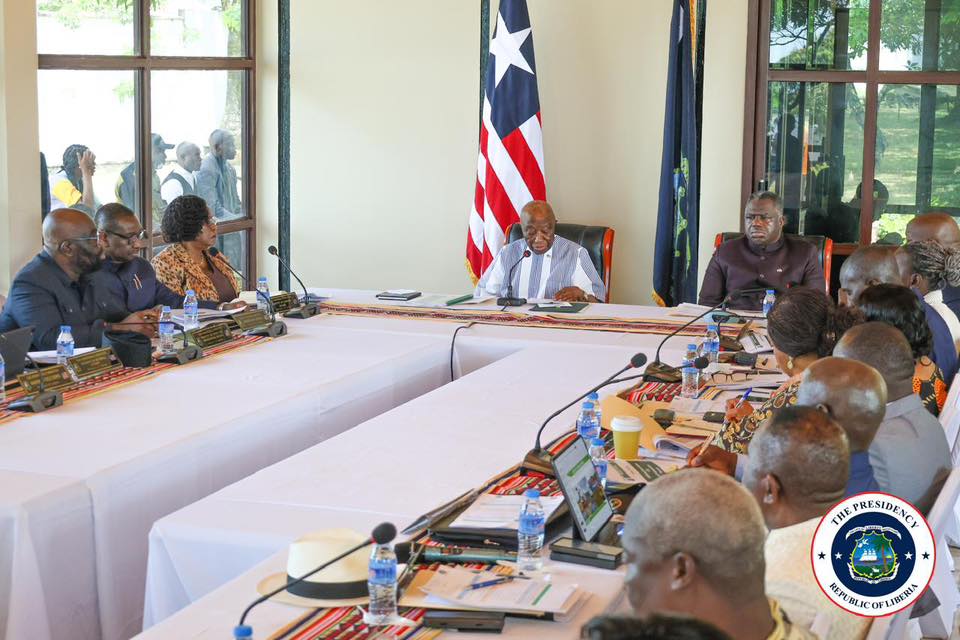
President Joseph Nyuma Boakai, Sr. issued a stern ultimatum to his Cabinet on Thursday, demanding a higher standard of coordination, fiscal discipline, and the immediate acceleration of the national development agenda. Speaking at the Tea House of the Executive Mansion on March 5, 2026, the President signaled that the era of “business as usual” has ended as the administration enters its third year of governance.
The high-level meeting served as a critical review of the ARREST Agenda for Inclusive Development (AAID). With a massive US$8.4 billion development target on the horizon, the President reminded his ministers that the window for preparation has closed and the season for tangible delivery is now. The discussions spanned the core pillars of the government’s framework, including economic transformation, infrastructure, the rule of law, and human capital development.
President Boakai did not mince words regarding the internal conduct of his administration. He emphasized that Cabinet unity is non-negotiable, warning that dissent against collective government decisions would not be tolerated. He underscored that his ministers are servants of the public trust and remain strictly accountable for their performance and loyalty to the national agenda.
“If we sit here and agree on something, you cannot go outside and agitate against it,” the President stated firmly. He added a sobering reminder to his team: “Nobody here is so important that they cannot be removed.” This call for discipline extends to the management of state resources, particularly regarding official foreign travel. The President cautioned that all future trips must be justified by clear, documented national benefits, noting that excessive travel drains both time and the national treasury.
A central theme of the meeting was the urgent need for job creation to satisfy the growing expectations of the Liberian workforce. President Boakai highlighted that the deployment of road construction equipment—popularly known as the “yellow machines”—is a strategic move to unlock the economic potential of rural areas and stimulate agricultural productivity.
In a major policy announcement, the President revealed that Vice President Jeremiah Koung has been tasked with overseeing renewed efforts to jumpstart the long-dormant Putu Iron Ore Project. This move signals a more aggressive approach to natural resource management. The President warned that Liberia will no longer entertain investors who lack the technical competence or financial backing to perform. He insisted that any entity managing the nation’s resources must demonstrate the ability to add significant value to the domestic economy.
Beyond high-level investments, the President turned his attention to the everyday experience of Liberian consumers. He expressed concern over the influx of inferior goods and the rise of “hidden inflation”—a practice where manufacturers decrease the quantity or quality of a product while keeping the price the same.
To combat this, the President directed the Ministry of Commerce and Industry and the National Standards Laboratory to intensify their oversight. He insisted that Liberia must not become a “dumping ground” for sub-standard products. He urged these institutions to be proactive in monitoring imports and ensuring that every citizen receives fair value for their hard-earned money, particularly regarding food and essential consumer goods.
As the meeting concluded, President Boakai urged his Cabinet to reclaim the sense of purpose that brought them to power. He reminded them that their mission is not to follow existing patterns but to forge a new path for the republic. “We came to set a new agenda for this country,” he told the gathered officials.
The President’s message was clear: the success of the AAID depends on a collective, disciplined effort. As the administration moves forward, the focus will remain squarely on transforming the economy and delivering the “inclusive development” promised to the Liberian people
