
The National Food Assistance Agency (NFAA) has unveiled an ambitious US$42.5 million five-year Strategic Plan (2026–2030) aimed at strengthening Liberia’s food security systems and advancing the country’s drive toward ending hunger nationwide.
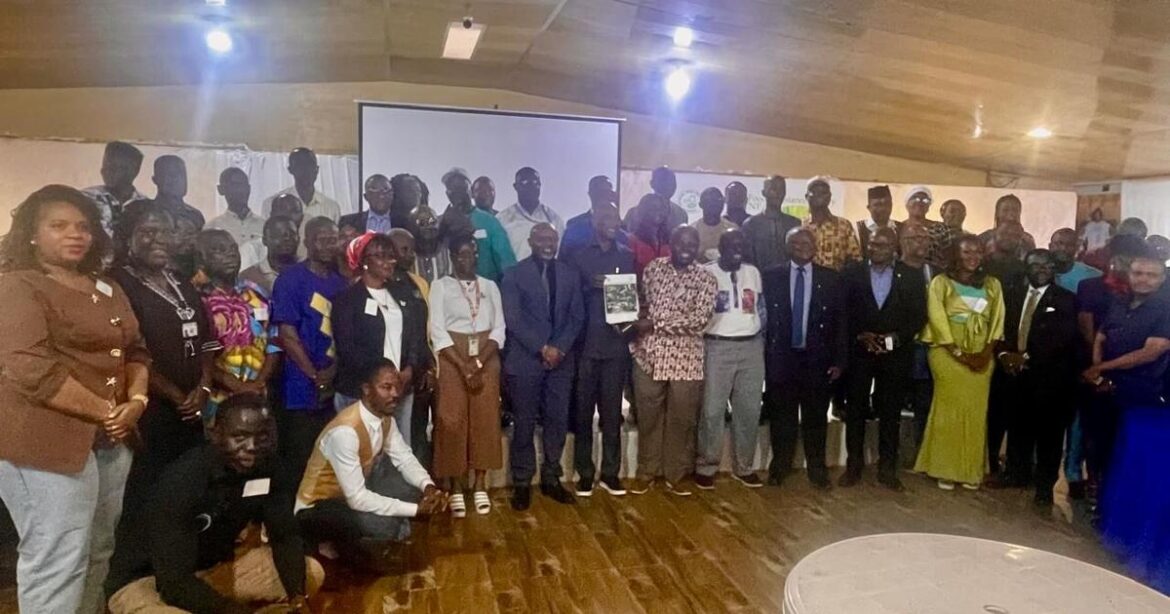
The strategic plan was officially launched at the Clar M. Weah Event Hall on 12th Street, Sinkor, bringing together government officials, lawmakers, development partners, and stakeholders in agriculture and humanitarian assistance.
The initiative sets out a comprehensive framework to improve food assistance coordination, enhance nutrition outcomes, and expand support to vulnerable populations across Liberia.
A Major Investment in the Fight Against Hunger
Presenting the framework, Hon. Bob Yeenuah Kartoe, Deputy Director General for Administration at the NFAA, said the plan represents a major national commitment to building a resilient and well-coordinated food assistance system.
According to Kartoe, the US$42.5 million implementation cost over five yearsreflects both the scale of Liberia’s food security challenges and the urgency of addressing them.
He explained that the plan emerged from a national validation exercise held on February 28, 2026, which brought together stakeholders to refine the agency’s strategy and strengthen collaboration across sectors.
“This plan now stands as a refined and nationally owned roadmap that will guide the agency’s work for the next five years,” Kartoe said.
He outlined four strategic priorities that will drive implementation:
Strengthening institutional capacity to improve the agency’s operational, technical, administrative, and logistical systems.
Coordinating national food assistance programs to harmonize interventions and eliminate duplication among partners.
Enhancing food security and nutrition through stronger partnerships and resource mobilization.
Strengthening partnerships and advocacy to sustain national momentum toward ending hunger.
Kartoe emphasized that the plan aligns with the government’s ARREST Agenda for Inclusive Development (AAID)and contributes directly to the United Nations Sustainable Development Goal (SDG) 2 – Zero Hunger.
“Today’s launch is not merely ceremonial,” he noted. “It marks the beginning of disciplined implementation, strengthened accountability, and renewed national commitment to building a food-secure Liberia.”
Government Reaffirms Commitment to Food Security
Speaking on behalf of President Joseph Nyuma Boakai, Charles Snyder congratulated the NFAA leadership for developing what he described as a timely national roadmap to address hunger and food insecurity.
Snyder conveyed the President’s regret for his absence due to a Cabinet meeting at the Executive Mansion.
“It is an honor for me to stand here representing His Excellency President Joseph Nyuma Boakai, who regrets that he cannot be here today to launch this important program,” Snyder said.
He noted that President Boakai, an agriculturalist by profession, has consistently emphasized agriculture and food security as critical pillars of national development.
“This is something that is very close to the President’s heart,” Snyder said. “If he had been here today, you might have had to ask him to take a seat because he would have spoken at length about agriculture and food security.”
Snyder expressed confidence that with coordinated national efforts, Liberia could significantly reduce hunger in the coming years.
“I want to congratulate the National Food Assistance Agency for this wonderful plan and hope that our aim of achieving zero hunger in Liberia will become a reality,” he added.
Agriculture Ministry Stresses Implementation
Also speaking at the event, David Acquoi, representing Agriculture Minister Dr. J. Alexander Nuetah, praised the NFAA for aligning its strategy with Liberia’s development priorities.
However, he stressed that the success of the plan will depend largely on effective implementation and strong monitoring systems.
“A strategic plan is not developed simply for the sake of drafting a document,” Acquoi said. “It must serve as a compass that directs institutions toward achieving their mandate.”
He called on the NFAA leadership to strengthen the agency’s monitoring and evaluation (M&E) systems to track progress and ensure measurable results.
“We must monitor every step, every goal, and every key performance indicator to ensure that what is written in this document is actually implemented,” he noted.
Acquoi further disclosed that the Ministry of Agriculture will closely follow the implementation process to ensure that the strategic objectives are achieved.
NFAA Outlines Vision for Zero Hunger
Delivering the keynote address, Hon. Boakai A.M. Sirleaf, Director General of the NFAA, described the strategic plan as a product of extensive national consultations.
Sirleaf explained that while the agency recently gained legal recognition through legislation, its programs date back several decades.
“The institution itself has been around since the 1970s,” he said. “Many people in this room who attended school during that time will remember benefiting from school feeding programs.”
He stressed that the agency’s core mission is to ensure that no Liberian child goes to school hungry.
“A child who goes to school without food cannot concentrate or develop properly,” Sirleaf said. “NFAA exists to fill that gap.”
He also highlighted the need to diversify Liberia’s food consumption patterns, noting that the country’s heavy reliance on rice continues to shape public perceptions about food security.
“When a Liberian says they have not eaten all day, it usually means they have not eaten rice,” Sirleaf observed. “Part of our work is to promote local food production and encourage healthier eating habits.”
Sirleaf called on development partners, humanitarian organizations, and the private sector to collaborate with the NFAA in reaching communities across the country.
“We see the NFAA as the last-mile institution that can deliver food assistance to communities where others cannot reach,” he said.
Legislature Raises Funding Concerns
Grand Bassa County Senator Gbehzongar Milton Findley welcomed the initiative but raised concerns about the sustainability of funding for the plan.
The senator noted that the US$42.5 million budget roughly US$8 million annually significantly exceeds the agency’s current allocation in the national budget.
“I am worried about how you will raise eight million dollars a year,” Findley said. “Your current budget is less than two million dollars.”
He urged the NFAA leadership to engage the Legislature to secure stronger financial support for the program.
“You have a tough job ahead of you,” the senator said. “But we will support your efforts and look forward to seeing this plan presented to the Legislature so that funding can be secured.”
Findley also encouraged Liberians to revive the culture of backyard farming, noting that growing vegetables such as pepper, okra, and potato greens could help strengthen household food security.
“Each of us must begin to think about how we can contribute to feeding ourselves and our communities,” he said.
A National Call to End Hunger
As Liberia continues to confront food insecurity affecting thousands of households, the NFAA’s five-year strategic plan signals a renewed national effort to build a more coordinated, sustainable, and resilient food assistance system.
With strong partnerships, adequate funding, and effective implementation, stakeholders say the initiative could mark a significant step toward realizing Liberia’s long-term goal of ending hunger and improving nutrition nationwide.
