
A proposed amendment to the landmark Kamara Abdullah Kamara Act of Press Freedom has ignited a fresh national debate over the balance between protecting citizens from online harassment and safeguarding freedom of expression in Liberia.
At the center of the controversy is the Press Union of Liberia (PUL), which has strongly rejected the draft “Protection from Gender-Based Online Abuse and Harassment Act of 2026.” The media advocacy body argues that the proposed legislation risks undermining one of Liberia’s most significant democratic reforms by potentially reintroducing criminal penalties for speech.
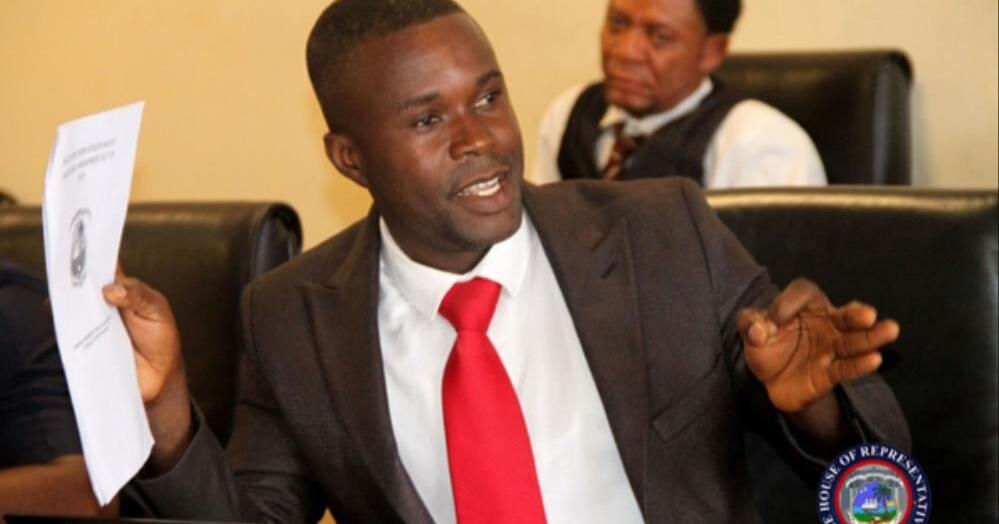
Speaking during a public hearing before a legislative committee of the Liberian House of Representatives, PUL President Julius Kanubah warned lawmakers that altering the KAK Act could erode hard-won protections for journalists and ordinary citizens alike.
“The Press Union of Liberia is deeply concerned that the proposed amendment would undermine the spirit and letter of the KAK Act,” Kanubah said. “The draft legislation risks re-criminalizing free speech and press freedom.”
The Kamara Abdullah Kamara Act of Press Freedom, enacted in 2019, represented a historic shift in Liberia’s legal framework governing speech and media.
The law repealed several controversial criminal statutes that had long been used to prosecute journalists and critics of government, including criminal libel against the President, sedition, and criminal malevolence.
For decades, these laws were widely criticized by human rights advocates for suppressing dissent and enabling authorities to intimidate the media.
The repeal was hailed internationally as a significant democratic achievement. Organizations such as the Committee to Protect Journalists and Reporters Without Borders praised Liberia for strengthening its commitment to press freedom.
Since then, the KAK Act has become a cornerstone of Liberia’s post-war democratic reforms.
The new draft legislation—introduced by Nyahn Flomo, Representative for Nimba County District 2—aims to address growing concerns about harassment and abusive language on social media platforms.
Under the proposal, individuals found guilty of posting insulting, obscene, or harassing language online could face up to two years imprisonment, fines ranging from L$50,000 to L$500,000, and or both penalties at the court’s discretion.
Supporters argue that the measure is necessary to address the surge of toxic online discourse, particularly attacks targeting women and vulnerable groups.
However, critics say the law’s broad language could easily be misused to silence critics, journalists, and political opponents.
Kanubah emphasized that while the PUL does not condone abusive speech, criminal penalties are an excessive solution.
“Personal insults and abusive language should not be encouraged,” he said. “But criminalizing such conduct is a disproportionate response and creates dangerous avenues for abuse.”
PUL’s Argument: Protecting Free Expression
The PUL’s central argument is that the proposed amendment threatens to undermine the very purpose of the KAK Act.
According to the union, the legislation could allow powerful individuals—especially public officials—to use criminal courts to punish critical expression.
This concern is rooted in Liberia’s political history, where speech-related laws were often used to target journalists and opposition figures.
Kanubah warned lawmakers that reopening the door to criminal sanctions could set a troubling precedent.
“To amend the KAK Act would risk sending people to jail simply for exercising their constitutional rights,” he said.
Instead of new criminal provisions, the PUL argues that existing laws already provide adequate remedies.
The organization pointed specifically to Section 17.3 of Liberia’s Penal Law of 1978, which addresses disorderly conduct and abusive language through civil and regulatory measures.
The PUL’s position has received backing from several prominent legal and human rights figures.
Among them is Kwame Clement, founding president of the Liberia School of Law, who urged lawmakers to scrutinize the proposal carefully.
Clement warned that poorly crafted speech laws could have a chilling effect on democratic debate.
“When legislation threatens free expression, it must be examined with extreme caution,” he noted.
Similarly, Ralph Nyuma of the Independent National Commission on Human Rights echoed concerns that criminalizing online speech could conflict with Liberia’s international human rights obligations.
These include commitments under the African Charter on Human and Peoples’ Rights and various United Nations conventions on freedom of expression.
Even within the legislature, the proposal has faced resistance.
Montserrado County Representative Sumo Mulbah, a member of the House joint committee reviewing the bill, voiced strong opposition to measures that could weaken press freedom protections.
The controversy highlights a broader challenge facing many democracies: how to address harmful online behavior without undermining fundamental rights.
Across Africa and globally, governments have struggled to balance the need to combat cyberbullying, misinformation, and harassment with the protection of free expression.
Liberia is no exception.
Social media platforms have dramatically expanded public discourse in the country, giving citizens unprecedented opportunities to criticize government officials and discuss national issues.
At the same time, the platforms have also become arenas for insults, misinformation, and targeted harassment—especially against women in public life.
Lawmakers advocating regulation argue that the absence of legal protections has allowed online abuse to flourish.
But the PUL insists that such concerns should be addressed through carefully crafted cybercrime legislation rather than amendments to the KAK Act.
Kanubah pointed out that issues of online harassment are already covered under the draft Cybercrime Act, currently before the legislature.
“We believe lawmakers should focus on strengthening the Cybercrime Act rather than weakening the KAK Act,” he said.
For media advocates, the debate over the proposed amendment is about more than a single piece of legislation—it is about protecting the trajectory of Liberia’s democratic development.
After decades of civil conflict and authoritarian governance, Liberia has gradually built a reputation as one of West Africa’s more open media environments.
The KAK Act symbolized that progress.
Reversing or weakening its provisions, critics argue, could signal a troubling shift away from those democratic commitments.
“The KAK Act was a historic victory for freedom of expression,” a media practitioner said last week. “Any attempt to dilute it must be approached with extreme caution.”
As lawmakers continue deliberations, the outcome of the debate could shape not only Liberia’s media landscape but also the broader environment for political discourse in the country.
“The House must stand firm in defense of free speech and a free press,” Kanubah declared. “These are the cornerstones of democracy and good governance in Liberia.”
