
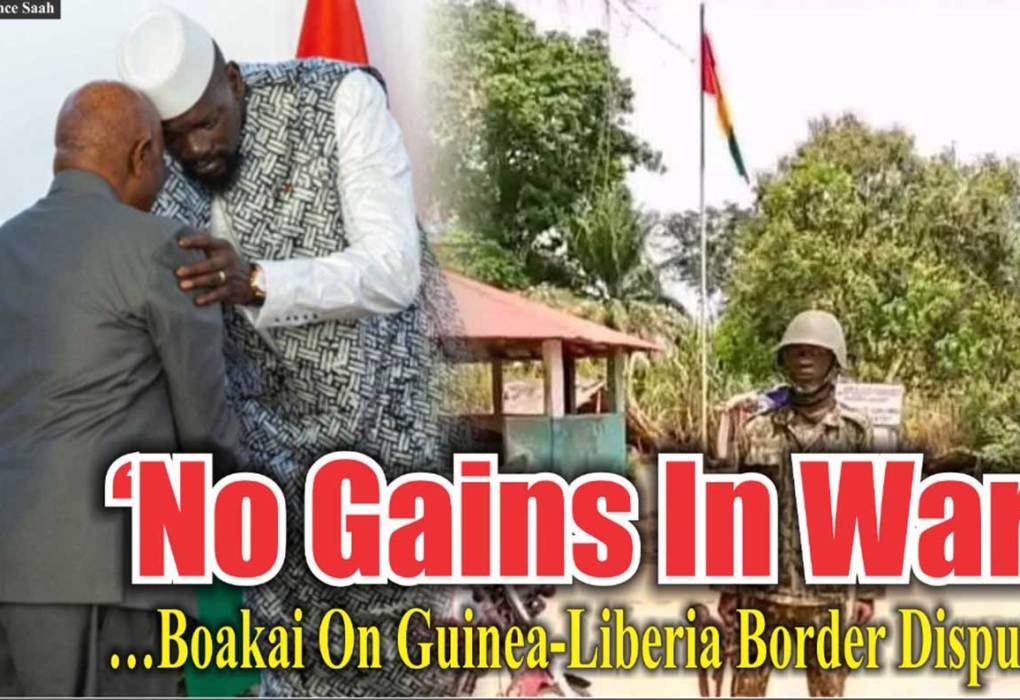
Declaring that “We have nothing to gain from war,” President Joseph N. Boakai has returned from high-stakes regional talks in Conakry, Guinea, with a renewed commitment by Liberia and its neighbors to pursue peace over escalating border tensions.
Speaking on Monday, March 16, 2026, President Boakai, in a rather conciliatory tone, emphasized shared identity and long-standing ties among the Mano River nations. “We realized that we are the same people. We should not waste time on war. We need to be friends and help to develop our country,” he said, signaling what observers describe as a critical de-escalation moment for the region.
The Liberian leader joined Mamadi Doumbouya and Julius Maada Bio in “cordial but frank” consultations under the Mano River Union (MRU) framework to resolve recent border disputes that have raised security concerns in parts of the subregion.
At the heart of the agreement is a unanimous decision to maintain the status quo along contested border areas as diplomatic engagements continue, effectively halting any potential military posturing and preserving fragile stability.
The joint communiqué adopted at the close of the summit underscored a collective pivot toward dialogue, anchored in international law, including commitments consistent with the principles of the United Nations Charter. The leaders stressed sovereignty, territorial integrity, and peaceful coexistence as non-negotiable pillars guiding their relations.
Beyond easing tensions, the summit delivered a broad roadmap for deeper cooperation. The three countries pledged to strengthen joint border patrols, boost intelligence sharing, and intensify collaboration against terrorism, transnational crime, and trafficking, threats increasingly seen as common enemies in the region.
They vowed to promote cross-border trade, infrastructure development, and the free movement of people and goods, as well as joint initiatives to improve livelihoods in border communities often hardest hit by instability.
In a move expected to fast-track implementation, the presidents directed their respective technical teams and security agencies to urgently engage in dialogue, prevent further incidents, and accelerate long-delayed border clarification and demarcation processes with support from regional and international partners.
They also agreed to convene a full MRU Summit within one month, an indication of growing urgency to institutionalize dialogue and prevent future flare-ups. For many observers, the outcome of the Conakry meeting represents more than a diplomatic success; it is a calculated effort to restore confidence among border communities and safeguard economic lifelines disrupted by uncertainty. As President Boakai returned home, his message was unmistakable: the future of the Mano River region lies not in conflict, but in cooperation.
