
By Amos Harris
ZWEDRU, GRAND GEDEH COUNTY — Alternative National Congress (ANC) Political Leader Alexander B. Cummings has sharply criticized the Unity Party-led administration of President Joseph Boakai, accusing the government of deepening Liberia’s political, economic, and institutional challenges. Speaking as the keynote speaker during the 22nd anniversary celebration of the Congress for Democratic Change (CDC) in Zwedru, Grand Gedeh County, Cummings urged opposition parties to put aside their differences and form a united front ahead of the 2029 general elections.
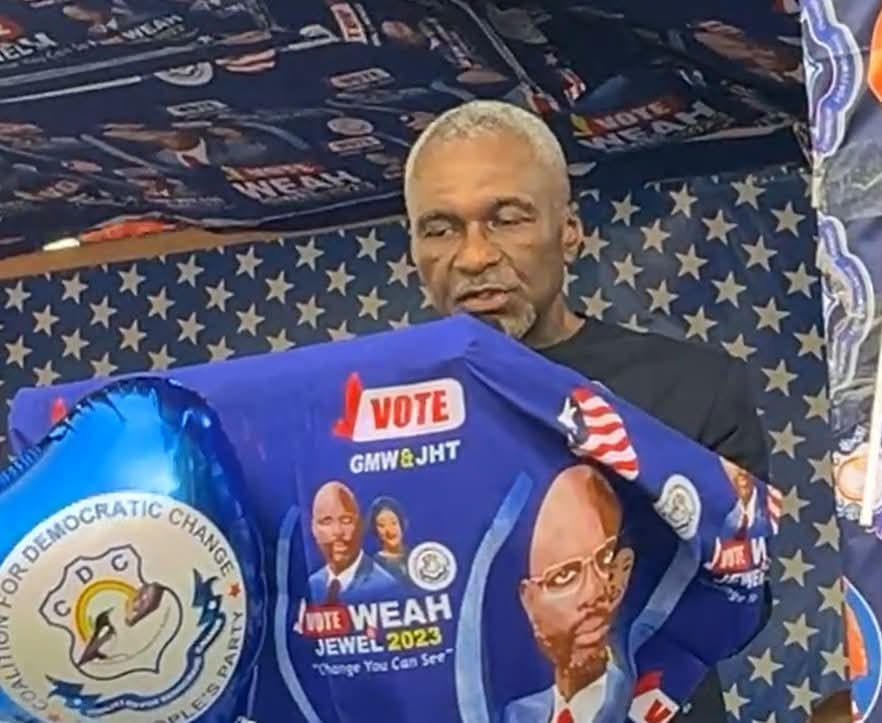
Addressing former President George Manneh Weah, opposition leaders, party executives, and thousands of gathered supporters, Cummings congratulated the CDC on reaching its 22nd anniversary. He described the party’s emergence as a defining milestone in Liberia’s democratic history, noting that it opened the doors of national leadership to ordinary Liberians, particularly those from disadvantaged communities who had historically been excluded from political power.
Reflecting on his personal journey, Cummings compared his background to that of former President Weah, observing that both men rose from humble beginnings despite facing rejection and fierce criticism throughout their respective careers. He argued that their experiences symbolize the true resilience of ordinary Liberians striving for equal opportunity and national progress. The ANC leader maintained that Liberia’s ongoing political struggle is rooted in the pursuit of social justice, economic inclusion, and equal opportunity, though he noted that successive governments have failed to decisively tackle widespread poverty and exclusion.
Turning his attention directly to the Boakai administration, Cummings accused the government of serving the interests of a privileged few rather than the broader population. He alleged that tribal politics, political favoritism, and partisan governance have become more pronounced under the Unity Party, which he claims is actively weakening national unity and undermining reconciliation efforts.
Cummings further claimed that Liberia’s democratic institutions are under immense pressure due to executive interference. He accused the current administration of unlawfully removing tenured public officials, disregarding court rulings, selectively prosecuting corruption cases, and interfering in legislative affairs. According to him, these aggressive actions threaten constitutional governance and weaken public confidence in the rule of law.
On the economic front, Cummings dismissed official claims of progress, arguing that ordinary Liberians continue to endure severe financial hardship. He said that despite statistical reports of economic growth and increases in the national budget, poverty, high unemployment, food insecurity, and limited access to basic healthcare remain daily realities for the majority of the population.
Consequently, the ANC leader called on opposition political parties to strengthen their collaboration to hold the government accountable. He specifically appealed to the ANC, CDC, Citizens Movement for Change (CMC), Movement for Progressive Change (MPC), National Patriotic Party (NPP), All Liberian Party (ALP), and the Liberia People’s Party (LPP) to build a robust coalition for the 2029 polls.
Among his key demands, Cummings called for an immediate independent investigation into the reported US$19 million drug seizure at Roberts International Airport, insisting that anyone connected to the case must face justice regardless of political affiliation. He also demanded independent inquiries into the Foya development project and recent security tensions along the Liberia-Guinea border.
Responding to public speculation about his own political future, Cummings acknowledged that many view him as solely focused on obtaining the presidency. However, he maintained that Liberia’s future must take precedence over personal ambition, stressing that opposition leaders must be willing to make sacrifices to achieve meaningful political change. Concluding his address, Cummings declared that deteriorating road infrastructure, rising unemployment, and a weak healthcare system affect citizens regardless of party affiliation, urging Liberians to reject division and rally together to replace the government’s “Rescue Mission” agenda with a new vision to “Fix Liberia” in 2029.
