
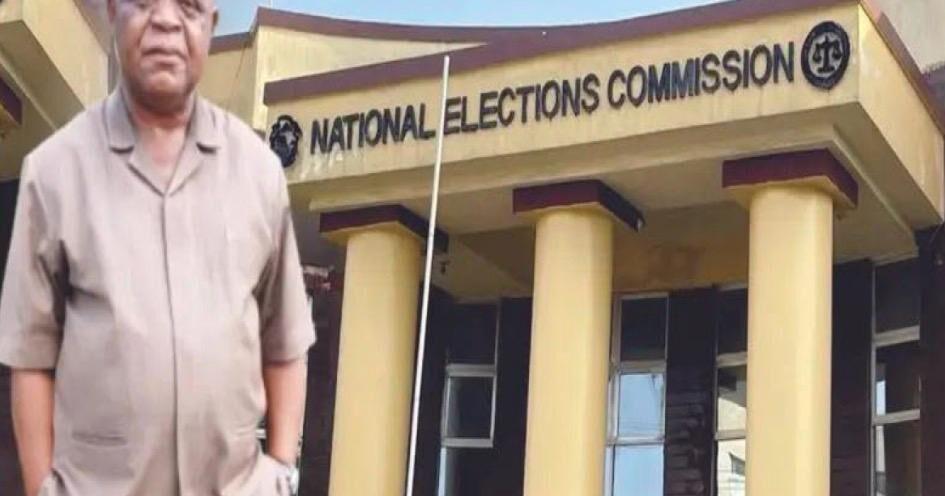
TheHouse of Representatives (HoR) has opened what could become one of the country’s most consequential electoral governance debates since the end of the civil war, summoning the National Elections Commission (NEC) and the Liberia Institute of Statistics and Geo-Information Services (LISGIS) to determine whether constitutional and demographic conditions exist for the creation of fourteen additional electoral constituencies.
If the proposal ultimately satisfies constitutional requirements and receives legislative approval, the House would expand from 73 to 87 members, fundamentally altering Liberia’s representative landscape ahead of the 2029 General and Legislative Elections.
Beyond the numerical increase, however, the debate raises broader constitutional questions about electoral fairness, equal representation, population redistribution, and the integrity of Liberia’s democratic institutions.
The House has directed NEC Chairperson Jonathan T. Weadee, electoral commissioners, and senior technical staff, alongside LISGIS Director General Richard Fatorma Ngafuan and his demographic experts, to appear before Plenary to explain whether the legal threshold governing constituency delimitation has been met.
According to lawmakers, the inquiry is intended to ensure that any decision is grounded in constitutional compliance rather than political expediency.
“Before any electoral boundary realignment, constituency delimitation, or legislative reapportionment is undertaken, the House must be satisfied that every constitutional and statutory threshold has been fully met,” the Plenary directive stated.
At its core, the debate is about representation.
The Constitution provides that electoral constituencies should, as far as practicable, contain relatively equal populations to ensure that each citizen’s vote carries comparable weight.
As populations grow, migrate, and redistribute over time, disparities inevitably emerge between constituencies.
Some districts experience rapid urban growth while others witness population decline.
When those imbalances become significant, constitutional democracies often undertake constituency delimitation—or redistricting—to restore representational equality.
Supporters of Liberia’s proposal argue that this is precisely what the Legislature is now attempting to examine.
The House Committee on Elections and Inauguration, chaired by Representative Prof. Thomas Romeo Quiah, has recommended that lawmakers carefully evaluate whether recent demographic changes justify expanding legislative representation.
According to proponents, additional constituencies could reduce population disparities, improve citizens’ access to elected representatives, and strengthen representative democracy, particularly in densely populated areas that have experienced sustained population growth.
The House’s decision to summon both NEC and LISGIS reflects the constitutional division of responsibilities governing Liberia’s electoral system.
LISGIS is responsible for producing official census data and demographic statistics that determine population distribution across the country.
NEC, meanwhile, administers elections and oversees constituency delimitation based on constitutional and statutory requirements.
Neither institution can independently create constituencies.
Rather, their technical expertise provides the demographic evidence and legal interpretation upon which policymakers rely before any legislative action can proceed.
Lawmakers expect LISGIS to explain the census methodology, population benchmarks, and demographic indicators supporting any proposal for additional constituencies.
NEC is expected to clarify constitutional standards relating to constituency boundaries, voter equality, electoral cartography, and representational balance.
Taken together, their testimony will determine whether the proposal rests upon objective demographic evidence or requires additional legal and constitutional review.
The discussion centers on what lawmakers repeatedly describe as the “constitutional threshold.”
Under Liberia’s constitutional framework, constituencies cannot simply be created because communities desire greater representation or because political leaders consider expansion desirable.
Population size, demographic distribution, and equality of representation remain the principal constitutional considerations.
The Legislature therefore seeks to determine whether sufficient population growth has occurred to justify increasing representation while preserving the constitutional principle that every constituency should, as nearly as possible, represent a comparable number of citizens.
That principle protects against unequal representation in which one legislator represents substantially fewer citizens than another.
Such disparities can undermine the democratic doctrine of equal suffrage by giving some votes greater practical influence than others.
The current debate carries particular historical significance because Liberia’s electoral map has undergone relatively limited structural change since democratic institutions were rebuilt following the country’s civil conflicts.
After the signing of the 2003 Comprehensive Peace Agreement, rebuilding electoral credibility became one of Liberia’s foremost national priorities.
The National Elections Commission, working alongside international partners—including the United Nations Mission in Liberia (UNMIL)—focused primarily on restoring confidence in elections through transparent voter registration, electoral administration, civic education, and peaceful polling.
The landmark 2005 elections, which produced Africa’s first elected female president, represented the beginning of Liberia’s post-war democratic recovery.
Subsequent elections in 2011, 2017, and 2023 further strengthened public confidence in constitutional transfers of power.
Throughout this post-war period, electoral reforms have concentrated largely on improving electoral management rather than significantly redesigning constituency boundaries.
As a result, Liberia’s representative map has remained comparatively stable despite changing demographic realities, increasing urbanization, internal migration, and population growth.
The current proposal therefore represents one of the most substantial discussions on legislative reapportionment since Liberia’s democratic institutions were re-established.
Although lawmakers insist that the process must remain nonpartisan, few observers believe constituency expansion is entirely insulated from politics.
Redistricting carries profound political consequences in every democracy.
Creating additional constituencies inevitably alters electoral competition, redistributes political influence, and may affect the electoral prospects of political parties and independent candidates.
Some emerging population centers could gain additional representation, while existing political strongholds may experience changes in electoral dynamics.
For that reason, transparency remains critical.
Political analysts argue that any perception that constituency boundaries are being adjusted to benefit particular political interests rather than reflect demographic realities could undermine public confidence ahead of the 2029 elections.
Conversely, a process grounded firmly in census data, constitutional principles, and independent technical analysis could strengthen confidence in Liberia’s democratic institutions.
Beyond constitutional questions, the proposal also raises practical governance considerations.
Expanding the House from 73 to 87 members would increase public expenditure associated with legislative salaries, committee operations, staffing, office administration, and constituency services.
Supporters contend that improved representation justifies those costs, particularly if lawmakers become more accessible to constituents and better able to address local concerns.
Critics, however, may question whether fiscal constraints should influence decisions about expanding government at a time when Liberia faces competing demands for investment in healthcare, education, roads, and public infrastructure.
Those competing priorities are likely to feature prominently as legislative deliberations continue.
The House’s decision to seek technical guidance before proceeding may ultimately prove as significant as the proposal itself.
Rather than immediately embracing or rejecting constituency expansion, lawmakers have requested constitutional interpretation, demographic validation, and electoral analysis from the country’s principal technical institutions.
That approach reflects an understanding that electoral legitimacy depends not merely on political consensus but on adherence to constitutional rules and objective evidence.
As Liberia prepares for another electoral cycle in 2029, ensuring that constituency boundaries reflect demographic realities while preserving equal representation will remain essential to maintaining confidence in the country’s democratic system.
The testimony of NEC and LISGIS is therefore expected to shape more than a legislative proposal.
It could define how Liberia approaches electoral representation in the decades ahead, balancing constitutional fidelity with evolving demographic realities.
Whether the House ultimately approves fourteen new constituencies or determines that the constitutional threshold has not yet been reached, the process itself underscores an important principle of post-war Liberia’s democratic evolution: that electoral reforms must be driven by law, evidence, and institutional credibility rather than political convenience.
In that respect, the debate represents another test of the constitutional institutions that have underpinned Liberia’s democratic consolidation since the end of the civil conflict—a reminder that representative democracy depends not only on holding elections, but on ensuring that every vote carries equal constitutional value.
