
By Lincoln G. Peters
CAPITOL HILL, Monrovia, July 3, 2026 — The Liberia Chamber of Commerce has called for a shift in the country’s economic model, urging increased investment in local content, innovation, and value addition to drive sustainable economic transformation.
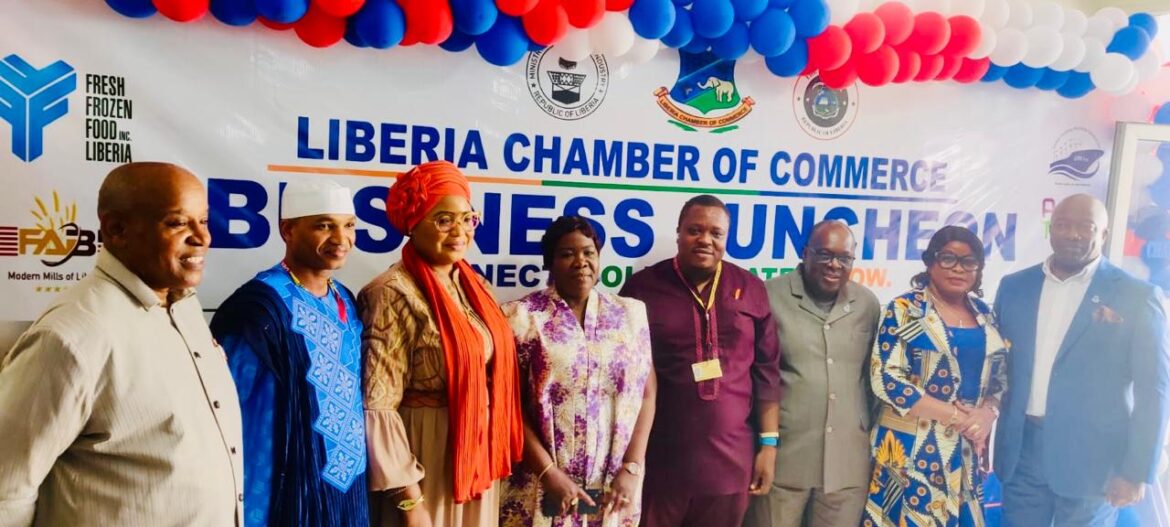
The call was made Thursday during the Chamber’s Annual Business Lunch, held at its headquarters on Queen’s Avenue, Capitol Hill, under the theme: “Liberia’s Next Economic Chapter: Innovation, Trade and Leadership for Economic Transformation.”
The event brought together senior government officials, diplomats, development partners, investors, entrepreneurs, and private sector leaders to discuss strategies for strengthening Liberia’s economy through enhanced public-private collaboration.
Delivering the keynote address, Liberia Chamber of Commerce President O. Natty B. Davis II said Liberia must move away from its longstanding dependence on exporting raw natural resources with little local processing.
“For more than 15 years, Liberia has largely extracted and exported its natural resources with limited processing and value addition. We must now do business differently,” Davis said.
He stressed that the country’s next phase of economic development should focus on building competitive local industries, expanding domestic supply chains, promoting innovation, and ensuring Liberian-owned businesses benefit more directly from investment opportunities.
According to Davis, strengthening local content and supplier development remains one of the Chamber’s top priorities because they are essential to creating jobs, building wealth, and improving the competitiveness of Liberian businesses.
“Together, we must recognize the opportunities ahead and prepare Liberian businesses to participate meaningfully in them,” he said.
Davis highlighted several initiatives undertaken by the Chamber over the past year, including the Supplier Development Program, the MSME Clinic, the Young Business Leaders Platform, and efforts to strengthen commercial arbitration in partnership with Liberia’s Judiciary.
He said the initiatives are equipping Liberian entrepreneurs with technical skills, mentorship, and market access while improving investor confidence in the country’s commercial environment.
Representing President Joseph Nyuma Boakai Sr., Minister of State Without Portfolio for Presidential Affairs, Mamaka H. Bility reaffirmed the government’s commitment to creating an enabling environment for businesses to thrive.
She said the President’s ARREST Agenda for Inclusive Development (AAID) recognizes the private sector as the engine of economic growth and prioritizes entrepreneurship, investment, and job creation.
“A vibrant and competitive private sector is indispensable to creating jobs, stimulating investment, increasing productivity, and delivering broad-based prosperity for all Liberians,” Bility said.
She commended the Chamber’s Supplier Development Program and Supplier Development Portal, describing them as innovative platforms that help Liberian-owned businesses meet industry standards and access concession companies, corporate supply chains, and government procurement opportunities.
Meanwhile, Minister of Commerce and Industry Magdalene Ellen Dagoseh said the government remains committed to reforms aimed at improving the business climate and strengthening Liberia’s industrial base.
She said the ministry continues to implement policies that promote commerce, expand trade, encourage industrial development, support micro, small and medium-sized enterprises (MSMEs), and improve the ease of doing business.
Dagoseh also highlighted Liberia’s participation in the African Continental Free Trade Area (AfCFTA) and the ECOWAS Trade Liberalization Scheme (ETLS), describing both as important platforms for expanding market access for Liberian businesses across Africa.
She emphasized that sustained dialogue between the government and the private sector is essential to developing policies that promote innovation, investment, exports, and industrial growth.
