By Lewis S. Teh
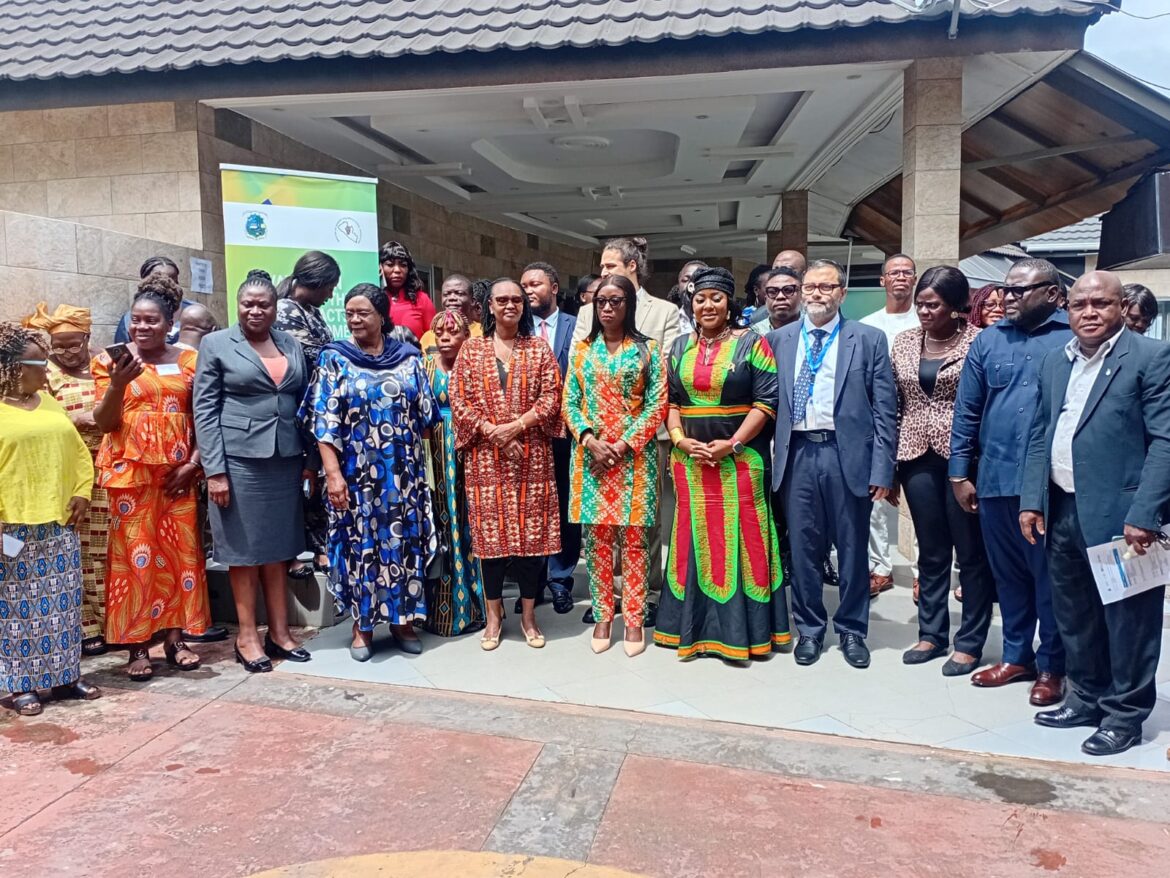
MONROVIA, July 3, 2026 – The Government of Liberia has launched a two-day national validation workshop for its Third National Action Plan (NAP) on Women, Peace and Security, a policy framework designed to guide the country’s implementation of United Nations Security Council Resolution 1325 from 2026 to 2031.
The Ministry of Gender, Children and Social Protection is hosting the workshop in collaboration with UN Women and the African Union, with support from the governments of Ireland and Sweden. The event brought together representatives from the ministries of Foreign Affairs, Justice, Local Government and Defense, alongside civil society organizations and women’s rights groups.
Opening the workshop, Gender Minister Gbeme Horace-Kollie described the validation process as a demonstration of Liberia’s commitment to strengthening institutional accountability, expanding women’s participation in peacebuilding and governance, and fulfilling its national, regional and international obligations.
“The convening of this national validation workshop is a testament to our collective resolve to strengthen institutional accountability, deepen women’s participation in peacebuilding and governance, and uphold our national, regional, continental and international commitments,” she said.
Liberia became the first African country to adopt a National Action Plan on UN Security Council Resolution 1325 in 2009. The second plan covered the period from 2019 to 2025.
Presenting an overview of the draft, the government’s lead consultant, Ghoma Karloweah, said the proposed third plan carries a budget of approximately US$410million, more that than the previous plan US$29 million budget.
Karloweah said the new framework is built around five pillars: prevention, protection, participation, relief and recovery, and coordination and accountability.
She said consultations conducted in nine counties identified emerging issues that will be addressed under the new plan, including digital violence against women, sexual exploitation in mining communities, climate-related insecurity and violence against women in politics.
Karloweah also highlighted progress made under the second action plan, noting increased female representation in the Armed Forces of Liberia and local governance structures.
According to Minister Horace-Kollie, women’s representation in the Armed Forces increased from about 4 percent in 2022 to 7 percent in 2024, while women’s participation in local governance rose from 8 percent to 11 percent during the same period.
United Nations Resident Coordinator Christine Umutoni praised Liberia’s inclusive approach to developing the action plan, saying the country’s county-level consultations provide a model for other nations preparing similar frameworks.
She added that the plan takes on added significance as Liberia serves as a non-permanent member of the UN Security Council for the 2026-2027 term.
Representing the African Union Office of the Special Envoy on Women, Peace and Security, Dr. Sally Wangamati urged Liberia to prioritize local implementation of the action plan to ensure its benefits reach communities across the country.
She also encouraged Liberia to ratify the African Union Convention on Ending Violence Against Women and Girls, noting that The Gambia recently became the first country to ratify the instrument.
“Across Africa, we must move from commitments to results by investing in women’s leadership, strengthening accountability, ensuring sustainable financing and localizing implementation so that every woman and girl can experience the dividends of peace,” Wangamati said.
UN Women Liberia Country Representative Abul Hasnat Monjurul Kabir said the action plan aligns with the government’s ARREST Agenda for Inclusive Development by promoting good governance, the rule of law, social cohesion and human capital development.
“For UN Women, this work is at the heart of our mandate,” Kabir said. “We support women’s leadership, women’s participation in peace and security decisions, protection from violence, and stronger accountability for commitments made to women and girls.”
Representatives of the ministries of Defense, Justice and Local Government, as well as civil society organizations, including the Women NGO Secretariat of Liberia and the National Civil Society Council of Liberia, pledged their support for implementing the new plan.
Representatives of the Irish and Swedish embassies also welcomed the consultative process and reaffirmed their governments’ continued support for Liberia’s Women, Peace and Security agenda.
The opening day of the workshop focused on presentations and technical reviews of the draft document. Organizers said the validation process is expected to conclude with endorsement by the National Steering Committee and other relevant authorities before the plan is officially launched and rolled out nationwide.
The finalized document is expected to be presented during the United Nations General Assembly in September.
