
By Our Reporter | Smart News Liberia
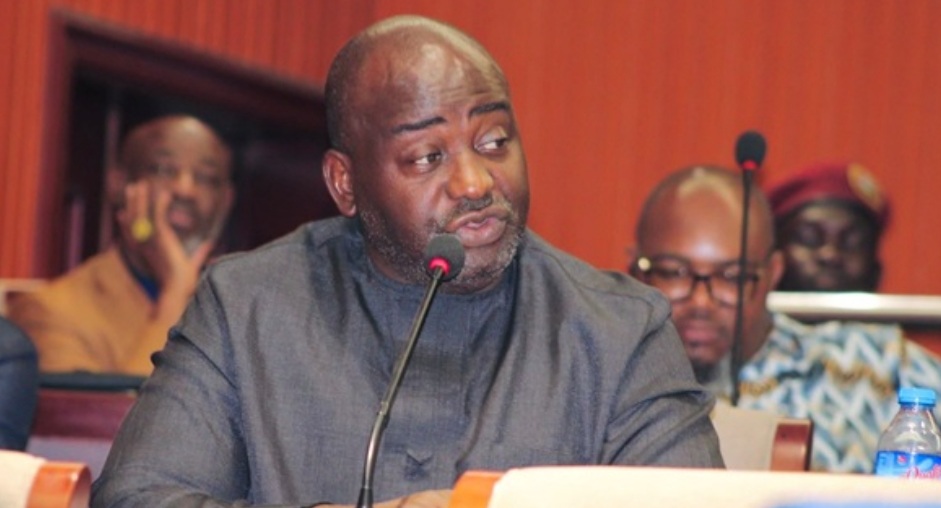
MONROVIA – Musa Hassan Bility has described the newly released Bertelsmann Transformation Index 2026 Country Report as a stark warning that Liberia’s governance failures can no longer be ignored, arguing that corruption, institutional weakness, and persistent poverty continue to undermine the country’s democratic progress.
In a press statement issued in Monrovia on Thursday, July 2, 2026, the Nimba County District #7 Representative said the report should not be viewed as an insult to Liberia but rather as a reflection of realities that ordinary citizens experience every day.
“The recently released BTI 2026 Country Report on Liberia is not merely an international assessment. It is a mirror held before our nation,” Bility declared, adding that while Liberia has managed to sustain democratic elections and peaceful transfers of power, its institutions remain fragile and incapable of delivering meaningful change for citizens.
Bility acknowledged that the report credits Liberia for maintaining constitutional democracy through peaceful elections. However, he argued that democracy must extend beyond voting, insisting that citizens should also expect justice, accountability, quality public services, equal opportunities, and responsible management of national resources.
The lawmaker pointed to the report’s findings that corruption remains deeply embedded within state institutions, legislative oversight remains weak, the judiciary continues to face questions over independence and influence, and public institutions are vulnerable to private interests.
According to Bility, these findings represent a serious indictment of Liberia’s governance system rather than merely criticism from international observers.
“No nation can develop when public service becomes a pathway to private enrichment,” he stated, warning that weak accountability, political patronage, and excessive government spending continue to undermine efforts to reduce poverty and promote national development.
Bility also highlighted what he described as the report’s most troubling conclusion: Liberia’s continuing struggle with widespread poverty despite repeated promises of economic reform.
He noted that the report paints a grim picture of limited educational opportunities, poor healthcare delivery, inadequate electricity, weak sanitation services, and high youth unemployment, arguing that these conditions represent more than economic statistics.
“This is not just a statistical failure. It is a human tragedy,” he said.
The CMC political leader further criticized Liberia’s political culture, arguing that politics remains heavily driven by personalities, transactional alliances, and short-term political interests instead of strong institutions and national vision.
According to him, the combination of weak institutions and intense competition for political power poses a long-term threat to Liberia’s democratic stability.
At the same time, Bility cautioned against using the BTI report solely as a political weapon against President Joseph Nyuma Boakai or the former administration of George Weah.
He observed that the assessment covers periods under both governments and argued that Liberia’s governance problems are structural and have accumulated over many years rather than emerging under a single administration.
Nevertheless, Bility insisted that the current Boakai administration now bears the responsibility of translating reform promises into concrete action.
He called for audit findings to result in prosecutions where evidence supports criminal wrongdoing, enforcement of asset declaration requirements for public officials, greater transparency in public procurement, stronger legislative oversight, and an independent judiciary capable of administering justice without political interference.
Bility further urged the government, the Legislature, the Judiciary, civil society organizations, and the media to treat the report as the foundation for genuine national reforms instead of dismissing it or engaging in partisan debates.
His statement comes as governance, corruption, and public accountability continue to dominate Liberia’s national discourse, with both domestic watchdogs and international partners repeatedly calling for stronger institutions and more effective anti-corruption measures.
While Bility framed the BTI report as an opportunity for national reflection rather than political confrontation, his remarks also add to growing pressure on the Boakai administration to demonstrate measurable progress in tackling corruption, strengthening public institutions, and improving the living conditions of ordinary Liberians. As debates over governance reforms intensify, the challenge for the government will be whether it can transform repeated commitments into visible results that restore public confidence in the state.
