
By Kruah Thompson
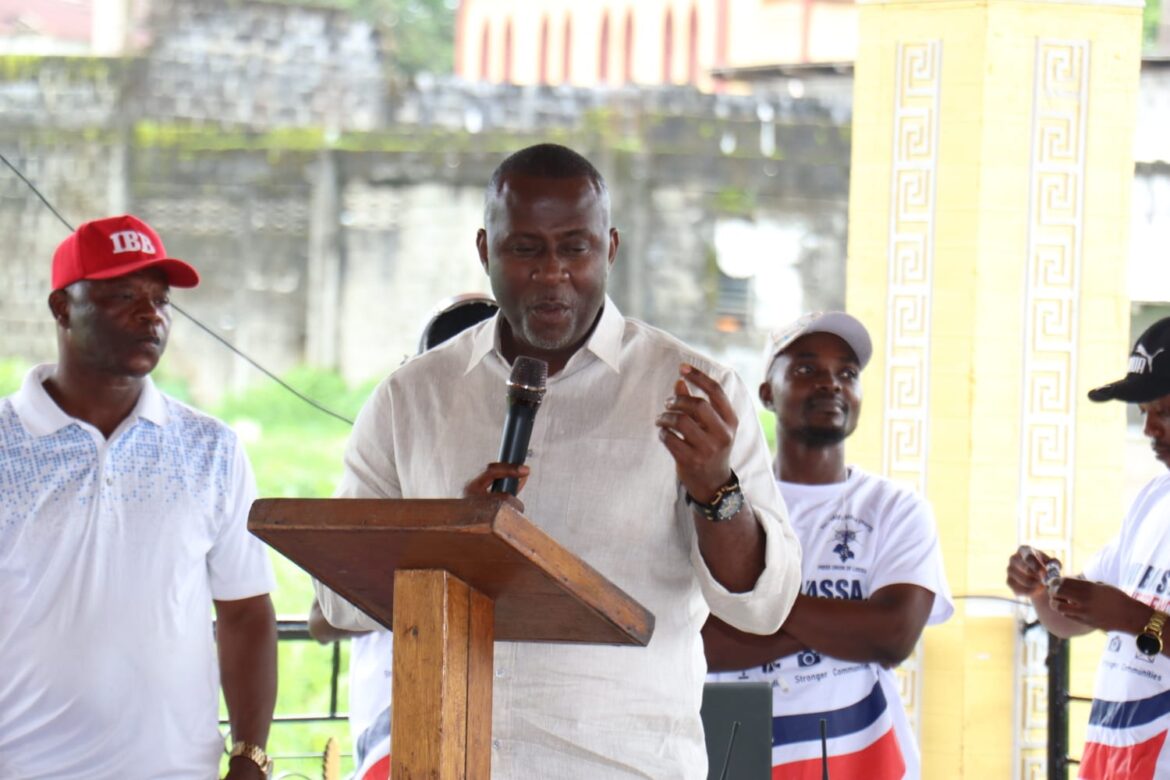
BUCHANAN, Grand Bassa County, July 6, 2026 — Media extortion undermines public trust and is tantamount to “dressed-up fraud,” B. Elias Shoniyin, Managing Director of Africa Development Management Associates, said at the first Grand Bassa Media Conference.
Delivering the keynote address at the conference organized by the Press Union of Liberia (PUL) Grand Bassa Chapter, Shoniyin urged journalists to uphold the principles of truth, independence, and accountability. He said residents of Grand Bassa County rely on the media for accurate information and expect journalists to serve the public interest rather than personal or political agendas.
“The power of the press is not simply a license to practice; it is the trust of the people you serve,” Shoniyin told participants.
He criticized journalists who use their profession for personal gain, including those who write or threaten to write stories to extort money.
“I have seen journalists in this country who have turned the pen into a weapon for extortion,” he said. “They write stories, or threaten to write stories, not to serve the public, but to serve their private interests. That is not journalism. That is dressed-up fraud.”
Shoniyin said the credibility of journalism depends on accuracy, honesty, and accountability. He encouraged journalists to report without fear or favor, regardless of personal relationships, tribal affiliations, or financial considerations.
He also emphasized the importance of transparency, particularly as media institutions face increasing political influence. According to Shoniyin, audiences should be aware of potential interests that could affect reporting.
Acknowledging the challenges facing journalists in Liberia, including low pay, inadequate infrastructure, and difficult working conditions, he urged media practitioners to remain committed to serving the public.
Shoniyin encouraged journalists to prioritize long-term public interest over short-term personal benefits and cautioned against seeking protection or favors from government officials.
“The journalist who holds the powerful accountable, even at personal cost, is the one whose work outlives them,” he said.
He described journalism as an honorable profession that exposes corruption, amplifies marginalized voices, and highlights issues that might otherwise go unnoticed. He also urged journalists to pursue continuous professional development through training, online courses, and networking opportunities.
Addressing government officials at the conference, Shoniyin said the media should be viewed as a partner in governance rather than an adversary.
“A functional press is the best gift any government can receive,” he said, noting that the media can help identify problems before they develop into crises and provide citizens with a platform to express concerns.
Shoniyin also called on leaders in Grand Bassa to focus on long-term development and praised the PUL Grand Bassa Chapter for organizing the county’s first media conference.
He urged the chapter to strengthen its institutional capacity by establishing an office, enforcing a code of ethics, and investing in journalist training and professional development.
The keynote speaker also encouraged journalists to expand coverage to underserved communities, including Neekreen, the St. John River District, and other rural areas.
In his closing remarks, Shoniyin compared the press to the St. John River, urging journalists to remain committed to truth despite political or private pressures.
“A free press is essential to democracy,” he said.
The conference was attended by journalists, government officials, and other stakeholders and was described as a step toward strengthening journalism and democratic governance in Grand Bassa County and Liberia.
