
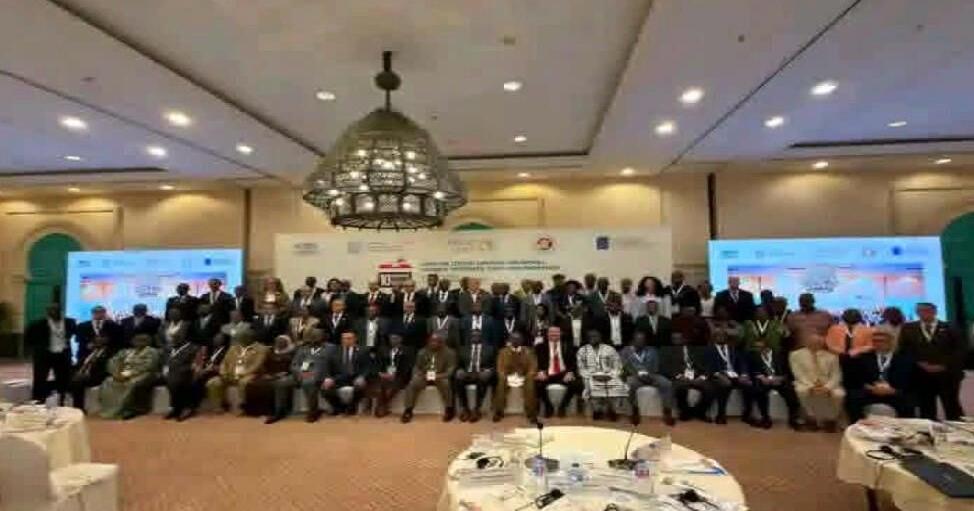
Liberia is not yet legally or practically prepared to allow citizens living abroad to participate in national elections, the Chairperson of the National Elections Commission (NEC), Jonathan K. Weedor, has told a continental gathering of election management bodies in Egypt.
Speaking at the 10th Annual Continental Forum of Election Management Bodies in Sharm El Sheikh, Weedor said Liberia faces significant legal, financial, and logistical challenges that must be addressed before diaspora voting can become a reality.
The forum, which is focused on the theme “African Citizen Abroad (Diaspora) Voting: Progress, Gaps and Prospects,” has brought together election authorities from across Africa to examine how countries can expand electoral participation to citizens living outside their borders while maintaining credibility and transparency.
Unlike some African countries that have already introduced out-of-country voting systems, Weedor said Liberia’s current legal framework does not provide a clear pathway for diaspora participation.
“Liberia’s current electoral laws do not clearly provide for diaspora voting,” Weedor told participants. “This presents a significant legal challenge to extending voting rights to Liberians residing abroad.”
According to the NEC Chairperson, addressing the legal gap would require legislative action and broader electoral reforms to establish the framework under which Liberians abroad could register, vote, and have their ballots counted.
Beyond the legal concerns, Weedor pointed to the financial and operational difficulties involved in implementing diaspora voting, especially for a country with a large population of citizens living in the United States, Europe, and other parts of West Africa.
He noted that establishing polling centers outside Liberia would require significant resources, including voter registration systems, trained election personnel, ballot security arrangements, transportation mechanisms, and reliable procedures for transmitting election results.
“The logistical and financial constraints associated with facilitating diaspora voting require sustainable and practical approaches to ensure broader electoral participation,” Weedor said.
He emphasized that any move toward diaspora voting must be built on systems that are affordable, credible, and capable of protecting the integrity of Liberia’s elections.
While acknowledging the growing demand for diaspora voting rights, Weedor stressed that public confidence must remain at the center of any electoral expansion.
“Public trust remains a foundational pillar in advancing diaspora participation in elections and strengthening electoral integrity,” he told fellow election management officials.
He explained that expanding voting rights without ensuring confidence in the electoral process could undermine rather than strengthen democracy.
For Liberians living abroad, the issue has become increasingly important due to their economic and social contributions to the country. Through remittances, investments, advocacy, and community support, members of the diaspora continue to play a major role in Liberia’s development.
However, many diaspora groups have argued that citizens who contribute to Liberia’s economy and national discourse should also have a voice in choosing the country’s leaders.
The NEC Chairperson said Liberia would continue to study experiences from other African countries that have successfully introduced diaspora voting and use those lessons to guide possible reforms.
The Sharm El Sheikh forum has provided a platform for countries with established diaspora voting systems to share lessons, challenges, and best practices.
Delegations from Guinea, Senegal, Cape Verde, Egypt, and Tunisia presented different models, including voting through embassies and other designated locations, as well as systems for overseas voter registration.
Participants acknowledged that diaspora voting is expensive and technically demanding but argued that excluding citizens abroad from elections is increasingly difficult to justify in an interconnected world.
The forum declared that “diaspora voting is a right rather than a privilege,” while encouraging election management bodies to develop systems that protect transparency, accessibility, and electoral credibility.
The three-day event is being hosted by Egypt and jointly organized by the African Union, the Association of African Election Authorities, and the European Centre for Electoral Support.
The forum is also expected to produce draft continental guidelines establishing minimum standards for diaspora voting, including voter registration, ballot security, and results transmission.
Weedor attended the forum alongside NEC Commissioner Barsee Leo Kpangbai and Special Assistant to the Chairperson Joe Yarsiah.
The NEC said the lessons gathered from the engagement will inform future discussions and possible recommendations to the Legislature regarding diaspora voting.
However, the Commission did not provide a specific timeline for when Liberia could begin the process of introducing out-of-country voting.
Any move toward diaspora voting would require legislative approval, financial support from the Executive Branch and possible assistance from development partners.
It would also require strong public confidence, transparent procedures, and potentially pilot initiatives before full implementation.
As African countries continue to expand democratic participation beyond their borders, Liberia remains at the early stages of the conversation.
For now, the question facing the country is not only whether Liberians abroad should vote, but whether the necessary legal, financial, and institutional systems can be created to make that participation credible.
The debate continues, but Weedor’s message from Sharm El Sheikh was clear: Liberia must first build the foundation before opening the ballot box to its citizens around the world.
