
By Seltue Robert Karweaye Sr.
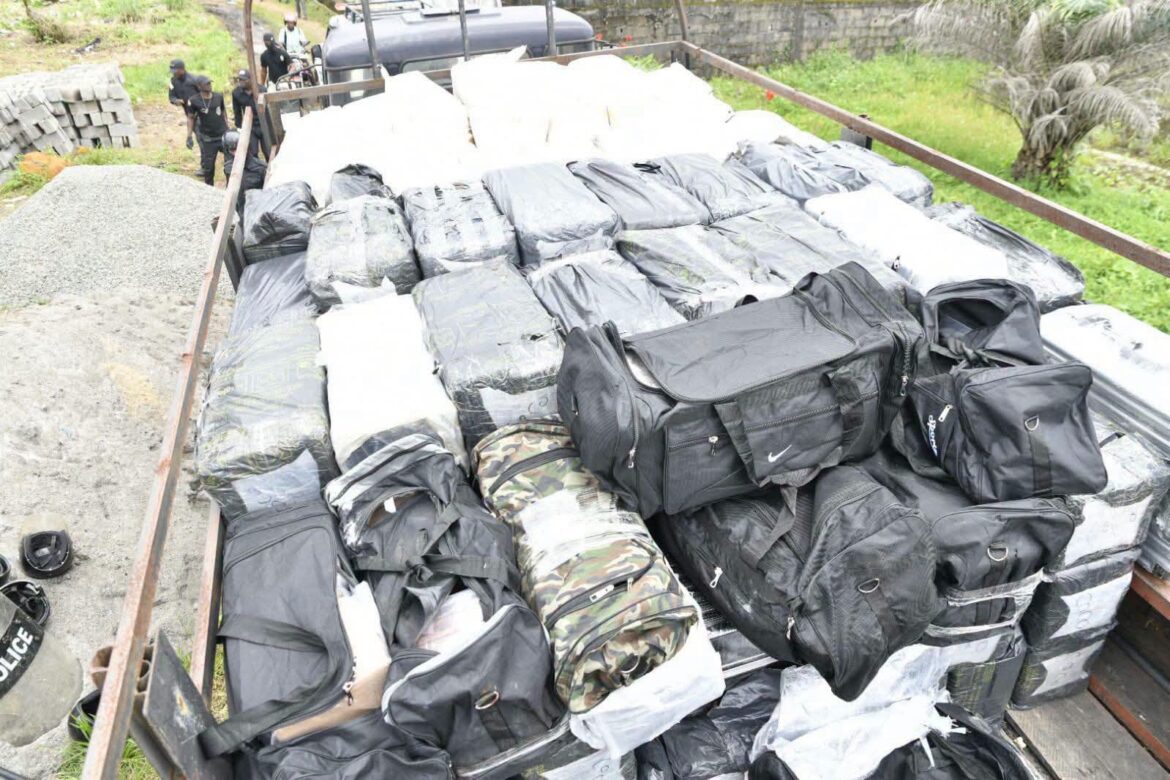
The recent discovery of a massive narcotics cache in Duazon, Margibi County, has pushed Liberia into a difficult but necessary national conversation: How did such a huge quantity of illegal drugs enter Liberia, move through our security system, and end up stored in a residential compound without detection?
Information Minister Hon. Jerolinmek Matthew Piah has confirmed that the Joint Security has uncovered what could become one of the largest drug busts in Liberia’s history. The operation led to the arrest of a Colombian national, a Spanish national, and several Liberians in connection with the investigation into the July cocaine seizure at Roberts International Airport (RIA), valued at approximately US$19 million.
While the success of the security operation deserves recognition, the discovery raises more questions than answers.
The arrest of individuals is only the beginning. The real investigation must focus on the larger network behind this operation.
Liberia Must Answer: Where Did the Drugs Enter From?
A shipment of this magnitude does not simply appear inside a country. It must have entered through a specific route—whether through the airport, seaport, coastal waters, land borders, or other illegal entry points.
Liberia is a coastal nation with several vulnerable points of access. The country has limited surveillance capacity along its coastline and borders, making it attractive to international criminal networks seeking weak points in security systems.
However, the size of this operation suggests more than ordinary smuggling. Moving millions of dollars’ worth of cocaine requires planning, financing, logistics, transportation, storage, and local cooperation.
The most important question remains:
Who allowed this shipment to enter Liberia, and how did it bypass the country’s security institutions?
The Duazon Compound: Who Owns This Property?
One of the most important unanswered questions is the ownership of the property where the drugs were discovered.
The Liberian public deserves transparency:
- Who owns the house and compound?
- Was the property purchased, rented, or provided by someone else?
- Who has been living there?
- Who paid for the property or rental arrangements?
- Were neighbors aware of unusual activities?
- How long had the compound been used as a storage location?
The location of the stash house is not a minor detail. It could provide critical information about how deeply the criminal network had established itself in Liberia.
Drug cartels do not operate through random locations. They rely on safe houses, trusted contacts, transportation networks, and individuals who can operate without attracting attention.
Were There Local Enablers Inside the System?
The involvement of foreign nationals alongside Liberian suspects highlights another critical issue: international drug organizations cannot successfully operate in a country without local assistance.
Someone had to provide:
- Local knowledge;
- Transportation;
- Storage facilities;
- Communication networks;
- Financial arrangements;
- Protection or information about security movements.
The investigation must determine whether any individuals within government institutions, security agencies, businesses, ports, airports, or communities assisted these operations.
If anyone abused their authority or position to facilitate drug trafficking, they must face the full weight of the law.
No political connection, social status, or financial influence should provide protection.
Is Liberia Becoming a Transit Hub for International Cartels?
For years, Liberia was not commonly associated with large-scale international drug trafficking compared to some other West African countries.
However, recent developments should concern policymakers and citizens alike.
West Africa’s strategic location between South America and Europe has made the region attractive to international narcotics networks. Countries with weak institutions, limited surveillance, vulnerabilities to corruption, and poor border monitoring can become targets.
Liberia must ask itself a difficult question:
Are international drug organizations beginning to see Liberia as a safe operating environment?
Ignoring this possibility would be a serious national security mistake.
The Government Must Provide Full Transparency
The public deserves more than announcements of arrests. A serious national investigation requires clear answers.
Authorities should explain:
Transparency is essential because drug trafficking is not only a criminal issue—it is a threat to national security, public health, and Liberia’s international reputation.
The Bigger Issue: Protecting Liberia’s Future
The discovery in Duazon should not be treated as an isolated criminal case. It should be viewed as a warning sign.
Countries do not become major drug trafficking routes overnight. Criminal networks test systems, identify weaknesses, establish contacts, and gradually expand operations.
Liberia must act now before these networks become deeply entrenched.
The question is not only about the drugs that were found. The bigger question is about the drugs that may have entered before, the networks that may still exist, and the people who may have helped create an environment where such an operation could happen.
Where did this massive drug shipment enter Liberia? Who helped it get here? Who owns the compound where it was found? And how do we ensure this never happens again?
Those questions must be answered—not only for accountability today, but for the security and future of Liberia tomorrow. The Liberian people deserve the truth. I rest my pen.
About the Author
Seltue Robert Karweaye Sr. is a Liberian policy analyst, researcher, and prolific commentary writer with interests in governance, public finance, economic development, and public policy. He can be contacted at
