
By Socrates Smythe Saywon | Smart News Liberia
BUCHANAN, GRAND BASSA COUNTY – Liberia’s 179th Independence Day celebration became a powerful reflection on the country’s past, present and future as Independence Day Orator Dr. Herbert Brewer challenged Liberians to reclaim their history, confront its triumphs and failures honestly, and accept responsibility for leaving future generations a stronger Republic.
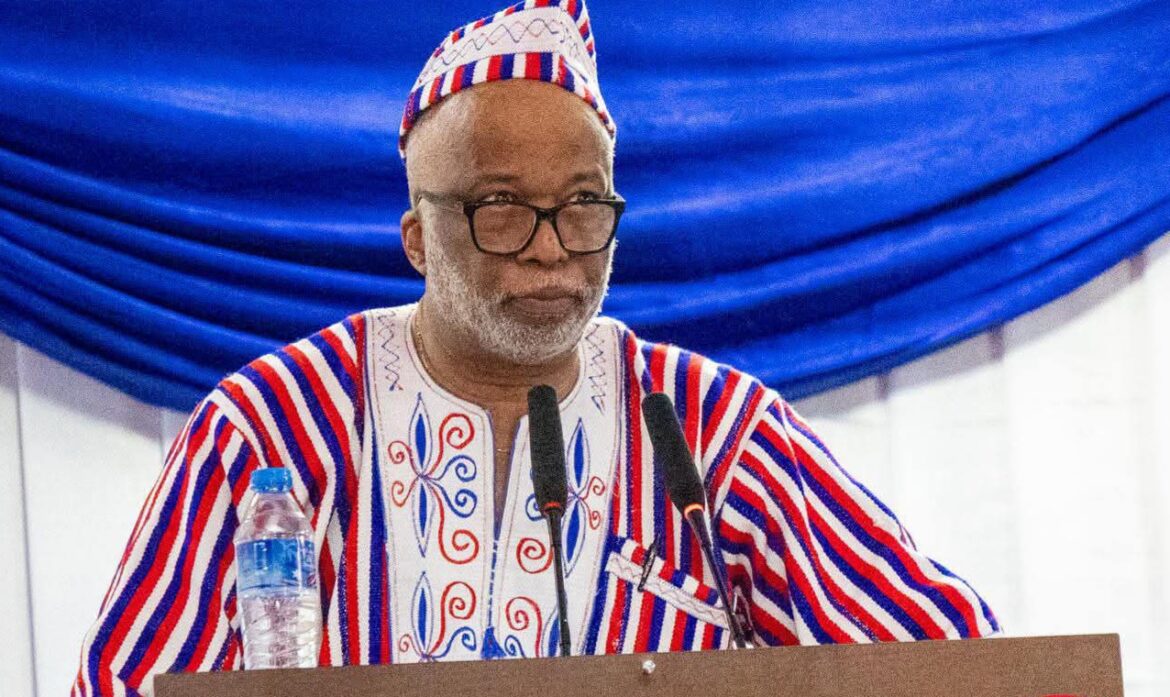
Delivering the national Independence Day oration on Monday, July 27, Dr. Brewer placed history at the center of Liberia’s national identity, arguing that the country’s greatest challenge is not simply that many Liberians do not know their history, but that too many have come to believe their history has little value.
Under the theme “Claiming Our History: The Inheritance of a Republic,” Brewer challenged the increasingly common view among some young Liberians that Liberia’s history is primarily a record of disappointment, failure and political conflict.
He instead argued that history represents one of the nation’s greatest assets because it provides the foundation for national identity, collective memory, wisdom and purpose.
“History is not merely a record of yesterday’s events,” Brewer argued. “History is the source of our identity, our memory, our wisdom, and our sense of national purpose.”
His message carried particular significance as Liberia marked 179 years since the declaration of independence on July 26, 1847, a milestone that he said should be understood not as the beginning of Liberian history, but as the beginning of the Liberian Republic.
That distinction formed one of the central arguments of his address.
According to Brewer, Liberia’s historical experience stretches back centuries before either 1822, when the first organized settlement of repatriated Black Americans was established at Cape Mesurado, or 1847, when Liberia declared independence.
He argued that the territory now known as Liberia was already home to complex African societies with their own political institutions, systems of justice, commercial networks, diplomatic relationships and cultural traditions long before the emergence of the modern Liberian state.
“The Republic whose independence we celebrate today rests upon foundations laid over many centuries,” he said.
Brewer used the history of Liberia’s ethnic communities to demonstrate the complexity of that inheritance, noting that migration, trade, marriage, conflict, cooperation and cultural exchange helped shape the identities of the peoples who now make up Liberia.
He cautioned against treating ethnic identities as static or naturally fixed, arguing that Liberia’s communities evolved through centuries of interaction.
“The Liberia of today is the product of centuries of migration and cultural interaction and exchange,” he said.
That historical perspective, Brewer suggested, should challenge contemporary Liberians to view national identity as something broader than ethnic or political affiliation.
His argument also sought to correct what he considers an incomplete understanding of pre-Republican Liberia.
Long before the establishment of Monrovia and the declaration of independence, African societies in the region governed themselves and participated in trade, diplomacy and regional political affairs.
Brewer highlighted Bopolu as one example, describing it as an important commercial center and pointing to evidence that products cultivated in the region participated in wider regional and international trade.
He also emphasized the importance of African knowledge and cultural contributions to the wider Atlantic world, including the role of West African rice-growing knowledge in shaping agricultural practices in the American South.
For Brewer, these histories represent an inheritance that Liberians should embrace rather than overlook.
But the orator did not present Liberia’s history as a story of uninterrupted achievement.
Instead, he confronted one of its most painful chapters: the transatlantic slave trade.
He argued that the slave trade profoundly disrupted societies throughout the region, affecting families, economies, political systems and communities across what is now Liberia.
Yet Brewer also identified a connection between the experience of enslavement and the later development of ideas surrounding freedom, sovereignty and self-government.
“Centuries of resisting enslavement strengthened among many of our ancestors a profound attachment to freedom, self-government, and sovereignty,” he said.
He cited the 1724 refusal by the Dei ruler known as Peter to allow French traders to construct a European fort at Cape Mesurado as an early example of African resistance to external attempts to establish control over the territory.
For Brewer, the episode demonstrates that the principle of sovereignty existed in the region long before the establishment of the Liberian Republic.
He also described Dukor, located beneath Cape Mesurado, as a multilingual commercial settlement connected to the wider Atlantic world and argued that the area was already a center of commerce and cultural interaction before the arrival of American repatriates.
The orator subsequently turned to the complex story of the Republic’s founding, emphasizing that it cannot be explained solely through the activities of the American Colonization Society.
Brewer highlighted the aspirations of free Black people in the United States and elsewhere who sought to reconnect with Africa and establish new lives on the continent.
He referenced the Reverend Lott Carey, who became one of the early Black American figures associated with the movement to return to Africa, and cited Carey’s declaration that he was “an African” who felt compelled to work for his people.
But Brewer stressed that the emergence of Liberia involved both returning descendants of Africa and Africans already living on the continent.
He specifically recognized the contributions of William Campbell, David Noah and William Davis, describing them as African abolitionists whose knowledge of the region, language skills, relationships with local rulers and understanding of political institutions helped facilitate communication between the American Colonization Society and African communities.
That contribution, he argued, deserves greater recognition in Liberia’s national historical narrative.
Brewer’s interpretation challenges a simplified version of Liberia’s founding that places returning settlers at the center while minimizing the role played by indigenous African leaders and communities.
He argued that the Republic emerged from a complex encounter involving Africans from the continent, descendants of Africans from the diaspora, local rulers, traders, diplomats and political actors.
The significance of July 26, according to Brewer, therefore lies not in the idea that Liberia suddenly came into existence in 1847, but in the transformation of existing historical experiences into a modern constitutional republic.
“The Republic has a founding date; the history of its people does not,” he emphasized.
He argued that Liberia’s declaration of independence was particularly significant because it occurred at a time when slavery remained widespread and European colonial expansion was accelerating across Africa.
Against that backdrop, Liberia declared that people of African descent could establish and sustain an independent constitutional government.
Brewer described that achievement as imperfect and incomplete but nevertheless extraordinary.
He argued that Liberia’s independence should therefore be understood not only as a national milestone but also as an event of wider historical significance.
The Republic’s subsequent development, however, was far more complicated than the symbolism of independence suggested.
Brewer noted that the Liberia established in 1847 was significantly smaller than the modern Liberian state and exercised limited authority beyond its coastal settlements.
For decades, many African communities within what would eventually become Liberia continued to govern themselves according to their own political institutions.
This meant that the expansion of the Republic was not simply a matter of Monrovia extending administrative authority across an already unified territory.
Instead, Brewer described the process as one involving negotiation, alliances, accommodation, conflict and political adaptation between the Republic and indigenous polities.
That interpretation places indigenous political actors at a more prominent position in the story of Liberia’s territorial and political development.
Brewer particularly highlighted the Condo Confederation centered around Bopolu, arguing that its leaders made strategic decisions that contributed to the survival and expansion of the Republic.
He suggested that Liberia’s national history has too often focused on presidents and political elites in Monrovia while overlooking indigenous leaders whose decisions also shaped the country’s trajectory.
The orator then moved to one of the most consequential periods in African history: the Scramble for Africa.
He recalled the Berlin Conference of 1884 and 1885, when European powers negotiated spheres of influence and colonial control across Africa without African participation.
At a time when European colonial powers were dividing much of the continent, Brewer emphasized that only Liberia and Ethiopia retained international recognition of their sovereignty.
He contrasted Ethiopia’s military defense of independence with Liberia’s reliance on diplomacy, international law and political strategy.
But he also stressed that Liberia’s survival was not solely the achievement of government officials.
Communities along Liberia’s northern and northwestern frontiers also made strategic choices as European colonial expansion threatened their sovereignty.
Brewer argued that some communities chose relationships with Liberia as a way of preserving aspects of their independence rather than being absorbed into British or French colonial territories.
Those decisions, he said, helped shape Liberia’s modern borders and political identity.
The orator then examined the twentieth century and the economic challenges that followed the preservation of Liberia’s territorial sovereignty.
He identified the country’s relationship with the Firestone Company as one of the decisions that profoundly influenced Liberia’s modern economic structure.
The agreement brought investment, employment and international connections but also contributed to economic dependence, the expansion of rubber plantations, changes in labor patterns and increasing centralization of political authority.
Brewer resisted presenting the Firestone agreement as simply good or bad, instead arguing that historical decisions must be understood within the circumstances in which they were made.
“History asks us first to understand,” he said, “and only then to judge.”
That principle became one of the broader messages of his Independence Day address.
Liberia’s history, he suggested, cannot be responsibly understood through political slogans or selective memory.
The country has experienced periods of political concentration, reform movements, military intervention, civil war and national tragedy.
But Brewer warned against allowing those painful experiences to become the entirety of Liberia’s national identity.
“No nation should be judged solely by its darkest hours,” he declared.
For him, the ability of Liberians to rebuild after conflict is itself evidence of national resilience.
“Today, nearly two centuries after independence, our Republic endures,” he said. “Imperfect. Still unfinished. Still striving. But enduring.”
That assessment formed the bridge to his central challenge to the current generation.
Brewer argued that every generation inherits a Republic it did not create and is ultimately responsible for what it passes on.
He urged Liberians to move beyond simply inheriting the country’s territory, flag and Constitution and instead inherit an understanding of the sacrifices, struggles and decisions that produced the Republic.
His message was particularly directed toward young Liberians, many of whom he said have questioned what there is to celebrate about Liberia.
Rather than dismissing those questions, Brewer encouraged young people to engage with the country’s history in its entirety.
“Do not inherit only this Republic’s territory. Inherit its memory,” he urged.
He also called on young Liberians to reject the idea that their history is something to be ashamed of.
Instead, he urged them to claim all of it: the achievements, failures, victories, mistakes, moments of courage and moments of national weakness.
For Brewer, accepting the full historical record is not an act of national self-condemnation. It is a prerequisite for building a stronger future.
“Only a people secure enough to face their own history honestly can build a better future,” he said.
His closing argument placed the responsibility squarely on the present generation.
The question, he said, is not whether Liberians inherited a perfect Republic.
They did not.
The real question is whether today’s generation will leave behind a Republic stronger than the one it received.
“That is the true test of patriotism,” Brewer declared. “That is the true meaning of citizenship.”
As Liberia marked 179 years of independence, the Independence Day oration therefore became more than a historical lecture. It was a call for national introspection, historical ownership and responsible citizenship.
Brewer’s central message was that Liberia cannot build a confident future by forgetting, romanticizing or selectively remembering its past.
The Republic’s inheritance includes its achievements and its failures, its indigenous foundations and its diaspora connections, its struggles for sovereignty and its periods of political crisis.
All of these, he argued, belong to the Liberian people.
And with the 200th anniversary of independence approaching in the longer horizon, his challenge was unmistakable: the generation celebrating Liberia at 179 must decide what kind of Republic it intends to hand to the generations that will follow.
“Let us preserve it. Let us enlarge it. Let us honor it. Let us fight for it,” Brewer said of Liberia’s historical inheritance.
“Let us pass it on stronger, richer, and wiser than we received it.”
For a country still wrestling with questions of identity, governance, economic development, political accountability and national reconciliation, the Independence Day orator’s message offered a simple but demanding proposition. Liberia’s history belongs to Liberians, but so does the responsibility for its future.
