
By Lewis S. Teh
MONROVIA, July 30, 2026 — The Governance Commission (GC) has begun implementing President Joseph Nyuma Boakai Sr.’s directive to relaunch the Liberia National History Project (LNHP), a move officials say is aimed at strengthening national identity, promoting reconciliation, and reclaiming the country’s historical narrative.
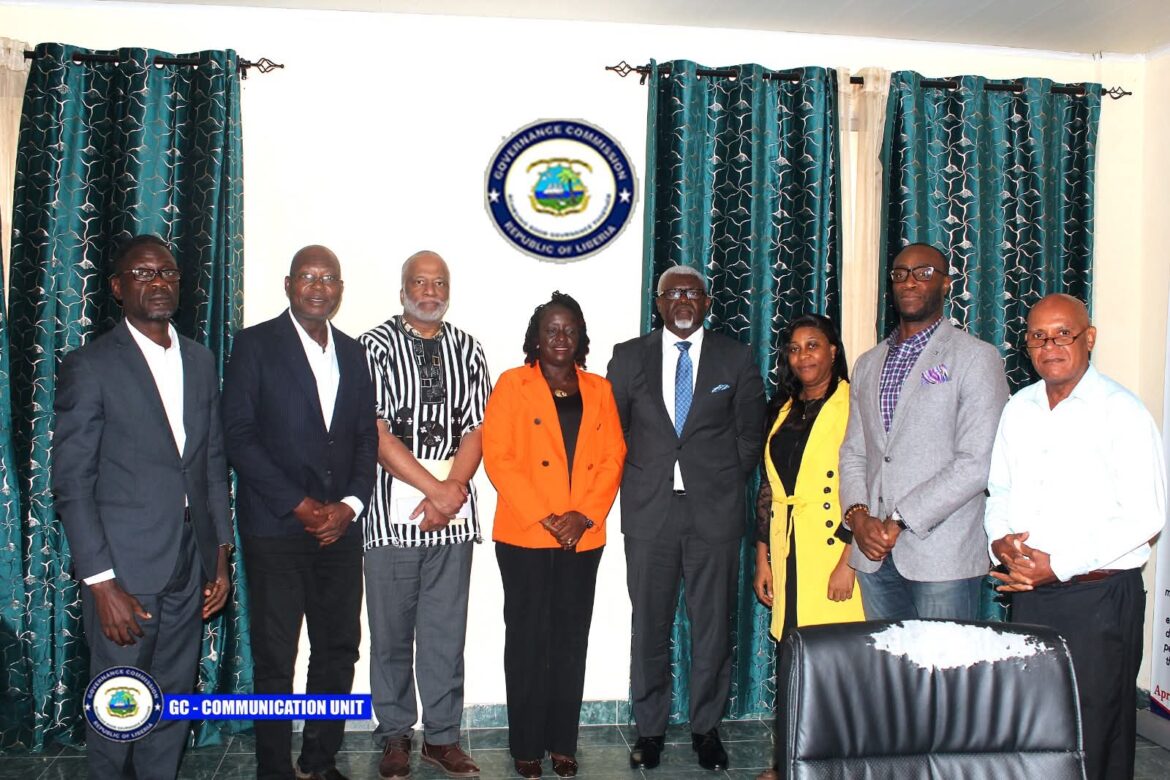
The Commission on Wednesday hosted a high-level planning meeting at its headquarters in Sinkor, bringing together Liberia’s 179th Independence Day National Orator, Dr. Herbert C. Brewer, Cabinet Director General Nathaniel Kwabo, and senior government officials to chart the way forward for the initiative.
The Liberia National History Project was first recommended by the Truth and Reconciliation Commission (TRC) in 2009 as part of efforts to document a more inclusive national history. The TRC argued that Liberia’s historical narrative had become fragmented, politicized, and incomplete, and called for a comprehensive account that reflects the experiences of indigenous communities, marginalized groups, and other stakeholders.
The project was formally launched in 2013 with support from UNESCO and the Liberian Government, with the Governance Commission serving as its lead implementing institution. During its initial phase, the Commission conducted nationwide and diaspora consultations, produced research on governance, demography, inequality, and constitutional reform, and promoted the use of history as a tool for peacebuilding.
However, the initiative stalled because of funding constraints, inconsistent government support, and limited institutional capacity, preventing the full development of educational materials and national history curricula.
The project was officially revived during Liberia’s 179th Independence Day celebrations in Buchanan, Grand Bassa County, under the theme, “Strengthening National Identity Through Liberian-Led Historical Leadership.”
In his Independence Day address, President Boakai called for the initiative to be led by qualified Liberian historians, archivists, archaeologists, anthropologists, linguists, and educators.
“The strongest nations are united by shared values, common purpose, mutual respect, and a deep sense of identity,” the President said, adding that Liberia’s national identity has been shaped by indigenous civilizations, the return of freed Africans from the Americas and the Caribbean, and enduring ties with the African diaspora.
To support the relaunch, the President announced plans to collaborate with international universities, libraries, and cultural institutions to repatriate historical records, modernize the National Archives and National Museum through digitization and expanded public access, restore the Kendeja Cultural Center as a national heritage hub, and establish an intergovernmental technical committee to oversee implementation.
At Wednesday’s meeting, Acting Governance Commission Chairperson Prof. Alaric K. Tokpa described the gathering as “a bold demonstration of political will and national commitment.”
Cabinet Director General Nathaniel Kwabo reaffirmed President Boakai’s commitment to the initiative, assuring participants of the Executive Branch’s full support for the project’s implementation.
Dr. Brewer also pledged continued collaboration with the Governance Commission and other stakeholders to ensure the project’s success.
Participants agreed to convene a National History Conference that will bring together historians, policymakers, academics, and civil society representatives to develop a roadmap for the project’s implementation.
The Governance Commission said the relaunch is intended to go beyond academic research by fostering national unity, strengthening Liberia’s identity, and promoting a deeper understanding of the country’s history.
Officials said the renewed initiative comes as Liberia approaches the centenary of major historical milestones, including the 1926 Firestone Concession Agreement and the Harvard African Expedition, presenting an opportunity for future scholarship to be increasingly led by Liberian researchers.
With renewed presidential backing and stakeholder engagement, the Commission said the project is positioned to move beyond years of stalled implementation and enter a new phase of preserving and documenting Liberia’s history.
