
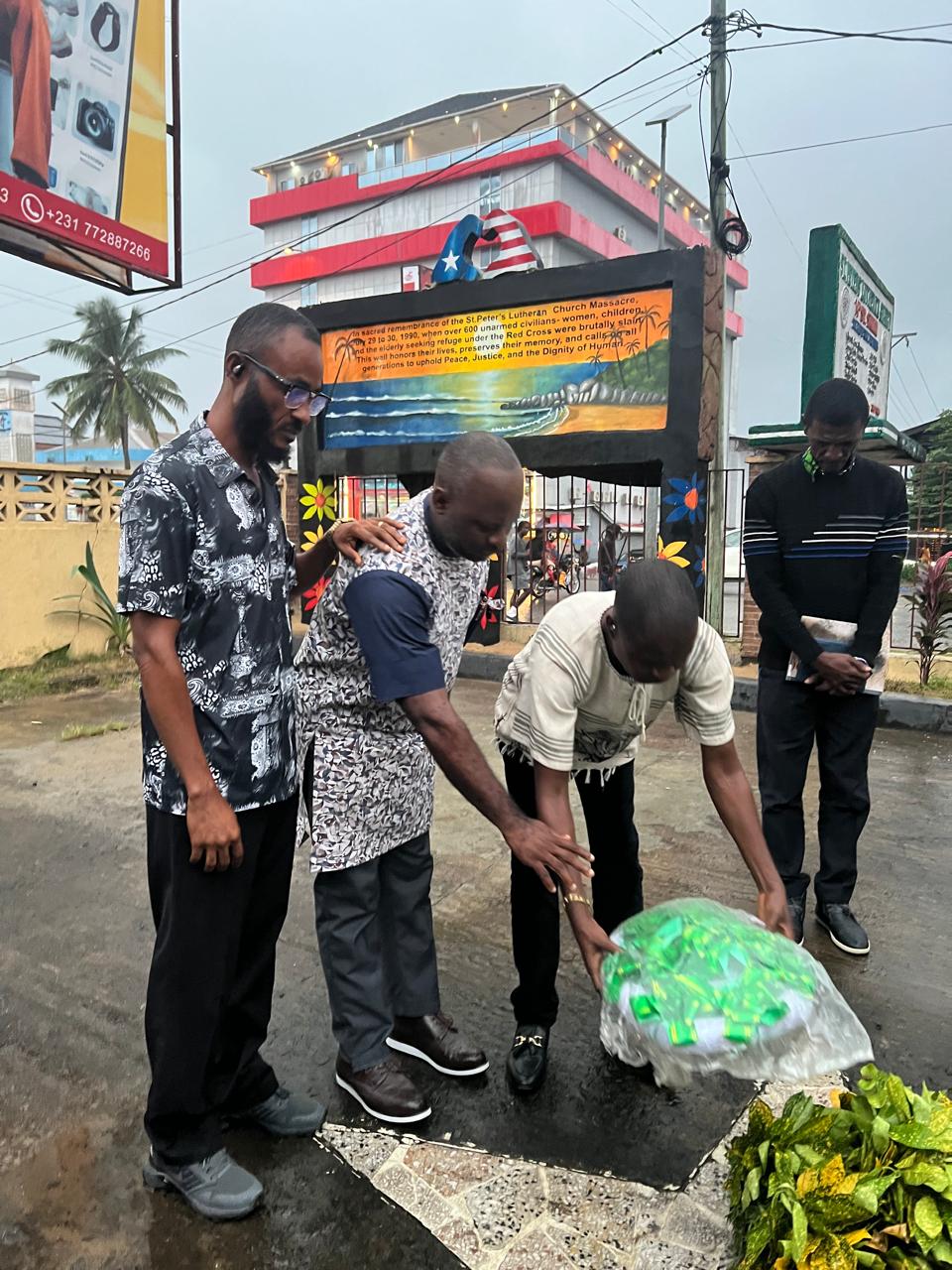
MONROVIA, Liberia, July 30, 2026 – The Office for the Establishment of the War and Economic Crimes Court for Liberia (OWECC-L) has renewed its call for justice, accountability, reparations, and national reconciliation as Liberia commemorated the 36th anniversary of the St. Peter’s Lutheran Church Massacre.
Speaking on behalf of OWECC-L Executive Director Dr. Cllr. Jallah A. Barbu during the memorial observance, Ms. Charelyn Mulbah of the institution’s War Crimes Division described the July 29, 1990 massacre as one of Liberia’s darkest chapters and paid tribute to the victims, survivors, and families who have waited decades for justice.
She said the proposed War and Economic Crimes Court is intended to promote accountability and healing rather than revenge.
“Justice delayed for thirty-six years cannot become justice denied forever,” Mulbah said on behalf of Dr. Barbu. “The War and Economic Crimes Court is not about revenge but about accountability, healing, and ensuring that victims and survivors finally receive the justice and dignity they deserve.”
Mulbah said the recent launch of the Civil War Memorial Photo Gallery represents an important step toward preserving the memory of victims, educating future generations, confronting denial, and ensuring that the atrocities committed during Liberia’s civil war are never forgotten.
She also called for a comprehensive reparations program to restore dignity to victims and survivors who continue to suffer the long-term effects of the conflict.
Drawing lessons from Rwanda’s post-genocide recovery, Mulbah said accountability, memorialization, reconciliation, and strong institutions are essential to achieving lasting peace and preventing future violence.
She renewed OWECC-L’s appeal to the Liberian Legislature to expedite passage of the War and Economic Crimes Court Bill and the National Anti-Corruption Court Bill, describing both measures as critical to ending impunity, strengthening democratic governance, and reinforcing the rule of law.
Mulbah also acknowledged the continued support of President Joseph Nyuma Boakai Sr., development partners, civil society organizations, victims’ groups, faith leaders, and other stakeholders involved in advancing Liberia’s transitional justice process.
The St. Peter’s Lutheran Church Massacre, which occurred on July 29, 1990, remains one of the deadliest atrocities of Liberia’s civil war. More than 600 unarmed civilians—many of them women, children, and elderly people seeking refuge in the church—were killed by soldiers of the Armed Forces of Liberia (AFL).
Also addressing the memorial service, Executive Director of the Lutheran Church Massacre Survivors Association (LUMASA), Marcus P. Quoigoah Sr., called on the Government of Liberia and its partners to prioritize the welfare of survivors.
Quoigoah said meaningful reconciliation cannot be achieved while survivors continue to suffer from untreated physical injuries, psychological trauma, poverty, and neglect.
He said survivors are seeking dignity, access to medical care, psychosocial support, meaningful reparations, and justice for the atrocities committed against them.
Quoigoah commended OWECC-L for its commitment to advancing accountability and encouraged the institution to maintain close engagement with victims and survivors throughout the transitional justice process.
Reaffirming LUMASA’s commitment to truth, justice, and remembrance, he urged survivors to continue sharing their testimonies, describing every account as an act of courage that preserves history and confronts denial.
Declaring, “We Survived to Change the Future,” Quoigoah called on Liberians to reject silence and indifference, support accountability and reparations, and ensure that the tragedy of July 29, 1990, is never repeated.
The memorial service brought together survivors, government officials, members of the diplomatic community, civil society organizations, religious leaders, development partners, and other stakeholders to honor the victims of the massacre and reaffirm Liberia’s commitment to justice, accountability, healing, and lasting peace.
