
By Lincoln G. Peters
MONROVIA, Liberia, July 30, 2026 – Executive Protection Service (EPS) Director Sam Gaye has defended the government’s decision to destroy more than US$336 million worth of seized cocaine, assuring former Vice President Jewel Howard-Taylor and the Liberian public that all legal procedures were followed before the narcotics were incinerated.
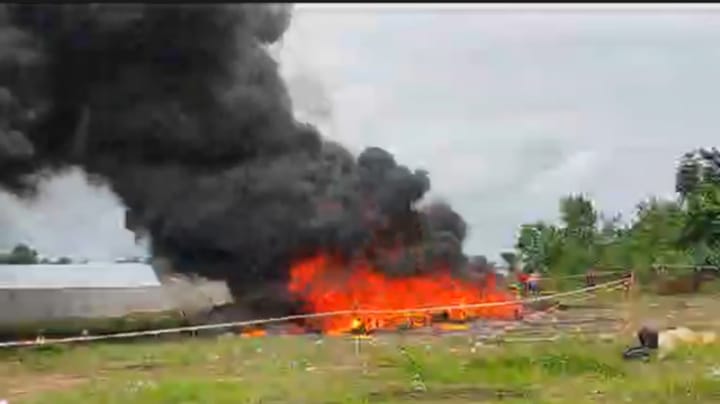
The government on Thursday destroyed the US$19 million cocaine shipment seized at Roberts International Airport (RIA) and the US$317 million consignment confiscated in Duazon, Margibi County, despite ongoing investigations into both cases.
Earlier on Thursday, Howard-Taylor issued a statement urging the government to ensure that all legal, forensic, and investigative requirements had been fully satisfied before destroying the seized narcotics.
She argued that, because investigations remain active, authorities should first assure the public that every legal and evidentiary requirement has been met.
“The premature destruction of evidence, without complete transparency regarding the legal procedures followed, risks undermining public confidence and could inadvertently weaken efforts to ensure that all those responsible are brought to justice,” Howard-Taylor said.
She urged the Government of Liberia, the Liberia National Police, the Liberia Drug Enforcement Agency, the Ministry of Justice, and other relevant institutions to ensure that any destruction of seized narcotics takes place only after all legal, investigative, and evidentiary requirements have been fulfilled.
Howard-Taylor also maintained that Liberia’s commitment to combating drug trafficking must not come at the expense of the rule of law and due process.
According to her, the public deserves assurance that all forensic examinations and laboratory analyses have been completed, sufficient samples have been preserved for future prosecution, the chain of custody has been fully documented and secured, and all individuals connected to the alleged criminal enterprise have been identified, investigated, and, where appropriate, charged.
“This case extends far beyond the seizure of illegal drugs. It concerns dismantling an organized transnational criminal network that reportedly used Liberia as a transit point,” she said.
“Every piece of evidence must therefore be preserved in a manner that protects the integrity of future prosecutions, whether in Liberia or through international cooperation. This is not a call to preserve illegal drugs indefinitely. Rather, it is a call to preserve justice.”
Responding to the former Vice President’s concerns, Gaye said the government strictly adhered to both Liberian law and internationally accepted procedures governing the destruction of narcotics.
“Madam Former Vice President, there are legal guidelines regarding the destruction of bulk drug evidence. The process was followed to the letter,” Gaye said.
“Representative samples were collected for presentation in court, and the court legally authorized the destruction pursuant to Liberian law and international best practices.”
Government officials have maintained that preserving representative samples for evidentiary purposes while destroying the bulk of the seized narcotics is consistent with established legal procedures and is intended to prevent the drugs from re-entering circulation while ensuring that prosecutors retain sufficient evidence for trial.
