
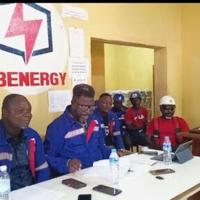
Power distribution company LIBENERGY has formally challenged the Liberia Electricity Regulatory Commission’s (LERC) newly approved electricity tariff, arguing that the revised pricing structure could undermine its financial sustainability and weaken its capacity to deliver reliable electricity services across southeastern Liberia.
The challenge comes just days after the Commission’s revised electricity tariff took effect on August 1, 2026, with LIBENERGY requesting that LERC reconsider key elements of the decision issued on July 6, 2026.
According to information released by LERC on August 1, LIBENERGY submitted its application for reconsideration on July 23, 2026, invoking Regulation 32(1) of the Electricity Tariff Regulations, which allows regulated electricity operators to seek a review of tariff decisions when they believe significant issues have not been adequately addressed.
In its application, LIBENERGY argued that the Commission’s revised tariff substantially reduces its primary source of operating revenue by lowering the energy charge while also reducing customer contributions toward electricity meter acquisition.
The company contends that these changes threaten its financial viability and could adversely affect its ability to recover operating costs, maintain distribution infrastructure, improve service reliability, and continue expanding electricity access to underserved communities.
LIBENERGY further argued that the Commission did not adequately consider the long-term financial implications of the tariff decision on the company’s operational sustainability.
Despite the appeal, LERC clarified that the application does not suspend or invalidate the tariff, which officially came into force on August 1 and remains legally binding unless amended by the Commission.
LERC Chairman Claude J. Katta described LIBENERGY’s application as part of the normal regulatory process established under Liberia’s electricity laws.
«”The filing of an application for reconsideration is a standard regulatory process provided for under the Electricity Tariff Regulations and does not in itself alter the Commission’s decision,” Katta said.»
He assured stakeholders that the Commission would evaluate the application objectively and in accordance with the law.
«”The Commission is carefully reviewing LIBENERGY’s application in accordance with its regulations and will reach a decision based on the evidence presented, while ensuring transparency, fairness, and the protection of the interests of electricity consumers and the sector as a whole,” he added.»
The tariff now under review followed months of technical analysis, stakeholder consultations, and regulatory assessment.
According to LERC, the revised three-year tariff is intended to make electricity more affordable for households and businesses while ensuring continued investment in Liberia’s expanding electricity sector.
Under the approved tariff, the energy charge was reduced by 12 percent, from US$0.25 per kilowatt-hour (kWh) to US$0.22 per kWh, a reduction expected to lower electricity bills for thousands of LIBENERGY customers across southeastern Liberia.
To help offset part of the resulting revenue reduction and finance improvements to the distribution network, LERC approved a US$1.50 monthly fixed charge. The Commission said the fee will support network reinforcement, routine maintenance, rehabilitation of distribution facilities, and improvements in the quality and reliability of electricity services.
LERC also significantly reduced the cost of connecting new customers to the electricity network.
The connection fee for new single-phase customers was cut from US$110 to US$40, representing a 64 percent reduction. The remaining US$70 cost of the connection package will be recovered gradually through the approved electricity tariff.
According to the Commission, the standard connection package includes one electricity meter, up to 25 meters of low-voltage cable, and all connectors required for a standard household installation.
The connection fee for new three-phase customers remains unchanged at US$330.
The dispute highlights the continuing challenge confronting electricity regulators in balancing consumer protection with the financial sustainability of electricity service providers.
While consumers generally welcome lower tariffs and reduced connection fees, electricity operators argue that tariff structures must generate sufficient revenue to cover operating expenses, maintain infrastructure, respond to technical faults, replace aging equipment, and finance future expansion projects.
Energy sector observers say the outcome of LIBENERGY’s application could have significant implications for Liberia’s electricity sector as the country seeks to expand electricity access, strengthen regulatory confidence, and attract greater private investment in power generation and distribution.
LERC has assured the public that it will conduct a thorough, transparent, and impartial review before issuing a final determination.
Until that review is completed, the tariff approved on July 6, 2026, remains fully effective and continues to govern electricity billing for all LIBENERGY customers.
The Commission reiterated its commitment to maintaining a transparent, predictable, and balanced regulatory framework that protects electricity consumers while ensuring the long-term financial sustainability of Liberia’s power sector.
The Commission’s eventual ruling on LIBENERGY’s application is expected to be closely watched by electricity consumers, businesses, investors, development partners, and policymakers, as it could influence future electricity tariff-setting and shape the next phase of Liberia’s ongoing energy sector reforms.
