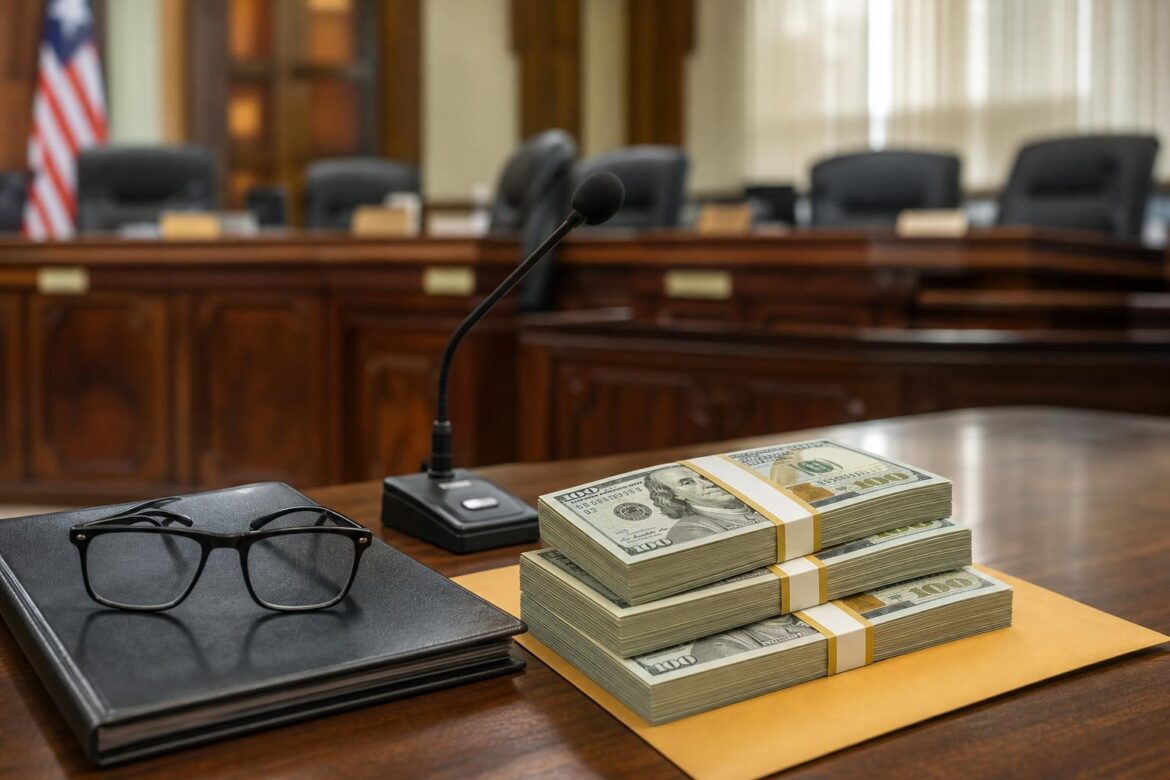
Concerns are mounting in Nimba County over the reported disbursement of US$10,000 to each county lawmaker under a budget line described as a “Legislative Engagement Fee” from the County Development Funds, with some citizens warning that the payments could undermine legislative oversight and weaken scrutiny of financial management within the county administration.
The controversy has emerged amid broader concerns over the management and implementation of the County Development Funds and the County Development Agenda (CDA), with citizens questioning whether lawmakers who receive money from the county administration can independently scrutinize the use of public resources in their respective constituencies.
Critics argue that providing lawmakers with direct financial allocations could create a conflict of interest, particularly because members of the Nimba Legislative Caucus are expected to exercise oversight over development activities and raise concerns about possible financial irregularities.
The controversy has also intensified because some residents believe the allocation is being used to support ongoing district-level football activities in the county.
The Nimba County Administration, however, has rejected suggestions that it independently created or distributed US$10,000 to lawmakers for football and has defended the expenditure as a lawful appropriation approved through the county’s established budget process.
In a statement responding to concerns from citizens, the office of Superintendent Kou Meapeh Gono said public accountability requires citizens to question government decisions, express their opinions, and demand explanations from public officials.
The Superintendent’s office said such discussions, however, must be guided by accurate information about how county budgets are developed, approved, and implemented under Liberia’s Local Government Act.
The county administration maintained that it did not independently create, withdraw, or distribute public funds to lawmakers for the purpose of supporting a football tournament.
Instead, it said the disputed allocation was approved through the county’s established budget process by the County Council, in consultation with relevant county governance structures, including the Legislative Caucus.
According to the county administration, the budget line was identified as “Legislative Engagement” or “Constituency Engagement” and was intended to strengthen the ability of lawmakers to monitor development projects and engage with communities within their constituencies.
“Under the Local Government Act,” the county leadership said, “county resources are appropriated through the legally established county budget process.”
The Superintendent’s office further explained that the county administration does not have the authority to unilaterally create budget lines or allocate public funds outside approved appropriations.
“The County Administration cannot unilaterally create budget lines or allocate funds outside of approved appropriations and its responsibility is to implement lawful decisions and resolutions approved through the county governance framework,” the statement said.
Defending the allocation, the county administration said the Legislative Engagement provision is comparable to other approved county budget lines supporting government functions and constituency-focused programs.
“The Legislative Engagement allocation is no different from other approved county budget provisions that support important county functions, including education, health-related interventions, and other constituency-focused programs,” the county leadership said.
The administration also sought to distance itself from decisions by individual lawmakers on how they use the funds.
It said that where a lawmaker chooses to dedicate part of his or her approved Legislative Engagement allocation to community activities, including sports, such a decision is within the discretion of the individual representative and should not be characterized as a direct funding decision by the County Administration.
However, some citizens remain unconvinced.
Residents contend that the disbursement could compromise the ability of lawmakers to independently question the county administration about financial decisions, particularly when lawmakers themselves are beneficiaries of county resources.
Some residents have also alleged that the money was specifically intended to enhance the ability of lawmakers to support district teams participating in the ongoing district football league in Nimba.
According to claims circulating in the county, some lawmakers have spent hundreds of thousands of Liberian dollars in connection with the competition.
The Superintendent’s office has rejected the characterization that it simply took US$10,000 from county development resources and handed the money to lawmakers for football.
“It is therefore important to correct the misconception that the Superintendent or the County Administration alone decided to take US$10,000 and give it to lawmakers for football,” the office said.
But the controversy has raised a broader question about the independence of lawmakers in exercising their constitutional and oversight responsibilities when they receive direct financial allocations through the county governance structure.
Citizens argue that lawmakers are expected to scrutinize development activities, question questionable expenditures, and provide impartial oversight over public resources within their constituencies.
They fear that accepting direct financial benefits from the same county structure they are expected to oversee could create an environment in which lawmakers become reluctant to challenge questionable decisions.
Some residents also claim that the practice appears to have occurred during successive budget years since the Unity Party-led administration took office, although the precise historical scope and amounts require further verification.
The Daily Observer has established that some lawmakers have distanced themselves from receiving the reported allocations.
Among them are Nimba County Senator Samuel Kogar and Representative Musa Bility, who have been publicly critical of aspects of the county administration’s development activities and have called for greater scrutiny, including an audit.
The controversy comes at a time when the credibility of the Nimba County Council itself is facing questions.
The County Council, initially composed of nine members, has reportedly been reduced to six following the departure of two civil society representatives and the dismissal of Chief Robert Sehneah as head of the Nimba Chief Council by the Minister of Internal Affairs.
The changes have generated questions among some citizens about the council’s current composition, independence, and capacity to provide effective oversight of county resources.
An elderly resident identified only as Mialor questioned the rationale behind providing lawmakers with such allocations.
“We thought that the central government gave the lawmakers budget for agriculture break so as to enable them carry on their oversight responsibility in their various constituencies,” Mialor said.
He questioned whether lawmakers can effectively perform their oversight duties if they are simultaneously receiving funds through the county administration.
The controversy over the Legislative Engagement allocation is now unfolding alongside a separate dispute in Lao Chiefdom, where questions are also being raised about the management of money generated from a scrap-metal transaction.
The amount involved is reportedly about US$20,000, although available accounts indicate that the funds were divided among different accounts and individuals associated with the chiefdom.
Some residents have accused stakeholders, including District Commissioner Jefferson Gondah and officials associated with the Nimba County Administration, of failing to provide sufficient information about the use of the proceeds.
The allegations have been denied.
One of the stakeholders, Ben Zomah, who was himself accused of involvement in handling the funds, denied managing the money but confirmed that the chiefdom had deposited approximately US$11,000 into a bank account, while about US$8,000 was reportedly placed with prominent community members.
Zomah explained that one of the scrap buyers, identified as Junior, brought US$5,000 to him.
He said he declined to handle the money and instead accompanied Junior to the office of Jefferson Saye Gondah, Commissioner of Meinpea Mah, where Lao is located.
According to Zomah, in his presence, US$1,700 was deducted from the US$5,000 as part of a reported 30 percent allocation intended for the Office of the Superintendent of Nimba.
He said communication was subsequently made with Nimba County Human Resource Officer Darius Vaye to take delivery of the money.
However, when contacted by the Daily Observer, Vaye denied having any knowledge of scrap-metal funds from Lao.
District Commissioner Jefferson Gondah also strongly rejected allegations that he had misappropriated development funds.
Gondah challenged anyone accusing him of using the money for personal purposes to provide evidence.
Other reported signatories to the account, including an individual identified as Chris Zogbay, declined to provide information when contacted by the Daily Observer.
The competing accounts have left unanswered questions about the collection, custody, disbursement, and utilization of the scrap-metal proceeds and have intensified calls from residents for greater transparency.
The two controversies — the reported US$10,000 Legislative Engagement allocations to lawmakers and the disputed management of scrap-metal proceeds in Lao Chiefdom — have placed renewed attention on financial accountability and oversight within Nimba County.
For critics, the central issue is not simply whether the expenditures were included in a county budget, but whether the mechanisms used to disburse and manage public resources are sufficiently transparent to prevent conflicts of interest and ensure independent oversight.
The County Administration insists that its actions were undertaken within the established county governance and budgetary framework.
Citizens, meanwhile, are calling for greater disclosure of the relevant budget documents, expenditure records, beneficiaries, and decisions of the County Council to establish how the funds were approved and ultimately used.
With questions continuing to emerge over the Legislative Engagement allocations, the composition of the County Council, and the management of the Lao scrap-metal proceeds, demands for a comprehensive and independent review of Nimba County’s financial management are growing.
The investigation continues.
See more Liberia News Network stories in Google Search by adding LNN as one of your Preferred Sources.
★ Add LNN as a Preferred Source