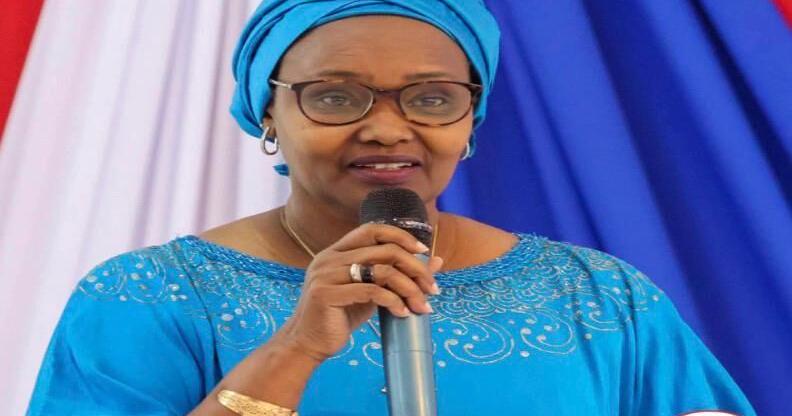
United Nations Resident Coordinator and Deputy Chair of Liberia’s ARREST Agenda for Inclusive Development (AAID) National Steering Committee, Christine N. Umutoni, has warned that Liberia must fundamentally change the way it finances national development, urging the country to compete for investment rather than remain dependent on dwindling traditional development assistance.
Umutoni said Liberia’s development environment is changing rapidly as traditional donors reassess their priorities and official development assistance declines, making it increasingly necessary for the country to mobilize domestic resources, attract private investment and deploy innovative financing mechanisms to fund development at scale.
She made the call Tuesday, August 11, 2026, at the National Steering Committee meeting of the AAID, Liberia’s 2025–2029 national development plan, held at Monrovia City Hall under the theme, “Consolidating AAID Gains, Accelerating Implementation into Measurable and People-Centered Outcomes.”
The meeting brought together senior government officials, development partners, civil society representatives, private-sector stakeholders and other actors to assess progress under the AAID and discuss measures to accelerate implementation and deliver measurable results for Liberians.
Umutoni said the meeting marked an important transition from planning to implementation, stressing that the success of the national development agenda must ultimately be measured by tangible improvements in the lives of citizens.
“If the first Steering Committee was about launching the National Plan, today’s meeting is about implementation and results,” Umutoni said. “It is an opportunity to take stock of progress, identify lessons, address bottlenecks and reaffirm our collective commitment to delivering for the Liberian people.”
She commended President Joseph Nyuma Boakai and the Government of Liberia for maintaining what she described as an inclusive development partnership involving government institutions, development partners, civil society, the private sector and other stakeholders.
According to Umutoni, that partnership remains one of Liberia’s major strengths, but she cautioned that partnerships alone will not deliver the transformation envisioned under the AAID without stronger institutions, accountability and effective implementation.
“We are already seeing encouraging signs that the AAID is translating from vision into action,” she said.
She pointed to progress in development planning, service delivery at the community level, decentralization and efforts to mobilize domestic resources around national priorities.
However, Umutoni said Liberia must now move beyond fragmented interventions and small-scale projects and begin concentrating resources on investments capable of transforming the country at scale.
“The message at this stage of implementation is clear: the focus must now be on transformation at scale,” she declared.
At the center of her message was the changing nature of international development financing.
Umutoni said Liberia can no longer assume that traditional development partners will provide the level of assistance that has historically supported major areas of the country’s development agenda.
“The development model is changing,” she said. “Official development assistance is declining, traditional donors are recalibrating, and development relationships are becoming more strategic, investment-oriented and increasingly focused on results. Countries are competing not only for dwindling aid, but for investment. Liberia must adapt.”
She said the shift should force Liberia to rethink the traditional approach of waiting for external partners to finance development programs.
Instead, she urged the country to transition from “funding development to financing development” by creating an environment in which different forms of capital can be mobilized around nationally determined priorities.
“The question can no longer be only, ‘Who will fund the development programs?’ It must increasingly be: ‘How do we structure these development programs so different sources of capital can finance them?’” Umutoni said.
She identified domestic resource mobilization, climate finance, private investment, innovative financing instruments and stronger partnerships as key components of the financing model Liberia needs to build.
Umutoni specifically highlighted the proposed Integrated National Financing Framework and Development Cooperation Policy being advanced by the Ministry of Finance and Development Planning.
She said the initiatives could provide an important foundation for building a new architecture for financing Liberia’s development priorities.
According to Umutoni, such a framework could bring government, development partners, international financial institutions, investors, foundations, private-sector actors and the Liberian diaspora around clearly defined national priorities.
Rather than approaching development financing through isolated projects and individual funding arrangements, she said Liberia should develop a coordinated financing strategy capable of attracting different categories of capital toward projects with the greatest potential economic and social impact.
Umutoni also called for a shift “from small projects to flagships,” urging the government and its partners to identify nationally owned, catalytic investments capable of changing Liberia’s development trajectory.
She said priority areas should include human capital development, economic transformation, food systems, digital transformation and climate resilience.
“Together, we should identify a number of nationally owned flagship investment cases; catalytic and capable of changing Liberia’s development trajectory,” she said.
The UN Resident Coordinator argued that Liberia possesses several assets that could make it more competitive in the global investment environment.
She identified the country’s young population, natural resources, strategic geographic location, peace and democratic resilience as important components of Liberia’s investment proposition.
“Liberia should be open for business, and the world should know it,” Umutoni declared.
“These are not simply national attributes. They are part of Liberia’s investment proposition,” she added.
She said Liberia must therefore become more deliberate in presenting itself internationally as a destination for responsible investment, rather than being viewed primarily through the lens of aid and development assistance.
According to Umutoni, the country’s international profile also presents opportunities that can be leveraged to attract new partnerships and investment.
She cited Liberia’s membership of the United Nations Security Council as an opportunity to strengthen the country’s international visibility and present a different narrative about Liberia as an African nation that emerged from conflict, sustained peace and democratic resilience.
She said Liberia should use that reputation to attract investors and development partners interested in supporting long-term economic transformation.
But Umutoni cautioned that investment cannot be attracted and sustained simply through natural resources, geographic advantages or international visibility.
She said strong institutions and good governance must form the foundation of Liberia’s new development-financing model.
“None of this can be sustained without transparent, accountable and capable institutions that give citizens confidence, investors certainty, and Government the capacity to deliver,” she said.
She stressed that investors need confidence that public institutions can provide predictability, transparency and accountability, while citizens must be assured that development investments are being managed in the public interest.
For Umutoni, institutional capacity is therefore inseparable from Liberia’s ability to compete for investment.
She also placed Liberia’s young population at the center of the country’s development strategy, describing young Liberians as the country’s greatest asset.
She said investments in education, skills development, employment, healthcare, economic empowerment and digital inclusion could transform Liberia’s demographic structure into a powerful engine of economic growth.
A large and productive young population, she argued, could provide the workforce, entrepreneurial capacity and consumer market needed to support economic transformation if the necessary investments are made.
But without adequate investment in skills, employment and economic opportunities, she warned, the country could fail to fully benefit from its demographic advantage.
Umutoni said Liberia must therefore ensure that its development financing model is designed not only to build infrastructure but also to invest in people and create opportunities that enable citizens to participate meaningfully in the economy.
Her remarks also placed emphasis on implementation.
She said the AAID has moved beyond the stage of being simply a national planning document and must now demonstrate concrete results at the community level.
“If the first Steering Committee was about launching the National Plan, today’s meeting is about implementation and results,” she reiterated, stressing the importance of tracking progress and addressing bottlenecks.
She outlined three major priorities for the next phase of implementation.
First, she called for accelerated delivery so that every county and community can begin to see tangible improvements from the national development agenda.
Second, she urged Liberia to strengthen the transition from traditional development funding toward a broader financing model capable of mobilizing domestic and international capital.
Third, she called for deeper accountability and partnerships through regular reviews of AAID implementation, including National Steering Committee meetings and the Government-Development Partners Retreat.
Umutoni said these mechanisms would be important for ensuring that progress is measured, challenges are identified early and corrective measures are taken where implementation falls behind.
She emphasized that the AAID’s success will depend on sustained collaboration between government, development partners, the private sector, civil society and citizens.
The UN Resident Coordinator commended development partners for their continued support to Liberia but encouraged them to increasingly align their programs and resources with the country’s national priorities.
She also stressed the importance of creating stronger links between development cooperation and investment, arguing that partnerships should increasingly support initiatives capable of generating sustainable economic and social returns.
Her call comes as Liberia faces growing pressure to finance ambitious development priorities within a constrained fiscal environment and amid changes in the global development-financing landscape.
For decades, Liberia has relied heavily on grants and concessional assistance from international partners to support infrastructure, healthcare, education, agriculture, governance and other sectors.
Umutoni’s message suggests that the country must now develop a broader financing ecosystem that reduces vulnerability to changes in donor priorities while increasing Liberia’s capacity to attract investment and mobilize its own resources.
The proposed Integrated National Financing Framework and Development Cooperation Policy could play a central role in that transition by helping the government identify financing gaps, match development priorities with appropriate sources of capital and coordinate the contributions of public and private actors.
Umutoni said Liberia’s objective should not simply be to replace one source of financing with another, but to create a diversified and sustainable financing system that can support development over the long term.
She said the country must become more strategic about the way it packages projects, demonstrates their potential returns and creates conditions that allow investors and other financing partners to participate.
The approach, she argued, should prioritize nationally owned investments capable of producing broad economic and social benefits rather than numerous disconnected projects with limited impact.
She also emphasized that transparency and accountability must remain central to the process.
Without credible institutions, reliable information and effective public financial management, she said, Liberia could struggle to attract the scale of investment required to transform its economy.
Umutoni therefore urged the government to continue strengthening institutions while simultaneously improving the country’s investment proposition.
She said Liberia’s peace and democratic resilience provide a foundation on which a more competitive economy can be built, but that foundation must be supported by effective institutions, skilled citizens, infrastructure and predictable policies.
Ultimately, Umutoni said Liberia’s development prospects should not be measured by the amount of aid it receives but by the strength of the institutions it builds and the investment and opportunities it is able to generate.
“Liberia’s future will not be determined by the amount of aid it receives,” she said. “It will be determined by the institutions it builds, the people it empowers, the investment it attracts, and the opportunities it creates.”
“The next journey must be from peace to prosperity,” Umutoni added, reaffirming the United Nations and its partners’ commitment to supporting Liberia along that path.
The AAID, launched in January 2025, serves as Liberia’s current national development framework for advancing inclusive and sustainable growth and translating national priorities into measurable development outcomes.
See more Liberia News Network stories in Google Search by adding LNN as one of your Preferred Sources.
★ Add LNN as a Preferred Source