By Socrates Smythe Saywon | Smart News Liberia
MONROVIA – The Central Bank of Liberia has raised fresh concerns over the health of the country’s banking sector, warning that a sharp rise in non-performing loans is beginning to constrain credit access and could undermine economic growth.
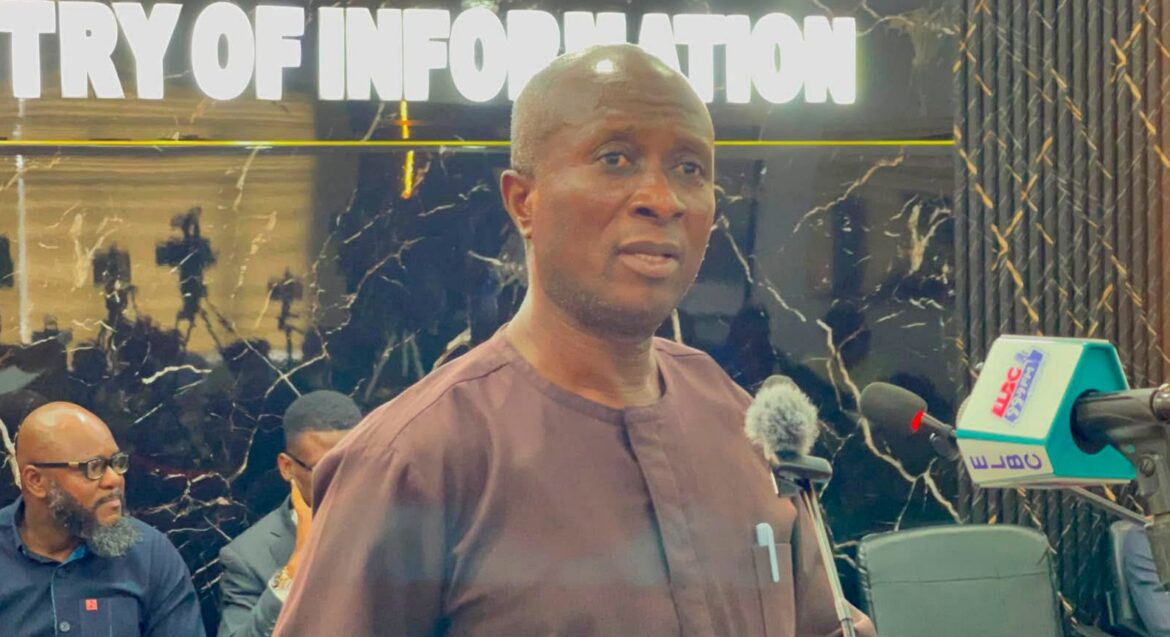
Musa Kamara, Senior Technical Advisor to the Governor of the Central Bank of Liberia, disclosed Thursday, August 13, 2026, that non-performing loans currently stand at approximately 12.87 percent, representing about US$71 million in troubled credit.
Kamara made the disclosure during the Ministry of Information’s press briefing, where he warned that Liberia’s current level of bad loans is significantly above what is considered acceptable under international banking practices.
According to him, non-performing loans should average around 5 percent under best international practices. Liberia’s rate, therefore, stands more than twice that benchmark, raising concerns about the ability of commercial banks to continue providing adequate financing to businesses and other borrowers.
The Central Bank official said the growing volume of bad loans is creating a cycle that could further weaken economic activity.
“As these bad loans grow, banks become reluctant to lend, denying growing businesses access to new credits,” Kamara said.
The warning is significant for an economy where access to affordable credit remains a major challenge for businesses, particularly small and medium-sized enterprises seeking financing to expand operations, create jobs and increase production.
When banks accumulate a high volume of loans that are not being repaid as agreed, their willingness to extend new credit can decline. Financial institutions may become more cautious, tighten lending requirements and demand stronger collateral, making it increasingly difficult for businesses without substantial assets to secure financing.
The situation could consequently create a damaging feedback loop: businesses struggle to access credit, investment and expansion slow, economic activity weakens, and borrowers may face greater difficulty generating the income needed to service existing loans.
Kamara’s disclosure also raises questions about the underlying causes of the increase in non-performing loans and whether the country’s financial institutions have sufficient mechanisms to identify, manage and recover troubled debts.
The 12.87 percent figure means that Liberia’s banking sector is operating substantially above the cited 5 percent benchmark, placing greater pressure on banks to strengthen credit assessment, loan monitoring and recovery mechanisms.
For policymakers, the challenge now extends beyond protecting individual banks. A prolonged deterioration in loan quality could affect the broader economy by restricting the flow of financing needed for private-sector growth.
The Central Bank’s warning therefore puts renewed focus on the need for stronger financial-sector supervision and effective measures to address distressed loans before they become a deeper constraint on economic activity.
With approximately US$71 million already classified as non-performing, the issue is no longer simply a banking-sector concern. It represents a potential obstacle to businesses seeking capital and, ultimately, to Liberia’s broader economic recovery.
The Central Bank’s message is clear: unless the rising volume of bad loans is brought under control, Liberia risks having banks that are increasingly unwilling to lend at precisely the time businesses need greater access to credit to expand and drive economic growth.
See more Liberia News Network stories in Google Search by adding LNN as one of your Preferred Sources.
★ Add LNN as a Preferred Source