
MONROVIA, August 21, 2026 — University of Liberia President Dr. Layli Maparyan has outlined a three-phase plan for the ongoing renovation and modernization of the university’s Capitol Hill campus, as the institution moves to address years of deteriorating infrastructure.
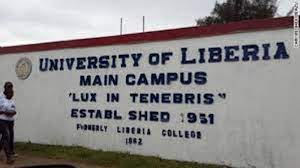
The University of Liberia traces its origins to Liberia College, which was established by the government in 1851 and opened in 1862. More than 160 years later, some of the institution’s aging facilities have fallen into deplorable condition, creating concerns about the learning environment.
The university has faced longstanding infrastructure challenges, including deteriorating buildings, damaged ceilings, leaking roofs, inadequate sanitation facilities and poorly equipped laboratories.
Over the years, student groups have repeatedly called for improvements to the campus, but many of the facilities have remained in poor condition.
In August, the university received approximately US$900,000 of the US$6.3 million allocated for the renovation and modernization of its campuses, with additional funding expected to be released by the government.
Renovation work began this week following an announcement by President Joseph Nyuma Boakai directing that rehabilitation of the university’s facilities begin immediately.
Speaking Thursday, August 20, 2026, at the Ministry of Information’s regular press briefing in Monrovia, Dr. Maparyan said the renovation program will be implemented in three phases.
She said the first phase will focus on addressing urgent infrastructure problems, including leaking roofs and non-functioning bathrooms.
The second phase, according to her, will involve creating temporary “swing spaces” to accommodate students while major renovation work is carried out on existing facilities.
“The third phase will involve the full-scale renovation and modernization of the university’s buildings and facilities to make them more conducive to teaching, learning and research,” Dr. Maparyan said.
She disclosed that the government has allocated US$6.3 million in the FY2026 National Budget for infrastructure renovation and modernization at the university.
Dr. Maparyan emphasized that modernization goes beyond painting and repairing buildings, saying the institution must also upgrade its electrical and energy systems to support digitally empowered education.
She said the university is also developing plans to modernize its science laboratories, particularly in science, technology, engineering and mathematics, or STEM, disciplines.
Meanwhile, Dr. Maparyan disclosed that the university is developing a solar-powered student utility park at its Fendall campus. The project is expected to include 26 new bathrooms and a student center equipped with internet service and 24-hour device-charging facilities.
She said the infrastructure improvements form part of the University of Liberia’s broader drive to improve academic standards and position itself among Africa’s top 300 universities.
