Published: August 23, 2026
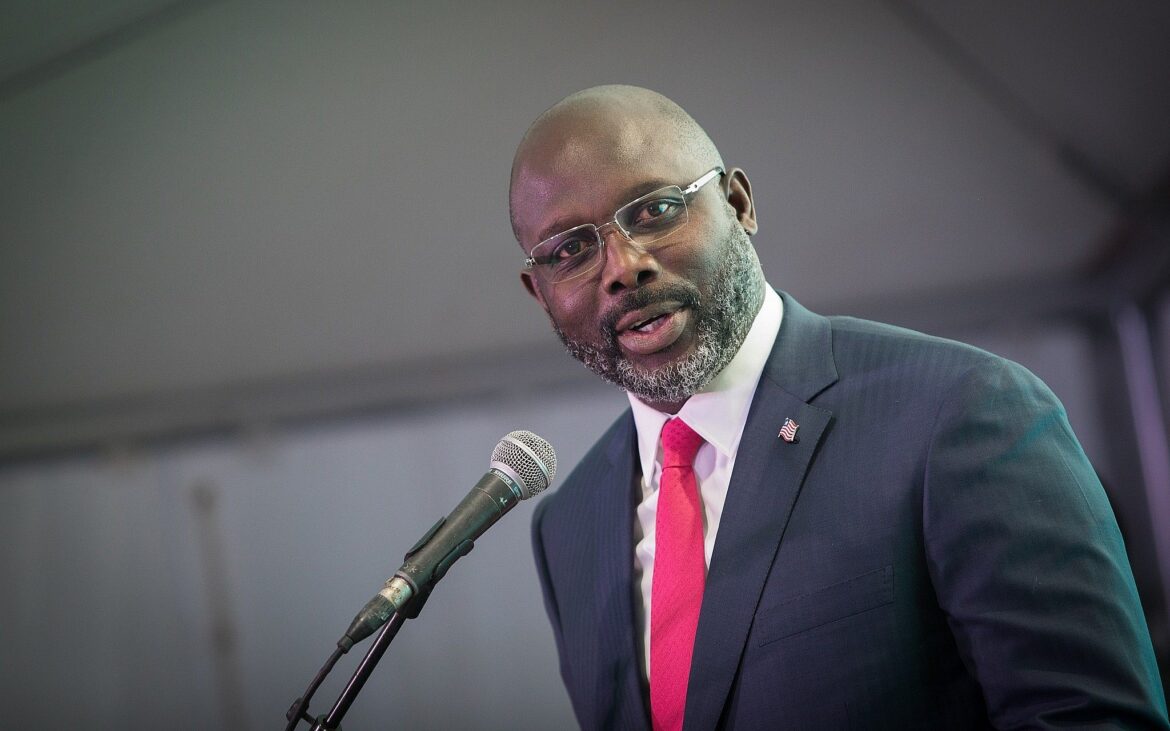
MONROVIA – Elected presidents in West Africa are sliding into dictatorship by bending courts to their will and reducing legislatures to echo chambers, former President George Weah told Africa’s largest bar association on Sunday, warning that a leader who takes office through a clean ballot can end up governing no differently than the soldiers who seize power at gunpoint.
Weah delivered the warning during a keynote address at the 66th Annual General Conference of the Nigerian Bar Association in Port Harcourt, Rivers State, an assembly he described as comprising more than 150,000 members. The conference theme was “Beyond Limits.”
“A tyrant with a certificate of return is still a tyrant,” Weah said.
He placed that line at the center of a passage arguing that the more serious threat to democracy in the region is not the coup but the incumbent who was legitimately elected.
“The danger is not only that soldiers might seize power in the night, or that a defeated candidate might refuse to leave office. It is also that a leader who arrives in office through a free and fair election can, over time and often gradually, begin to govern like the very dictators the ballot was meant to guard against — leaning on the judiciary until it bends to his will, and strong-arming the legislature until it becomes an echo chamber rather than a check on his power,” Weah said.
“Democracy, properly understood, does not end on election night. It is tested every single day afterward, in how power treats the courts and the parliament that exist to restrain it.”
Weah named no country and no sitting government. He did, however, list what he called the mechanics of the erosion.
“This danger does not only come from the coup-makers who seize power in the night. It also comes from governments that call themselves democratic — through budgets manipulation, wrong appointments, and pressure on judges, and deciding that courts should be a convenience rather than a check,” he said.
“We have seen nations where a judiciary’s own budget must first pass through the executive it is meant to hold accountable. We have seen special courts created not to deliver justice but to secure political outcomes, and dozens of judges dismissed in a single stroke by presidential decree. And we have seen, across our region since 2020, an unsettling pattern of soldiers stepping over constitutions altogether.”
The former Liberian president told the Nigerian lawyers that no country in the region, including his own, should assume it is protected.
“I raise these examples because this Bar to which you belong and have gathered here in your thousands, cannot afford to assume that Nigeria, or Liberia, or any of us, is somehow immune,” he said. “A court’s decision must mean what it says, without anyone’s political permission — it is what protects a nation from sliding, gradually but progressively, into the very conditions we condemn when soldiers do it with guns.”
He cast the bar association itself as a political actor with an obligation to speak.
“The Nigerian Bar Association is not merely a professional association negotiating welfare for its members. You are a standing sentinel of this Republic’s democracy,” Weah said. “When the Bar is silent, courts become easier to be captured. When the Bar speaks with one voice, as guardians of the bench, the executive branch think twice before even dreaming of interference.”
He quoted the association’s outgoing president, Mazi Afam Osigwe, in support of the argument, saying he had come across the remark while preparing his address.
“Democracy cannot survive on strong men. It survives on strong institutions,” Weah quoted Osigwe as saying. Weah said the sentence “deserves to be written above the door of every parliament and every courtroom in West Africa.”
On the rule of law, he said the test is whether ordinary citizens are covered by the same protections as officials.
“The rule of law is not an abstract phrase for law school lecture halls. It is the practical guarantee that a citizen’s rights do not depend on who is in office or what favor they can secure — that a journalist, a trader, or a student in Port Harcourt, Monrovia, or Bamako has the same protection under the law as a minister or a general,” he said. “The moment that guarantee weakens, everything else in a nation weakens with it: investment, security, public trust, and peace itself.”
Weah returned to his own exit from power in 2023, saying he conceded the run-off before the final count was announced and against advice from people around him.
“In November 2023, when the early, provisional results of our run-off election made clear which way our country had voted, I did not wait for the count to be completed or for the final results to be formally announced before I picked up the telephone to congratulate my successor,” he said.
“There were those around me who suggested patience — who argued that a sitting president owes it to himself to contest every figure until the very last vote is certified. I chose otherwise. I chose to concede while the counting was still underway, because I have always believed, and still believe, that the will of the people must stand above the ambition of any one man in a democratic setting. Once elections do not follow democratic precepts, it is very dangerous for the peace and security of a country.”
He said the association’s invitation cited that decision, and he thanked it for the recognition.
The second half of the address turned to what Weah called brain circulation, arguing that African professionals abroad should be organized into national reform work rather than written off as brain drain. He said the African diaspora sends home more than 100 billion United States dollars a year in remittances, “more than the foreign aid and investment Africa receives combined,” and asked the lawyers to imagine that capacity “formally invited into legal reform and judicial modernization, as a deliberate national strategy.”
He set out five values he said allow individuals and institutions to exceed what is expected of them: discipline, hard work, respect, perseverance and spiritual strength.
“Discipline is the bridge between goals and accomplishment,” he said. “In football, talent without discipline gets you benched, or cut from the team entirely. In the law, brilliance without discipline leads to compromised justice.”
“There are no elevators to success — you must take the stairs,” he said.
Weah told the lawyers that the measure of the profession is whether it defends the law when the law is under pressure.
“The true measure of a lawyer is not how many cases you have won, how many titles you hold, or how much you earn. It is this: when the country needs courage, do you have the courage to stand? When justice needs a voice, will you give it one? And when the law itself is threatened, will you go beyond every limit to defend it?” he said.
“The law must never be an instrument of chaos. It must never become a weapon of war. It must remain what it was always meant to be: an instrument of remedy, of peace, of unity, and of accountability.”
See more Liberia News Network stories in Google Search by adding LNN as one of your Preferred Sources.
★ Add LNN as a Preferred Source