
By Bridgett Milton
MONROVIA, August 25, 2026 — The Civil Society Human Rights Advocacy Platform of Liberia has intensified calls for the abolition of the death penalty, disclosing that a proposed amendment seeking to remove capital punishment from Liberia’s laws has been drafted and submitted to President Joseph Nyuma Boakai.
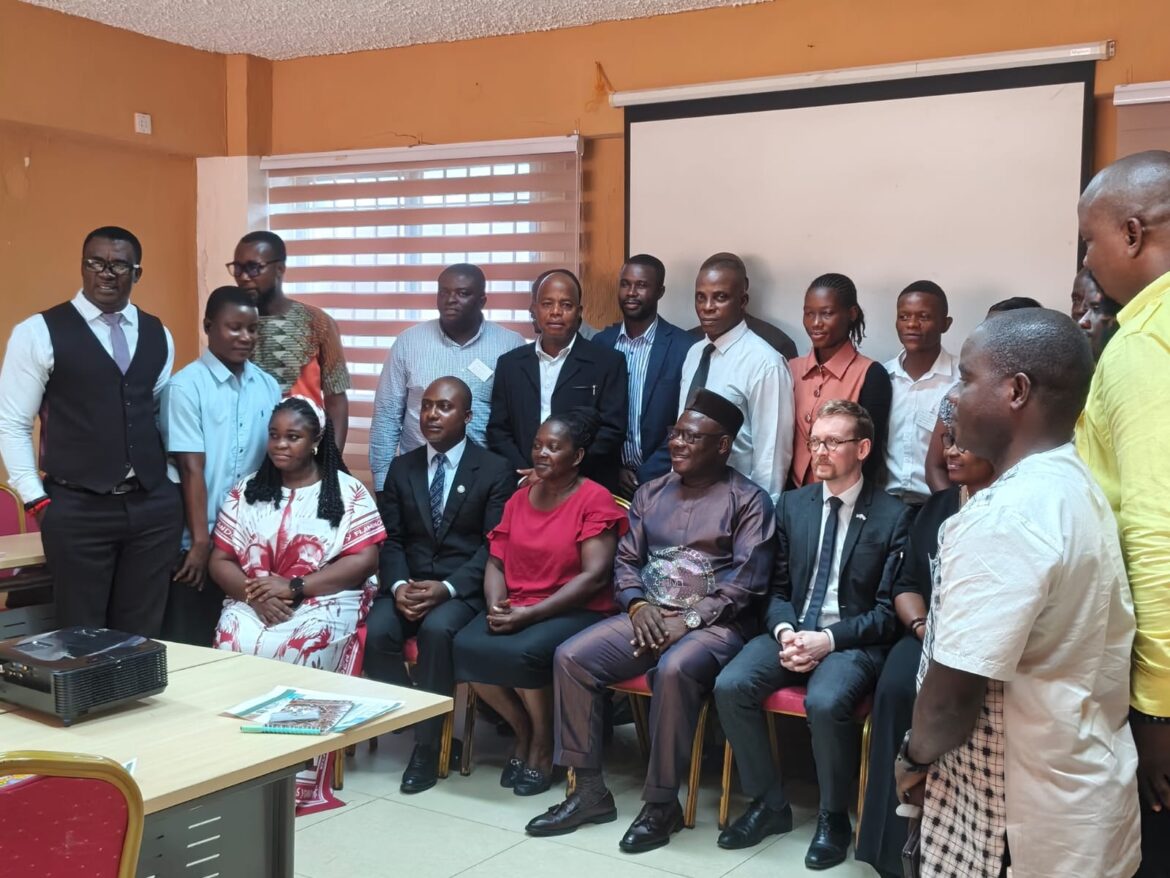
The disclosure was made Tuesday by Adama Dempster, Secretary General of the Civil Society Human Rights Advocacy Platform, at the opening of a two-day media training on the National Advocacy for the Abolition of the Death Penalty in Liberia.
Dempster said the proposed amendment was developed in collaboration with the Law Reform Commission, Liberia National Bar Association, Ministry of Justice, United Nations and other international development partners.
He said the next phase of the campaign will involve engagements with members of the National Legislature, where any proposed legal changes would ultimately have to be considered.
Dempster explained that the two-day training is intended to equip selected journalists with information on international policies, legal instruments and lessons from global campaigns against capital punishment.
He said experiences shared at the World Congress Against the Death Penalty in Paris reinforced arguments by abolition advocates that capital punishment has not been proven to reduce crime.
“Capital punishment has not been proven to reduce crime. Killing somebody cannot change society,” Dempster said.
The renewed campaign comes amid debate over whether Liberia should retain or expand the application of capital punishment, particularly as the country confronts major drug-trafficking cases and growing concerns over the use of illicit substances.
Also speaking, Press Union of Liberia President Julius Kanubah said the media has a critical role to play in shaping public understanding and facilitating informed debate on the death penalty.
Kanubah said the issue has gained renewed relevance following recent calls by former House Speaker Bhofal Chambers for people convicted of drug trafficking to face the death penalty amid Liberia’s ongoing fight against cocaine, kush and other dangerous substances.
“The media is the watchdog, educator and mobilizer capable of keeping the abolition debate in the national spotlight through investigative reporting, editorials, talk shows and public education,” Kanubah said.
He urged journalists to humanize their coverage by examining cases involving wrongful convictions, marginalized defendants and families affected by capital punishment.
Kanubah also called on the media to closely monitor government commitments, legislative proceedings and judicial practices surrounding the death penalty.
For his part, British Ambassador to Liberia Paul Simister reaffirmed the United Kingdom’s opposition to the death penalty in all circumstances, describing the position as a matter of principle.
Ambassador Simister praised the Liberian media for its role in promoting accountability and informed public discussion, while emphasizing the importance of a free, professional and responsible press in a democratic society.
He urged journalists covering the death penalty debate to maintain high professional and ethical standards, noting that capital punishment remains an issue that generates strong emotions and deeply held views.
The campaign by civil society groups is expected to shift increasingly toward the Legislature as advocates seek legal changes that would formally abolish capital punishment in Liberia.
