
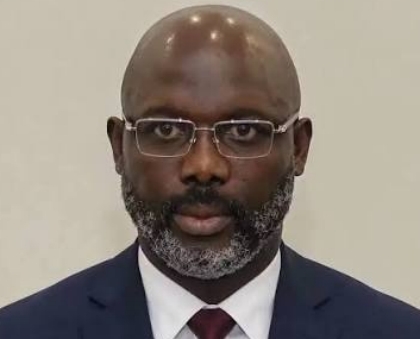
Barely two days after a euphoric homecoming carried former President George Manneh Weah from Roberts International Airport into Monrovia on a river of red and white, the opposition’s attention has turned from the roar of the crowd to a quieter and weightier test: a Roundtable of Opposition Political Leaders that Weah has convened for this weekend at the Jamaica Resort in Paynesville. Coordinated by former Foreign Minister Dee-Maxwell Kemayah and chaired by Weah himself, the gathering is expected to weigh the cocaine scandal, hardship and governance before confronting the question that has defeated the opposition for a generation — unity. Who attends, and how their partisans behave, may shape the road to 2029, as THE ANALYST reports.
Monrovia: Fresh from a homecoming that demonstrated his continuing command of Liberia’s largest opposition constituency, former President George Manneh Weah is preparing to sit with other opposition leaders at Jamaica Resort on Saturday, September 5, 2026. The meeting will test whether the excitement surrounding his return can be converted into something more durable than crowd size, political slogans and shared criticism of President Joseph Nyuma Boakai’s administration.
With opposition figures divided by ambition, history and mistrust, pundits say the gathering must confront an uncomfortable question: can leaders who agree about the government’s failures also agree on a credible national alternative? Jamaica may produce the beginning of opposition cooperation, but only if the participants resist premature coronation, personal grandstanding and the familiar struggle over who must lead.
Mid this week, the political story was written along the Robertsfield Highway, where thousands of Liberians poured into the streets to welcome Weah home. They sang, danced and transformed the former president’s arrival into a striking demonstration of political strength.
Some in the crowd repeated a refrain that has since travelled across radio talk shows and social media: “Sorry, George Weah, we made a mistake in 2023.”
Whether the confession represented a broad electoral realignment or the emotion of a carefully mobilized partisan base remains open to debate, but the size and intensity of the welcome cannot reasonably be dismissed.
By Saturday afternoon, however, the roadshow will give way to a different political setting. The cheering crowd will be replaced by a conference table, and Weah will have to deal with political leaders who may respect his following without accepting his authority over them.
That transition—from commanding a crowd to negotiating with equals—will define the Jamaica retreat. It is also the point at which opposition enthusiasm must either mature into political organization or retreat into another round of competing speeches.
From Popularity to Political Architecture
The Roundtable of Opposition Political Leaders is expected to take place at 3 p.m. at Jamaica Resort in Paynesville. Coordinated by former Foreign Minister Ambassador Dee-Maxwell Saah Kemayah, the meeting is being convened under Weah’s leadership to discuss the state of the nation, the economy, governance, Liberia’s worsening drug crisis and the possibility of opposition cooperation.
On paper, there is nothing unusual about opposition leaders meeting to discuss national issues. Liberia has witnessed countless political consultations, declarations, alliances, mergers and memoranda of understanding, many of which collapsed as soon as the question of leadership entered the room.
What makes Saturday’s meeting different is the moment in which it is being held. The Boakai administration is under pressure over allegations of selective justice, public frustration about economic conditions and a cocaine-trafficking scandal that has raised questions about the integrity of the country’s security institutions.
The opposition therefore has a powerful narrative around which it could organize. Yet a narrative of government failure, however forceful, does not automatically become a programme for national renewal.
If the Jamaica gathering produces only another catalogue of accusations against the administration, it will add little to what Liberians already hear daily.
The real test is whether opposition leaders can move from describing the country’s difficulties to presenting a disciplined, believable and measurable alternative.
The Chairs Around the Table
Early responses to the invitation suggest that several influential opposition figures recognize the importance of the meeting. Nimba County Senator Samuel G. Kogar has accepted the invitation, expressing hope for a meaningful and constructive discussion about the problems confronting the country.
Citizens Movement for Change Political Leader Representative Musa Hassan Bility, who initially rejected or questioned the invitation, has also agreed to attend. His reversal increases the political weight of the meeting, but the conditions and concerns he has raised expose the difficulty awaiting Weah at Jamaica Resort.
Alternative National Congress Political Leader Alexander B. Cummings has repeatedly spoken about opposition solidarity, arguing that the opposition’s strength depends on its ability to cooperate. His public position reflects a sentiment widely expressed among government critics who believe the fragmented opposition cannot effectively challenge the Unity Party administration while its leaders remain trapped in personal rivalries.
Attendance alone, however, will not amount to unity. Political leaders can share a room, exchange handshakes and pose for photographs without surrendering any of the suspicions that kept them apart before the meeting.
The empty chairs will matter as much as the occupied ones. If major opposition leaders stay away because they believe the meeting is designed to endorse Weah’s leadership, their absence will weaken any claim that Jamaica produced a broadly representative opposition understanding.
Unity Without Coronation
Bility has placed the most sensitive issue squarely on the table. He has warned that no opposition leader should enter a unity discussion with a crown already on his head or behave as though hosting the meeting automatically makes him leader of the entire opposition.
That caution cannot be dismissed as political jealousy. A serious coalition must be negotiated among political institutions and leaders who enter the process with their own constituencies, principles, ambitions and understanding of Liberia’s problems.
At the same time, other opposition figures cannot pretend that every party approaches the table with equal political weight.
Weah’s Coalition for Democratic Change has a nationwide structure, a passionate support base, legislative representation and a former president who continues to draw crowds that most Liberian politicians could not assemble.
Recognizing that political capital does not require other parties to surrender their dignity or abandon their right to negotiate. It simply means that honest coalition talks must begin with a realistic assessment of what each participant brings to the table.
Weah faces the heavier responsibility because he is the strongest figure in the room. He must show that his invitation is an attempt to build consensus, rather than an elaborate ceremony intended to present him as the opposition’s automatic presidential candidate for 2029.
The other leaders must also come without pride, theatrical defiance or the assumption that refusing to engage makes them independent. A politician who demands equal treatment must be prepared to defend his position at the table, because an empty chair cannot negotiate principles, influence decisions or secure guarantees.
The Drug Crisis in the Room
Hovering over the Jamaica meeting is Liberia’s escalating cocaine-trafficking crisis. Authorities have reported the seizure of drugs valued at more than US$336 million in two major operations, including 237.6 kilograms intercepted at Roberts International Airport and nearly four metric tons recovered in Duazon.
The scale of the seizures has forced the country to confront questions that go far beyond the suspects presently facing investigation or prosecution. Liberians want to know who financed the shipments, who arranged their movement, who expected to receive them and whether people occupying positions of public trust helped the traffickers penetrate the country’s security system.
Security personnel have been arrested, suspended, dismissed or accused in connection with aspects of the unfolding scandal. Those facing criminal allegations remain entitled to the presumption of innocence, but the institutional damage cannot be addressed merely by prosecuting the most visible suspects while leaving questions about financiers, protectors and beneficiaries unanswered.
The opposition has seized upon those questions, and understandably so. Any evidence that criminal networks compromised state institutions would represent a national-security emergency, not simply an opportunity for partisan advantage.
Saturday’s participants must therefore decide whether they want to use the drug crisis as an electoral weapon or develop a responsible common position on it. A credible opposition declaration should demand independent investigations, asset tracing, protection for investigators and witnesses, speedy trials, equal application of the law and full disclosure of how traffickers moved such enormous consignments through Liberia.
The leaders must also avoid prejudging cases or turning every arrest into proof of guilt. If they condemn selective justice while practising selective respect for due process, their argument will collapse under the weight of its own contradiction.
Can Anything Good Emerge?
The biblical question—whether anything good can come from an unlikely place—hangs over Jamaica Resort. Liberians have seen political retreats begin with prayers, patriotic speeches and promises of unity, only to end in quarrels over standard-bearers, running mates, legislative seats and control of campaign money.
Public scepticism is therefore justified. The country does not need another photograph of smiling politicians whose alliances disappear at the first sign of disagreement.
Something useful can nevertheless emerge if the leaders keep their first ambitions modest and practical. They do not need to select a presidential candidate on Saturday, declare a finished coalition or pretend that ideological and personal differences have vanished overnight.
They could agree on a permanent consultation mechanism through which opposition parties meet regularly and respond jointly to major national questions. Such a structure would prevent cooperation from depending entirely on emergency meetings called by whichever politician dominates the news cycle.
They could establish a small technical committee to draft shared positions on the drug crisis, economic hardship, unemployment, corruption, electoral reform, decentralization and the protection of civil liberties. That would begin the harder work of developing a governing alternative rather than relying on public anger to carry the opposition toward 2029.
The leaders could also adopt rules governing how they treat one another publicly. Opposition figures cannot preach unity in conference rooms while their supporters insult, threaten and dehumanize potential allies on radio, Facebook and political platforms.
A code of conduct would not eliminate disagreement, nor should it. It would establish that criticism among opposition parties must not destroy the possibility of future cooperation or turn political competition into personal warfare.
Peace Before Political Power
The peaceful character of Weah’s homecoming offers an important lesson for the Jamaica gathering. Thousands of Liberians assembled along the route from Roberts International Airport to Monrovia, security officers exercised restraint, and the occasion ended without the confrontation that many feared.
That outcome served the interests of both the government and the opposition. It demonstrated that citizens can express strong political loyalties without violence and that security forces can preserve public order without treating an opposition crowd as an enemy formation.
The same discipline must surround Saturday’s meeting. Organizers should resist turning a leaders’ roundtable into a competition over which politician can deploy the largest and loudest group of supporters outside Jamaica Resort.
The government and security agencies must also avoid unnecessary restrictions, intimidation or surveillance that could be interpreted as interference with lawful political activity. Professional security, responsible partisan conduct and respect for freedom of assembly should remain the standard, regardless of which party is gathering.
Liberia’s international partners, business community and ordinary citizens will be watching. A disorderly event would distract from the substance of the meeting and reinforce doubts about whether the opposition is prepared to govern itself, much less the country.
Beyond the Anti-Boakai Narrative
Opposition unity cannot survive if its only binding force is dissatisfaction with President Boakai. Governments change, scandals fade, court cases move slowly, and public anger can shift direction without warning.
A serious opposition must tell Liberians what it would do differently. It must explain how it would create jobs, manage public resources, confront drug trafficking, reform security institutions, improve education, reduce the cost of living and protect the independence of institutions responsible for fighting corruption.
That is where the Jamaica retreat can begin producing good from the present political narrative. The leaders can convert shared criticism into agreed principles and transform public frustration into a programme that voters can examine.
They must also confront their own records. Weah governed Liberia for six years, Cummings has participated in previous opposition collaborations, and several figures attending the meeting have held public office or exercised influence over national affairs.
Liberians are entitled to ask what lessons they have learned, what mistakes they accept and why the country should trust them with another opportunity. An opposition that demands accountability from the government must be willing to subject its own leaders to the same standard.
Beginning or Another Footnote
No responsible observer expects Jamaica Resort to produce a complete opposition coalition in a single afternoon. The differences are too deep, the ambitions too strong and the 2029 presidential calculations too consequential for one meeting to settle everything.
The gathering can still establish whether the leaders are capable of beginning. Its success should be measured by the seriousness of the discussion, the breadth of participation, the respect shown among rivals and the creation of a mechanism for continued engagement.
Weah’s role will receive the closest scrutiny. He has already demonstrated that he can bring thousands of people into the streets; Jamaica will test whether he can bring political rivals into a process without demanding that they first kneel before his popularity.
The other opposition leaders face an equally important test. They must decide whether their suspicion of Weah is greater than their concern about the direction of the country, and whether their personal ambitions can coexist with a broader national purpose.
The answer may not come in Saturday’s speeches or closing communiqué. It will appear in what happens after the leaders leave the resort—whether committees meet, agreements are respected, rhetoric is moderated and the public begins to see evidence of a functioning opposition rather than a temporary gathering of presidential hopefuls.
Jamaica can produce something good, but the resort itself holds no political miracle. The outcome depends on whether the people around the table understand that unity is built through negotiation, restraint, compromise and sustained work.
The crowd has already spoken, loudly and unmistakably. Saturday will determine whether the leaders can listen to one another long enough to give that public energy direction, discipline and a credible national purpose.
See more Liberia News Network stories in Google Search by adding LNN as one of your Preferred Sources.
★ Add LNN as a Preferred Source