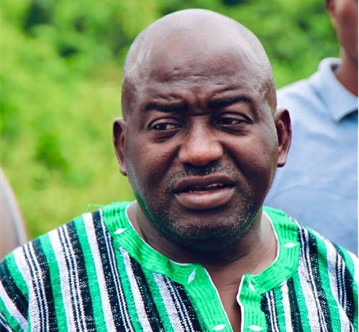
MONROVIA – Nearly three years after President Joseph Nyuma Boakai promised change, Musa Hassan Bility sees little fundamental improvement. His criticism questions whether government messaging has displaced honest assessment of national conditions. Bility reads crowds welcoming former President George Weah as growing frustration, not merely partisan celebration. He argues that economic hardship, distrust, security controversies and perceptions of selective justice continue weakening confidence in the administration. His warning carries political weight because public disappointment can harden long before an election exposes its depth. Boakai retains time to change direction, Bility contends, but speeches and propaganda cannot overcome what citizens experience daily. According to him, government must confront reality, deliver results and remember that political power remains borrowed. The Analyst reports.
MONROVIA — Musa Hassan Bility has delivered a sweeping assessment of President Joseph Nyuma Boakai’s administration, arguing that nearly three years after Liberians voted for change, the fundamental conditions that produced that demand remain largely unchanged.
Writing in his weekly “Letter From Saclepea,” Bility warned that political propaganda could help a party win an election but could never substitute for responsible governance.
Bility presented his intervention as a discussion about Liberia rather than another partisan argument involving former President George Manneh Weah, President Boakai, the Coalition for Democratic Change (CDC), the Citizens Movement for Change (CMC) or the ruling Unity Party.
He maintained that the more urgent issue was whether the change promised to Liberians in 2023 had materialized.
The CDC administration was defeated in the 2023 presidential election amid complaints about insufficient development, economic hardship, poor governance and widespread public demand for a different national direction, Bility recalled. Liberians consequently entrusted Boakai and the Unity Party with national leadership.
Bility acknowledged that he did not vote for Boakai but maintained that his personal electoral choice was irrelevant to the present assessment. He argued that the important consideration was why many Liberians believed Boakai represented the experience, maturity and competence needed to repair the country.
Experience Raised Public Expectations
According to Bility, Boakai entered the presidency with more government experience than nearly anyone who had recently pursued Liberia’s highest office. He traced the President’s journey from humble beginnings in rural Liberia through education and public service, including his tenure as Minister of Agriculture and 12 years as vice president.
That record, Bility observed, produced a compelling argument for Boakai’s election because he had witnessed the Liberian state from almost every level. Liberians could therefore reasonably expect him to understand what had gone wrong and how it could be corrected.
“There would be no learning curve, no excuses. There would be experience, maturity, competence and, above all, change,” Bility wrote. Almost three years later, however, he questioned where that promised change could be found.
Bility contended that the fundamental conditions that generated the demand for political change had hardly shifted. He argued that the public reaction surrounding former President Weah’s recent return to Liberia offered one of the clearest warnings about the political consequences of that failure.
Regardless of individual opinions about Weah, Bility maintained that the crowds that entered the streets should have prompted serious reflection within the government. Instead, he charged, officials and administration supporters responded through what he called a familiar political reflex: explaining away the turnout, attacking it, minimizing it and countering it with propaganda.
“But those people in the streets were communicating something,” Bility asserted. He argued that many participants were expressing more than admiration for the former president.
According to him, the crowds also reflected dissatisfaction with living conditions, the government’s failure to unite the country, perceived official excesses and the continued weaponization of state authority. He further interpreted the turnout as frustration with a political system that promised transformation but increasingly appeared familiar to the people.
Bility also linked the public frustration to controversies surrounding Liberia’s ongoing drug investigation, whose direction, credibility and possible conclusion he maintained remained unclear to citizens. He warned the Boakai administration to pay close attention to those signals instead of dismissing them as partisan mobilization.
Propaganda Cannot Deliver Development
Bility accused the Unity Party administration of becoming trapped by the political machinery that contributed to its electoral victory: propaganda. He cautioned that the greater danger emerged when a government began believing its own messaging and mistaking criticism for political opposition.
“You can win an election with propaganda. You cannot govern with propaganda,” Bility declared. He stressed that political messaging could convince voters that an opponent had failed, but it could not deliver the material outcomes citizens expected from government.
“Propaganda can convince people that your opponent has failed. Still, it cannot build a road, put food on a family’s table, create sustainable employment, improve healthcare, educate a child, strengthen institutions, make justice impartial, or make people feel safer,” he wrote.
Bility added that government propaganda could not indefinitely persuade people that their daily experiences were different from reality. When official messaging becomes a governing instrument, he warned, the government eventually risks believing the same illusion it created for public consumption.
He expressed concern that officials were gradually constructing an atmosphere in which everything appeared satisfactory and anyone who disagreed was automatically branded an opponent. That tendency, he asserted, was dangerous for democracy and public confidence.
Bility said Liberia was becoming increasingly distrustful of the government while the government itself appeared more distrustful of the country. He cited official reactions to political activities, the conduct of security forces, responses to dissent and anxiety whenever communities considered loyal to one political side showed signs of frustration.
“No district belongs permanently to any political party. No county belongs permanently to any politician. And certainly Liberia belongs to no government,” Bility emphasized.
Political power, he reminded the administration, remained borrowed from the people and could be withdrawn by them. Government nervousness over shifting political loyalties, he argued, could not become the basis for managing democratic participation.
Boakai Confronts Shrinking Political Time
Bility described the political task facing President Boakai as extremely difficult, warning that speeches and public relations alone could not rescue the Unity Party. He observed that Liberians were stubborn political people whose conclusions about a government could become extremely difficult to reverse once formed.
The warning signs surrounding the administration should therefore be studied rather than dismissed, Bility advised. He urged officials to approach them with humility and conduct an honest examination of the government’s performance.
Bility criticized the administration for continuing to explain its shortcomings by referring to the government it replaced. He argued that the previous administration had peacefully transferred power after Boakai asked Liberians for an opportunity to govern differently.
“At some point, yesterday stops being an excuse for today,” Bility declared. “The government you replaced peacefully transferred power to you. You asked Liberians for the opportunity to govern differently. They gave it to you. Therefore, govern.”
He maintained that the Unity Party could not spend an entire administration campaigning against a government it had already defeated. The ruling establishment, he added, could not condemn abuses while in opposition and normalize similar conduct after taking power.
Bility also warned against complaining about political persecution when outside government and later exercising prosecutorial authority in ways that created perceptions of persecution. He argued that political actors could not demand independent institutions in opposition and then become uncomfortable with those institutions after gaining control of government.
The administration could not persuade hungry, frustrated or disappointed citizens that everything was satisfactory simply because official statistics and government narratives suggested progress, he asserted. Liberians experienced the economy, governance, insecurity and injustice directly and therefore understood their circumstances.
Reality Will Defeat Political Illusions
Bility lamented that Liberia remained trapped in a recurring cycle in which governments, parties, officials and slogans changed while ordinary people continued waiting. He maintained that the country could not allow that pattern to remain its permanent national story.
President Boakai still had time to change course, Bility acknowledged, but he warned that political time disappeared more quickly than officeholders often imagined. The President and his officials could continue blaming the past, treating criticism as opposition and dismissing political warning signs, but propaganda would eventually collide with reality.
“And reality always wins,” Bility stated. His hope, he explained, was that Boakai would look beyond his party, advisers who told him what he wanted to hear, government propaganda and the approaching 2029 election.
Bility maintained that the central concern should extend beyond whether the Unity Party won or lost the next presidential election. The proper test, he argued, was whether Liberia could finally build a government that left the country fundamentally better than it found it.
“Almost three years later, I am still waiting to see that change,” Bility concluded. “So are millions of Liberians.”
See more Liberia News Network stories in Google Search by adding LNN as one of your Preferred Sources.
★ Add LNN as a Preferred Source