Published: September 7, 2026
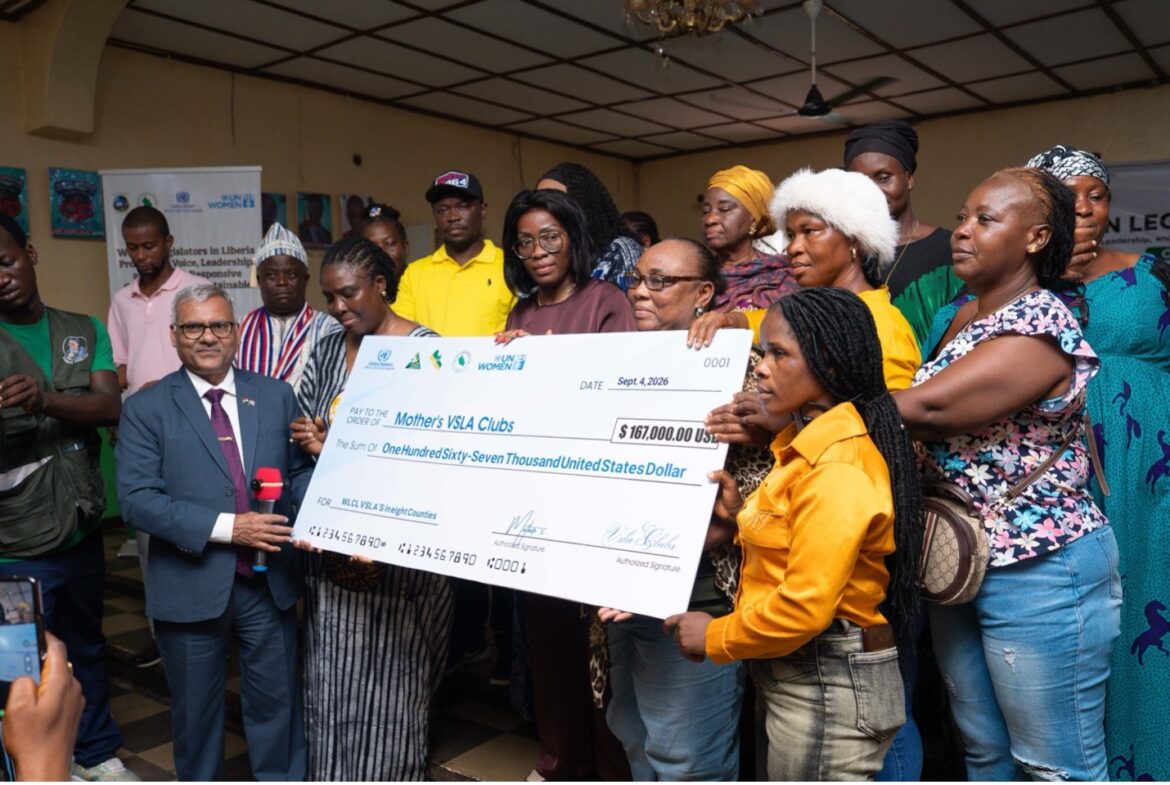
KAKATA, Margibi County — About 1,470 women in 49 savings and farming groups across eight counties will begin drawing on a US$167,000 empowerment fund after UN Women Liberia launched the disbursement stage of the project here Friday, moving it from training into cash.
The project, “Women’s Legislative Caucus in Liberia Promoting Voice, Leadership, and Gender-Responsive Governance for Sustainable Development,” is run with the Women’s Legislative Caucus of Liberia and CareFound Liberia and paid for through the IBSA Fund, with contributions from the governments of India, Brazil and South Africa channeled through the United Nations Office for South-South Cooperation.
Yemi Falayajo, deputy representative of UN Women Liberia, said the project pairs the money with training rather than handing it over alone.
“The project does not simply provide funds and expect women to manage on their own,” she said, adding that the financial support runs alongside practical training, community-based facilitation and continued mentoring.
Falayajo said the village savings and loan associations give women a place to make collective decisions, manage shared resources, keep records, settle problems and build leadership.
The project has established or strengthened 49 of a targeted 50 VSLAs and agricultural cooperatives, or 98% of the target, according to its progress brief. The groups have elected leadership committees, adopted constitutions and trained in savings, lending, financial management and grant preparedness. At an average of about 30 members a group, roughly 1,470 women hold membership.
Twenty-four community-based facilitators, 16 women and eight men, have been trained to carry the lessons on to about 3,800 rural and young women in the eight counties. The curriculum covers literacy and numeracy, financial and digital literacy, entrepreneurship, business management, VSLA operations, gender equality, leadership, peacebuilding and sexual and reproductive health and rights.
The counties are Montserrado, Bong, Lofa, Margibi, Gbarpolu, Grand Bassa, Grand Cape Mount and Grand Gedeh.
Indian Ambassador Manoj Bihari Verma said his government was glad to work with Brazil and South Africa to put livelihood support in the hands of local women, and that the beneficiaries would become agents of change at home. Economic opportunity makes communities stronger, he said, and greater participation by women in leadership makes society more inclusive.
Rep. Ellen Attoh Wreh of Margibi County District 3, who chairs the Women’s Legislative Caucus, thanked the people and governments of India, Brazil and South Africa for putting taxpayers’ money behind grassroots women. She said the US$167,000 was not enough, and that she hoped the results would persuade the donors to send more. Securing it took time, lobbying and sacrifice, she said.
Falayajo said a South-South peer-learning mission to India in August took caucus members to meet government institutions, parliamentarians and women’s organizations on political representation, leadership, gender-responsive budgeting, digital inclusion and economic empowerment. The lesson she took from it was that women should not be treated as recipients of assistance.
“Women must lead, make decisions and shape the development of their communities and countries,” she said, calling the approach a shift from “women’s development to women-led development.”
Community mobilization and awareness meetings held between May 11 and 31 drew 373 stakeholders, 305 women and 68 men, including local government officials, traditional and religious leaders, women’s and youth groups and caucus members. The progress report puts total direct beneficiaries at about 1,867 across mobilization, facilitator training and VSLA membership, with another 3,800 targeted for cascade training.
Falayajo commended the caucus, CareFound Liberia, community facilitators, county focal persons and local authorities, and thanked the IBSA Fund and the three governments.
The launch drew county focal persons, facilitators and VSLA representatives from all eight counties. Organizers said the next phase turns on what the women do with the money: expanding businesses, strengthening livelihoods, building savings that last and taking on more leadership at home.
See more Liberia News Network stories in Google Search by adding LNN as one of your Preferred Sources.
★ Add LNN as a Preferred Source