
Published: September 9, 2026
Liberia cannot surrender millions of dollars in the name of vulnerable families when importers and higher-income households capture most of the benefit.
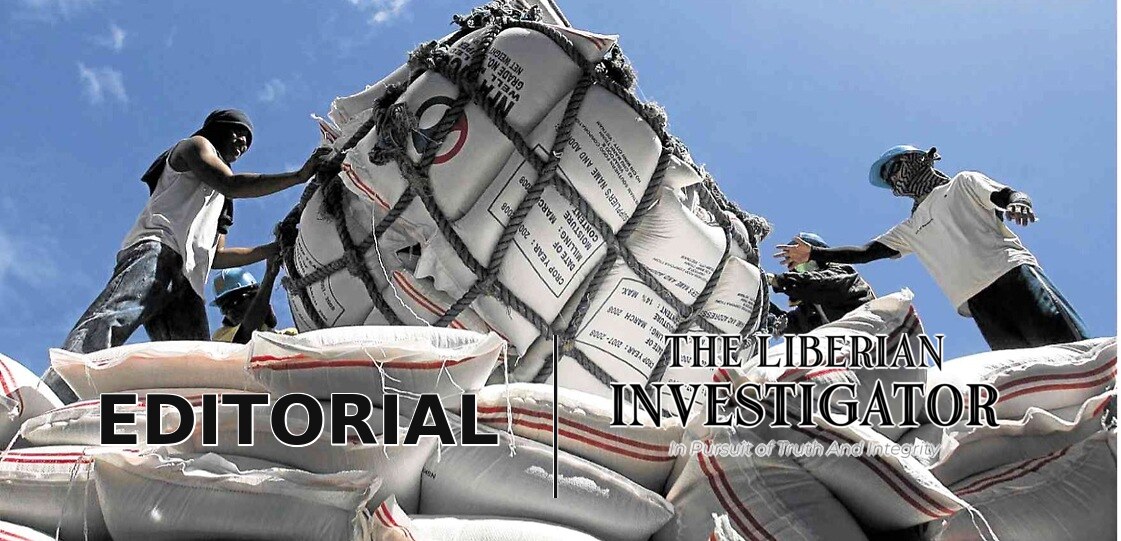
Liberia gave up about US$41 million in rice taxes in 2024 on the promise that the sacrifice would protect poor families. The World Bank now says most of the benefit went instead to commercial importers and higher-income households. That is not a minor defect in tax policy. It is a public-interest failure disguised as relief for the poor.
Rice is Liberia’s most politically sensitive food staple, and no responsible government should treat its price casually. A sudden increase can devastate families already stretching small incomes across food, rent, school fees and transportation.
That danger explains why successive administrations have defended broad tax waivers as a shield against higher prices. But a policy cannot be judged by the sympathy of its stated purpose. It must be judged by who actually benefits.
On that test, the current arrangement fails.
The Liberia Public Finance Review 2026 found that rice waivers represented 17% of the US$240.3 million the government surrendered through exemptions and concessions in 2024. Household data cited by the World Bank show that the principal gains did not reach the people whose hardship has long justified the policy. The country absorbed the loss; the poor received only a fraction of the protection promised in their name.
This matters because tax exemptions are not free. Every dollar waived is a dollar unavailable for medicines, textbooks, road maintenance, agriculture, electricity or clean water.
The same review says budgets for essential supplies and services have been squeezed, while only about one-third of capital spending was executed between 2018 and 2025. Liberia cannot plead poverty at clinics and schools while maintaining costly giveaways that it cannot prove are serving the public.
Nor is rice the only problem.
Exemptions and concessions cost Liberia US$270.7 million in 2023 and US$240.3 million in 2024 — more than 40% of the tax revenue collected and between 5% and 6% of gross domestic product.
Some discretionary concessions are granted without adequate public disclosure or a systematic assessment of whether the jobs, investment or lower prices promised in return ever materialize. That is not prudent economic management. It is government spending conducted through the back door, beyond the scrutiny routinely applied to the national budget.
The government has accepted the World Bank’s central findings and promised changes to the Revenue Code, a new tax-expenditure regime and the introduction of a value-added tax in January 2027.
Acceptance is welcome, but acknowledgment is not reform.
Liberians have heard too many correct diagnoses followed by weak execution. The real test is whether officials are prepared to confront beneficiaries, disclose the true cost of exemptions and cancel concessions that cannot demonstrate measurable public value.
The wrong response would be to rush a new consumption tax onto ordinary Liberians while leaving opaque exemptions and generous concession terms substantially untouched. Fiscal reform cannot begin at the market stall and end before it reaches the boardroom.
Before asking families to pay more, the government must show that it has stopped giving away revenue without evidence, oversight or results.
The Ministry of Finance and Development Planning should publish a complete annual tax-expenditure report identifying each exemption, its legal basis, its beneficiary, the revenue forgone, the public objective and the measurable result.
Discretionary waivers should be centralized, time-limited and subjected to independent review. The Legislature, which approves concession agreements and guards the public purse, must demand this accounting instead of treating tax giveaways as technical matters reserved for the executive branch.
For rice, the government should commission and publish an independent assessment of the entire pricing chain — from the port and importer to the wholesaler, retailer and consumer.
Liberians deserve to know how much of every tax concession reduces the market price and how much remains elsewhere in the chain. If the existing waiver cannot reliably reach low-income households, it should be redesigned and gradually replaced with more targeted protection, stronger competition, transparent pricing and serious support for domestic rice production.
That transition must be careful. Abruptly ending the waiver without safeguards could raise prices and punish the same families the government claims it wants to help. Reform must therefore be phased, publicly explained and paired with measures that protect vulnerable households.
But fear of a price shock cannot become an excuse for preserving an expensive and poorly targeted system indefinitely.
The World Bank’s findings leave the Boakai administration with a straightforward choice. It can continue a familiar arrangement in which the poor provide the political justification while better-positioned actors collect most of the value. Or it can build a transparent system in which every tax break must earn its cost through lower prices, jobs, production or another result the public can see.
Liberia cannot say there is no money for medicine, textbooks and development while surrendering US$41 million in one year without proving that the sacrifice put cheaper rice on the tables of poor families.
The poor must no longer be used as an alibi for benefits they do not receive.
See more Liberia News Network stories in Google Search by adding LNN as one of your Preferred Sources.
★ Add LNN as a Preferred Source