Published: September 9, 2026
HARPER, Maryland County — Liberia’s higher education regulator told faculty at William V. S. Tubman University that teaching alone no longer meets what the country needs from its universities, and challenged them to move into southeastern communities and produce research that governments, businesses and citizens can use.
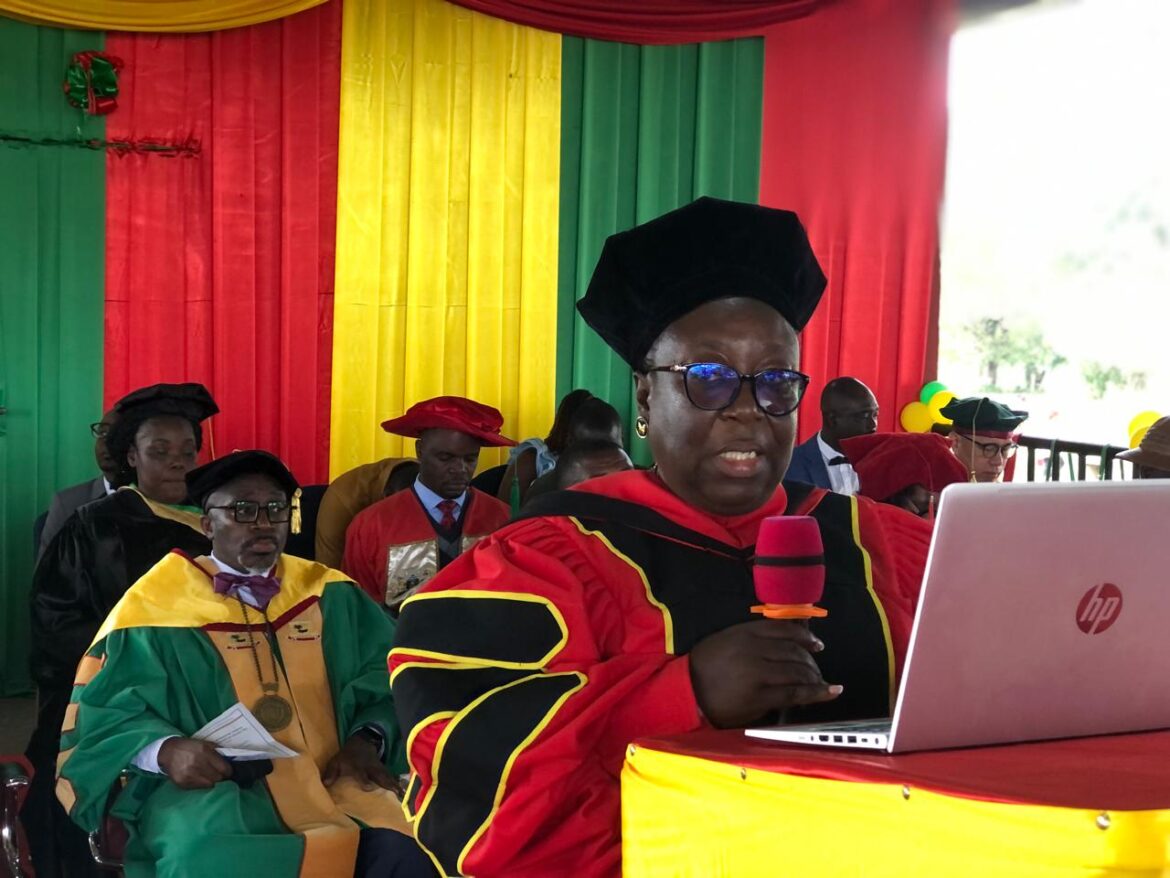
Cecelia Cassell, executive director of the National Commission on Higher Education, delivered the keynote at the university’s opening convocation for the 2026 to 2027 academic year. “Research becomes truly transformative when it moves from the pages of academic journals into the lives of ordinary people,” she said.
She said Liberia needs universities that investigate Liberia, and named agriculture, fisheries, mining, public health, education, climate resilience, governance, entrepreneurship, technology, infrastructure and environmental sustainability as fields needing sustained attention. Her instruction to faculty was specific: listen to farmers, examine schools, investigate health systems, study markets, document cultural heritage and understand the circumstances facing young people, then turn what they find into research capable of shaping policy.
Tubman’s location is why she made the demand, Cassell said, describing the southeast’s ecological, economic, cultural and developmental weight as a strategic advantage and arguing the university could become a research center for the region and the country.
She acknowledged the conditions working against that. Many Liberian institutions operate with inadequate infrastructure, limited access to modern teaching and research technology, and constrained finances, she said, but the country’s development needs make research more important, not less, particularly with a growing youth population and rising demand for tertiary education.
Faculty quality is the binding constraint, she said, arguing that no institution rises above the quality of its scholars and that laboratories, libraries and technology matter less than the people using them. She said lecturers must keep updating their knowledge as artificial intelligence changes how knowledge is produced and what employers expect, and must prepare students to think critically and solve problems rather than to pass examinations.
Cassell said the commission is pursuing reforms to strengthen governance, quality assurance and accreditation and to keep academic programs aligned with national development priorities, so that degrees awarded in Liberia hold their credibility. Regulation alone will not achieve it, she said. Universities have to build their own cultures of research and accountability, and she called on the Tubman administration to create conditions in which that work can be done.
See more Liberia News Network stories in Google Search by adding LNN as one of your Preferred Sources.
★ Add LNN as a Preferred Source