Senator Samuel G. Kogar has told citizens of Nimba that the controversy surrounding the establishment of a War and Economic Crimes Court (WECC) was primarily intended to address the county’s concerns, arguing that the issue has largely faded since the death of his predecessor, the late Senator Prince Y. Johnson.
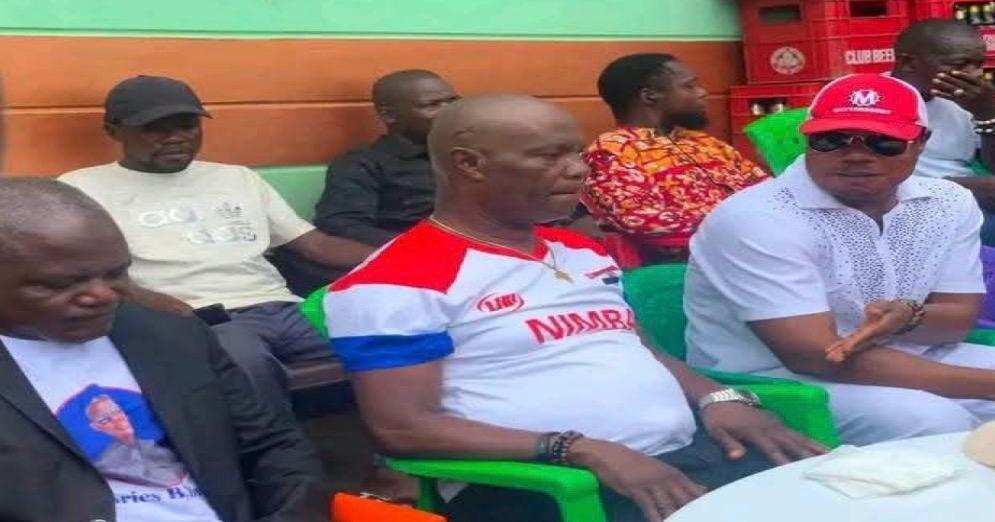
Senator Kogar made the assertion Sunday, September 6, during a citizens’ engagement in Ganta popularly known as the “GB Shop Discussion,” where residents openly questioned the senator on national and county-level issues.
Responding to questions about the status of the proposed court, Kogar said the issue had been strongly associated with the late Senator Johnson, who he said vigorously campaigned for the Unity Party and its rise to power.
Kogar alleged that despite Johnson’s political support for the Unity Party, the administration did not provide the protection he expected, while simultaneously advancing discussions surrounding the establishment of the WECC.
“Despite his effort from place to place to bring the Unity Party to power, they protected him as was promised during the campaign, but they went ahead with WECC, which subsequently left [him] frustrated and dead,” Kogar said.
The senator further argued that previous administrations had also faced pressure to establish a war crimes court but chose different approaches.
According to Kogar, former President Ellen Johnson Sirleaf was pressured to establish such a court but instead embraced the recommendations of the Truth and Reconciliation Commission. He said a similar position was maintained under the Coalition for Democratic Change-led administration.
Kogar linked Johnson’s death to what he described as frustration and disappointment arising from the Unity Party-led government, although the senator did not present evidence establishing that the late senator’s death was caused by the WECC controversy.
Johnson’s death has continued to generate strong emotions in Nimba, with some supporters and citizens linking his political frustrations to the unresolved question of war and economic crimes accountability.
During Johnson’s funeral in January, a former National Security Agency operative and supporter of the late senator reportedly attributed his death to the controversy surrounding the proposed court. The remarks generated controversy, and the operative was subsequently dismissed from his position.
Despite years of political debate over the WECC, Kogar said the limited public progress surrounding its establishment has continued to fuel speculation in Nimba.
He suggested that many citizens believe the court was closely connected to Johnson’s political advocacy because, following his death, public discussions surrounding the issue appeared to have lost momentum.
The senator also used the engagement to address his recent expulsion from the Movement for Democracy Reconstruction (MDR), the political party founded by Johnson.
Kogar said he accepted his removal from the party but maintained that he remains a political leader in Nimba.
He argued that political expulsions are not unusual in Liberia and cited several politicians who were removed from political parties but later remained influential or became more politically prominent.
Kogar recalled that his relationship with the MDR began through Johnson, who entrusted him with leadership responsibilities within the party.
“Now that I have been expelled, the MDR should not be concerned about my next political steps because I am no longer a member of the party,” he told citizens.
Johnson himself had a history of political party departures. He founded the National Union for Democratic Progress (NUDP), but was later expelled by the party’s executive during a 2012 conference in Buchanan. Following his departure, the NUDP subsequently declined, while Johnson went on to establish the MDR.
Kogar succeeded Johnson as senator for Nimba County following a 2025 by-election and remains in office with several years left on his nine-year mandate, which runs until 2032.
His latest visit to Nimba was his first major public engagement in the county since his expulsion from the MDR.
Kogar was warmly received in Ganta, where he drove through parts of the city amid applause from supporters who gathered along the main streets.
His visit coincided with Vice President Jeremiah Kpan Koung’s weekend stay at his farm near Ganta, adding further political significance to the senator’s presence in the county.
Kogar, who has become increasingly critical of the Unity Party-led government, said his disagreement with the administration was not personal.
He maintained that his concerns were centered on government policies, although he did not provide detailed examples during the engagement.
His political break with the government, coupled with his expulsion from the MDR, is adding another layer to the already complex political landscape in Nimba ahead of the 2029 elections.
Political observers in the county believe the developments could deepen divisions within the ruling Unity Party’s political base and complicate its efforts to maintain its influence in Nimba, particularly as the county remains a critical battleground in national elections.
See more Liberia News Network stories in Google Search by adding LNN as one of your Preferred Sources.
★ Add LNN as a Preferred Source