Published: September 11, 2026
MONROVIA – More than 9,000 women in six Liberian counties who once relied on subsistence farming and petty trading are now running small businesses, borrowing through savings groups, and selling into markets they could not reach before. The government assigned a new coordinating body the task of getting the next several thousand there this week.
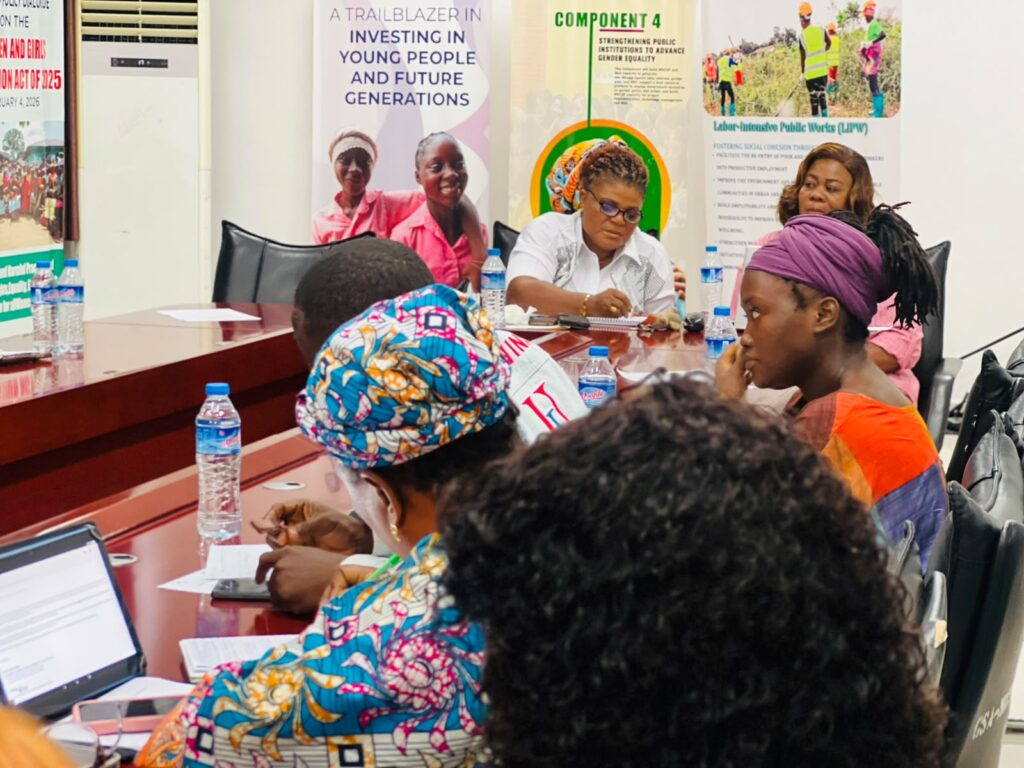
The Ministry of Gender, Children and Social Protection launched the Liberia Women Employment and Empowerment Taskforce on Wednesday, Aug. 26, in its conference room in Monrovia, bringing government institutions, development partners and civil society organizations together to stop working past one another. The body is meant to harmonize programs, cut duplication, strengthen collaboration, and track whether women’s employment initiatives are actually producing jobs and income rather than reports.
“This Taskforce is about action. It is about ensuring that Liberian women, whether in the city or in the villages, have access to training, jobs, and the support they need to build businesses,” said Ophelia Kennedy, assistant minister for gender, who delivered the opening remarks. She said establishing the task force shows that the government treats women’s economic empowerment as a national development priority and that the ministry and its partners are committed to protecting women, creating opportunities, and making existing opportunities accessible to women across the country.
The task force grows out of the Liberia Women Empowerment Project, a government of Liberia project run by the ministry and now operating in Gbarpolu, Rivercess, Grand Cape Mount, Bomi, Rural Montserrado, and Grand Gedeh. The project’s premise is unglamorous and specific. A woman who can already farm or trade is not short on effort. She lacks business skills, credit, and a buyer who will pay a fair price on time. LWEP addresses all three, delivering business development training, supporting village savings and loan groups, and connecting producers to markets for agricultural goods and small merchandise.
So far, the results give the task force something to build on. Project officials report that 418 women-led businesses, employing more than 9,000 people, have benefited from livelihood cash grants. Across 498 communities, women who previously relied on subsistence farming or petty trading now operate businesses, access credit, and create jobs for others. That last point is the quiet measure of whether any of this works. A woman who hires is a woman whose household is no longer the only one lifted.
Abdulai Sheriff, LSP manager for LWEP at Plan International, walked participants through the project’s design, explaining that it equips women with practical skills, access to financial services, and market linkages to improve livelihoods and economic independence.
Noorie Emmalin Dudley, program director for agriculture, livelihoods and landscapes at Catholic Relief Services, explained the task force’s rationale. Liberia does not lack women’s empowerment programs. It lacks a mechanism to prevent three donors from funding the same training in the same district while a neighboring district gets nothing. The task force, she said, will harmonize programs, reduce duplication, strengthen collaboration among stakeholders and track progress.
Shari Raji-Barry, senior gender officer at CRS, led the session on the proposed terms of reference, which participants reviewed and finalized during the meeting, giving the body a working mandate on its first day rather than deferring it to a second gathering.
The meeting closed with a call for continued collaboration and stronger collective action on women’s employment, economic empowerment and inclusion.
See more Liberia News Network stories in Google Search by adding LNN as one of your Preferred Sources.
★ Add LNN as a Preferred Source