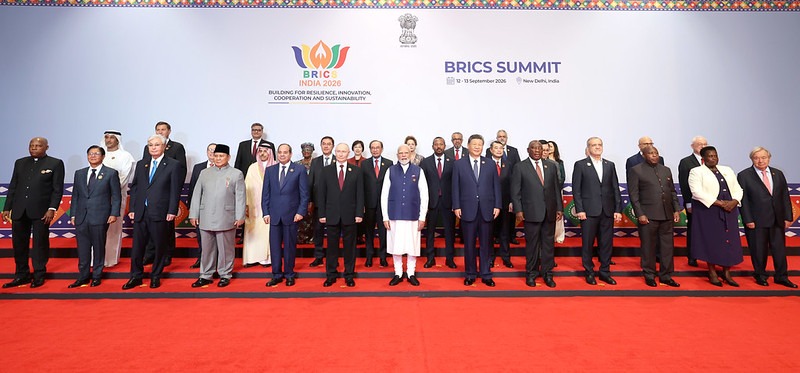
NEW DELHI, India, September 15, 2026 — BRICS leaders have reaffirmed calls for greater representation of developing countries in global decision-making, as the bloc concluded its 18th Summit in New Delhi with the adoption of a declaration outlining priorities ranging from international governance and security to trade, technology and climate change.
The summit, hosted by India from September 12-13, 2026, was held under the theme, “Building for Resilience, Innovation, Cooperation and Sustainability.”
At the close of the meeting, leaders adopted the New Delhi BRICS Leaders’ Declaration, reaffirming their commitment to strengthening cooperation among emerging markets and developing countries and pushing for what they described as a more representative, equitable and inclusive international system.
Indian Prime Minister Narendra Modi told the summit that countries of the Global South are frequently at the forefront of global crises but remain underrepresented in institutions where major international decisions are made.
He called for transforming what he described as a “pyramid of privilege” into a “platform of partnership,” arguing that global governance institutions should reflect contemporary economic and demographic realities.
Modi also called for greater representation of developing countries in institutions such as the United Nations Security Council.
He said the Global South must move from being a “rule-taker” to a “rule-shaper,” arguing that developing countries should have greater influence over decisions affecting their future.
Reform of international institutions featured prominently in the summit declaration, with BRICS leaders reiterating support for changes to the United Nations and international financial institutions to give emerging markets and developing countries greater representation.
The declaration also called for increased participation by Least Developed Countries, particularly those in Africa, in international decision-making.
Beyond institutional reforms, leaders discussed food and energy security, agriculture, health, climate change, digital transformation, artificial intelligence, trade and sustainable development.
India highlighted technology and innovation as tools for promoting inclusive economic growth and improving living standards in developing countries.
Food security and agricultural resilience also featured on the agenda, with India advancing initiatives involving digital agriculture, agroecology, regenerative agriculture and agricultural inputs as part of efforts to promote sustainable food systems.
On international peace and security, BRICS leaders reaffirmed their support for dialogue, consultation and diplomacy in resolving disputes.
The declaration called for restraint amid tensions in West Asia and emphasized the protection of civilians and civilian infrastructure. Leaders also expressed concern over the humanitarian situation in Sudan and called for a peaceful resolution of the conflict through dialogue.
BRICS leaders also condemned terrorism in all its forms, including terrorist financing, safe havens and the cross-border movement of terrorists.
The leaders specifically condemned the April 22, 2025 terrorist attack in Pahalgam, Jammu and Kashmir, which killed 26 people and injured several others.
The New Delhi summit concluded with India emphasizing development, resilience and practical cooperation among developing economies as central priorities for BRICS and its broader engagement with the Global South.
See more Liberia News Network stories in Google Search by adding LNN as one of your Preferred Sources.
★ Add LNN as a Preferred Source