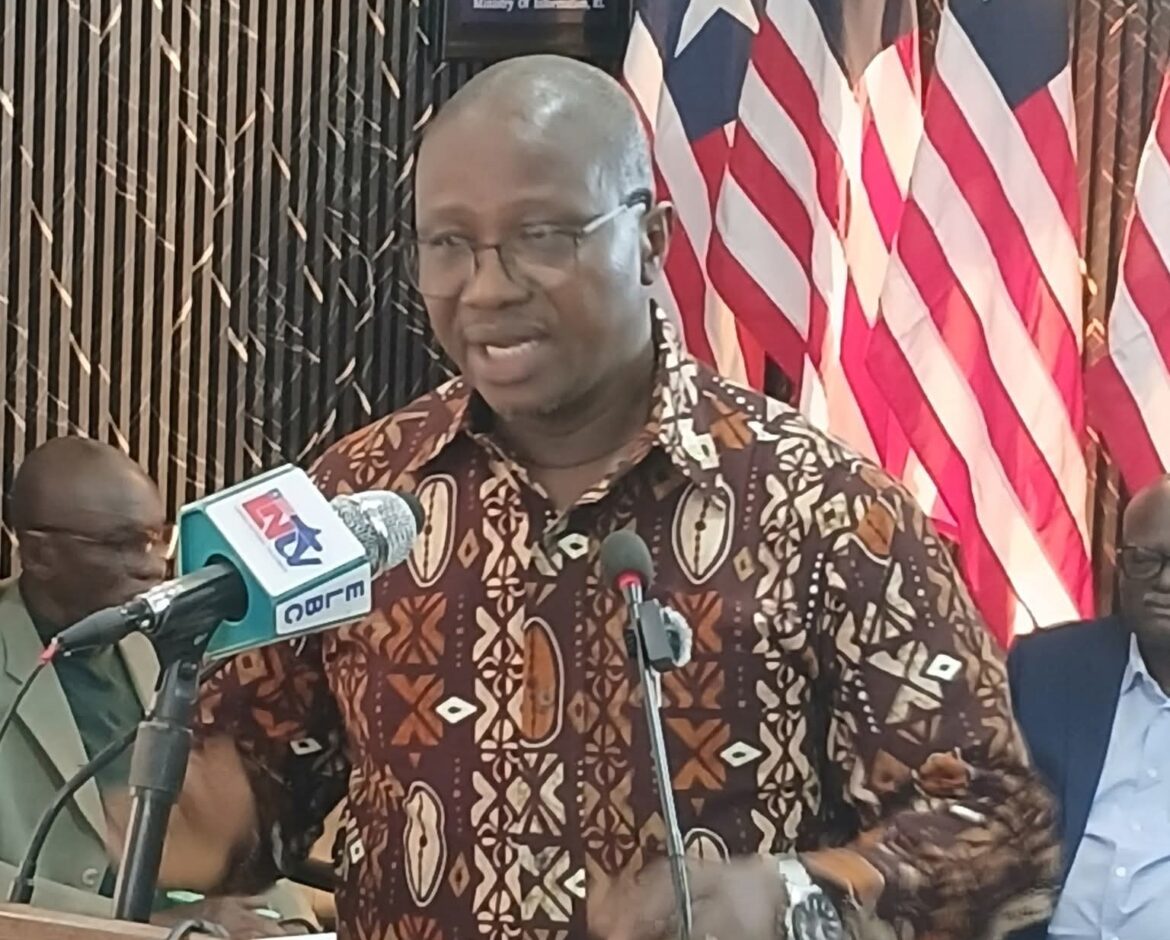
The Government of Liberia says it is accelerating its decentralization agenda to strengthen local governance, increase citizens’ participation in decision-making, and improve access to essential social services across the country.
Speaking at the Ministry of Information’s regular press briefing on Thursday, September 15, 2026, the Deputy Minister for Local Government and Decentralization at the Ministry of Local Government, Edward K. Mulbah, disclosed that Liberia’s long-standing concentration of political and administrative authority in Monrovia has severely limited access to basic services, particularly for rural residents. He explained that the decentralization process aims to resolve these challenges by transferring selected powers, functions, responsibilities, and resources from central government institutions directly to local authorities.
According to Minister Mulbah, the government is actively pursuing three major dimensions of decentralization—deconcentration, delegation, and devolution—with the overarching goal of bringing governance closer to the people. To support this vision, local structures such as county councils and county service centers are being established or reinforced. County councils are slated to provide oversight on resource management and development planning, while county service centers will streamline public service delivery at the regional level.
Minister Mulbah noted that essential government services—including the issuance of birth and marriage certificates, land documentation, and driver’s licenses—will soon be fully accessible outside the capital, significantly reducing the financial and logistical burdens on rural citizens.
Emphasizing the importance of the County Development Fund and participatory planning, Mulbah stressed that local communities must have a direct voice in identifying and prioritizing projects. Participatory exercises conducted across various counties are designed to gather grassroots priorities from district levels and integrate them into broader county development plans.
The Deputy Minister further underscored the critical role of decentralization across key sectors such as education, healthcare, roads, sanitation, justice, and security. On education and infrastructure, he highlighted that localized decision-making ensures schools reflect community needs, while improved rural road maintenance remains essential for farmers, teachers, health workers, and the movement of vital supplies. Given that a significant portion of Liberia’s population relies on agriculture and resides outside Monrovia, empowering county-level leadership ensures development strategy aligns with real-world local challenges.
The Ministry of Local Government is currently engaging line ministries, state agencies, superintendents, and regional stakeholders to determine which specific functions can be effectively transferred to local administrations.
Mulbah maintained that decentralization is not merely an administrative reform, but a core pillar of Liberia’s broader national development strategy. Reaffirming the commitment of President Joseph Nyuma Boakai’s administration, he emphasized that decentralizing decision-making will foster public trust, enhance accountability, and accelerate inclusive development nationwide.
“Decision-making should be brought closer to the people so that development can be accelerated,” Mulbah stated, reinforcing that Liberia’s progress must reach every community across the nation rather than remaining confined to Monrovia.
By Amos Harris
See more Liberia News Network stories in Google Search by adding LNN as one of your Preferred Sources.
★ Add LNN as a Preferred Source