Published: September 16, 2026
MONROVIA — Liberia’s first US$1 billion revenue year has sparked immediate demands for a share of the money. Nurses are calling for a US$500 minimum monthly salary, while street vendors in Monrovia and Paynesville say the record has yet to touch their lives. The government is beginning to prepare the 2027 budget.
The pressure matches the test the government set for itself. Finance Minister Augustine Kpehe Ngafuan, announcing the milestone Monday in Harper, Maryland County, said the figure should be judged by its impact on ordinary people.
“The true measure of revenue is not what enters the government’s account. It is what enters the life of the citizen,” Ngafuan said.
In a special address titled “One Billion, One Liberia,” President Joseph Nyuma Boakai said it was the first time in Liberia’s 179-year history that domestic revenue had passed US$1 billion in a single year. He said the money was raised at home and was “earned, not borrowed, and not foreign aid.”
Boakai said domestic revenue rose from about US$612 million in 2023 to US$699 million in 2024 and US$848 million in 2025, and is expected to pass US$1 billion this year. That is an increase of more than US$388 million, or about 63%, over 2023. The government is targeting US$1.3 billion by the end of the year.
The president tied the milestone directly to the lives of ordinary Liberians.
“It means an ordinary market woman must receive support to improve her conditions; civil servants must experience a reversal of the harmonization of their salaries, a young student must receive quality education… our public hospitals must receive regular supply of medicines,” Boakai said.
Health workers are taking him at his word. The Liberia Nurses Association is demanding a minimum monthly salary of US$500.
“Now that the government has collected US$1 billion in revenue, it is time for nurses to feel the effect,” the association said.
The Liberia Midwives Association said it hopes the milestone brings greater investment in midwives.
Ngafuan said the concerns he heard during his trip through the Southeast would go back to Monrovia as work begins on the 2027 budget. He said the government cannot meet every demand at once, but limited resources should force officials to set priorities, finish projects properly and account for what they spend.
“Scarcity must never excuse indifference,” he said.
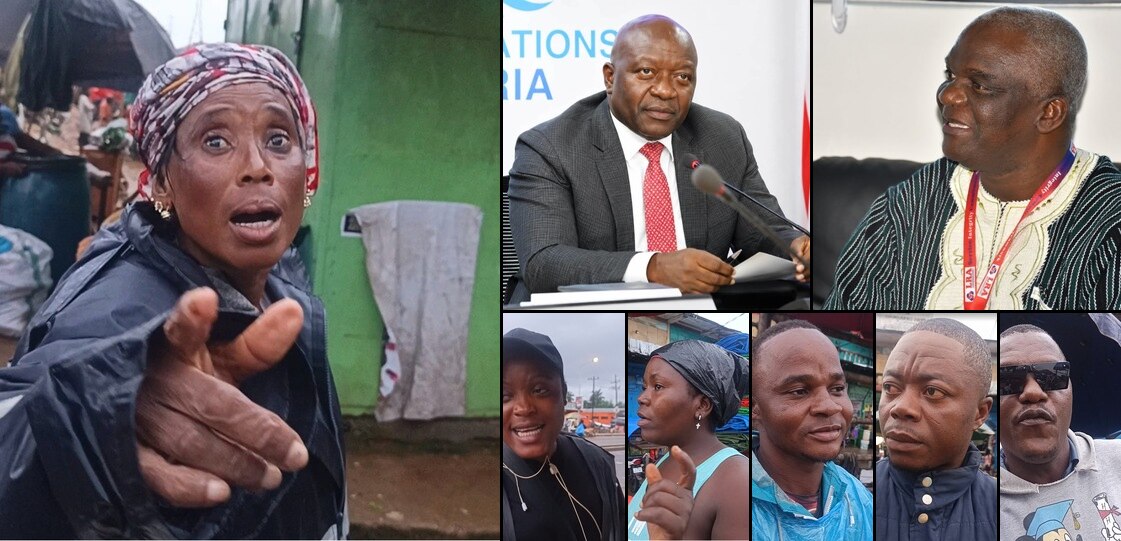
On the streets, most of the vendors and traders The Liberian Investigator interviewed said they have seen no change.
“Who are they giving the $ 1 billion to?” asked Edith Wilson, a vendor at Parker Paint Junction.
Wilson said the cost of living keeps rising and prices of local goods continue to climb. She said conditions feel no different from years when the national budget was in the hundreds of millions.
“No improvement. It’s from worse to worst,” she said
Patient Jallah, a single mother, said she still cannot afford a full bag of rice.
“I’m not feeling nothing, no chance for me, I’m still buying rice by the cup L$70, L$80 because I can’t even afford a bag of rice,” she said.
Helenna Johnson, a market seller in her 50s, said her living conditions are getting worse. She said her husband died after what she described as poor care at the government-run John F. Kennedy Medical Center.
“Citizens sick in the hospital and nurses are telling you no bed,” she said.
In Paynesville, Jerry Toe, a seller along the commercial corridor, pointed to the exchange rate.
“You drop the US exchange rate while prices in the stores remain the same. What’s the difference?” he said.
Another trader said Liberians remain spectators in an economy dominated by foreigners.
Some saw progress. Lavelah B. Kortimai, a motorcyclist, pointed to technical and vocational training programs, road construction, agriculture and what he said was the deployment of 285 earth-moving machines.
“Everyone is not benefiting but at least some people are benefiting,” he said.
Bobby Smith, a local business owner, said easier travel to the southeastern counties and a steady supply of gasoline, rice and other goods show the government is delivering. Ngafuan made a similar point in Harper, citing the paved road that now reaches Tappita and the National Transit Authority buses that run between the Southeast and Monrovia. But he said the region still needs better roads, schools, health care, jobs and transport.
Boakai and Ngafuan both credited Liberia Revenue Authority Commissioner General James Dorbor Jallah and his team. Ngafuan said Jallah showed him a real-time revenue dashboard confirming that the country had crossed the threshold. According to a statement on the president’s address, the authority has tightened compliance and enforcement, expanded digitalization and moved to modernize tax and customs administration.
Boakai also credited taxpayers, including market women and traders, who now say they have seen little return. Ngafuan cautioned against reading the figure as a sign that Liberia’s problems are solved. He said a larger revenue base gives the government more capacity to act and therefore a greater obligation to deliver.
See more Liberia News Network stories in Google Search by adding LNN as one of your Preferred Sources.
★ Add LNN as a Preferred Source