Monrovia — A shipment that triggered alarm this weekend over suspected cocaine and heroin has tested negative for narcotics, the Liberia Drug Enforcement Agency says, in a reversal that clears those named in connection with the cargo and instead points to commercial herbal supplements as the likely contents.
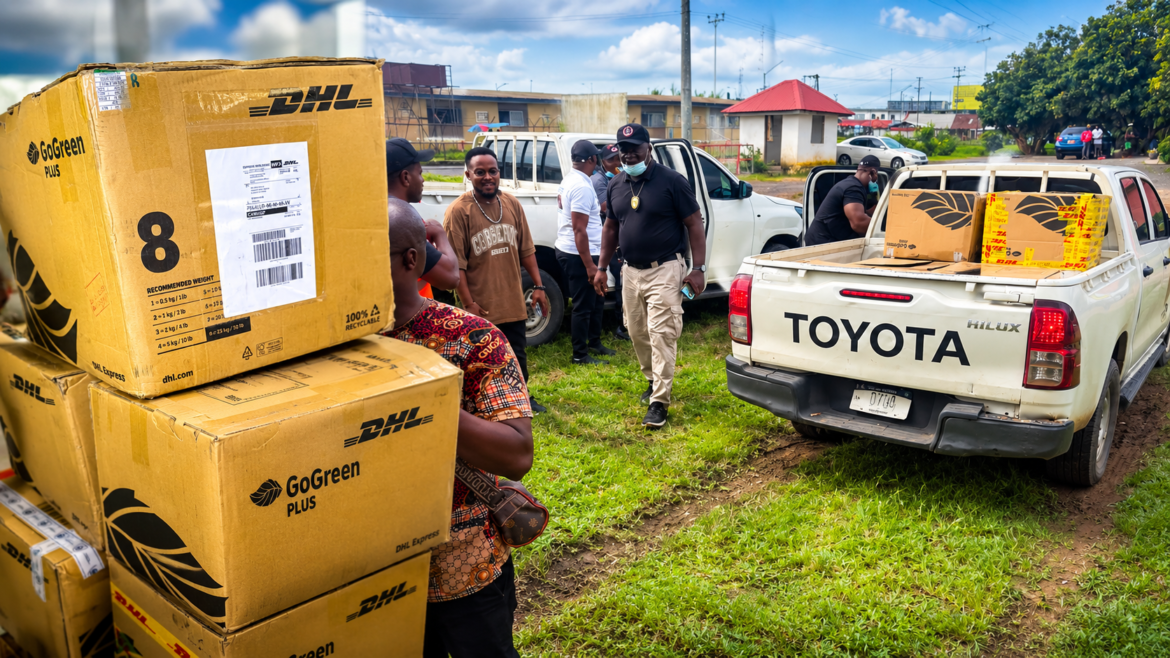
The shipment — nine cartons shipped via DHL from Malaysia, declared on their labels as botanical powder, coffee and candy and weighing a combined 202.5 kilograms — had already cleared customs at Roberts International Airport, with $437.65 in duties, levies and GST paid, before it was flagged during a subsequent clearance attempt at a DHL warehouse.
A Favor, and a Shipment
According to a preliminary field report obtained by FrontPageAfrica, the chain of events began with an act of goodwill. Martha Jallah, a 39-year-old Liberian woman residing in Sinkor, Montserrado County, was approached by an acquaintance — identified in the report only as Solange, an Ivorian national employed at the Ivorian Embassy in Monrovia. Solange asked Jallah to help clear the shipment on behalf of one of her countrymen: Tan Makado, a 60-year-old Ivorian national based in Abidjan.
At approximately 12:30 p.m. Saturday, the report states, Jallah went to the DHL warehouse to clear the cartons — the same shipment paperwork elsewhere describes as consigned to a Tan Gouet Gerard at an address on Fiamah Coleman Avenue, Monrovia. LDEA’s RIA Detachment intervened at that point, taking the cartons into custody for testing.
The field report stated that during initial, on-site screening, agents alleged the material tested positive for cocaine and heroin — a finding that prompted Chief Operations Officer Special Agent Milton K. Howard and members of LDEA’s Special Drug Squad, including Special Agent Buster Jolson, to transport the shipment to LDEA headquarters for confirmatory testing.
The Reversal
That confirmatory testing has now come back negative, according to authorities, who say they suspect the shipment instead contained dietary and herbal supplements manufactured in Malaysia — including, officials said, some products marketed for sexual enhancement.
The finding stands in sharp contrast to the initial field-level allegation and underscores the risk of publicizing preliminary results before laboratory confirmation. Individuals named in connection with the shipment — including Jallah, who was asked to help clear the cargo, and Makado, the Ivorian national identified as its intended recipient — appear to have been cleared of any wrongdoing related to narcotics trafficking, pending any further findings from LDEA.
What Was Inside
Photographs of the shipment reviewed by FPA show the cartons — marked with DHL’s “GoGreen Plus” branding and a shipping label citing waybill number 96 5091 8255 — packed with what outwardly resembled ordinary consumer wellness products. One carton examined bore the marking “Piece 3/9,” with an individual weight of 22.5 kg, consistent with the shipment’s total declared weight of 202.5 kg spread across nine separate boxes.
Inside were boxes of “Aceguard” and slim cartons of “Rocenta,” both marketed under the “Dynace” brand by Malaysia-based Dynace Global, alongside foil pouches of “Triple Root Coffee,” an arabica blend infused with ginseng-style root extracts. According to the products’ own labeling and marketing materials, Aceguard is promoted as an immune-support supplement containing plant stem cells and herbal extracts, while Rocenta is marketed as a botanical supplement containing ingredients such as rose placenta extract, bitter melon and ashwagandha. FPA has not independently verified which, if any, of these specific branded products are linked to the sexual-enhancement claims referenced by authorities.
A Possible Ivorian Connection
A separate document obtained by FPA — a Laissez-Passer issued by police in Danané, Côte d’Ivoire, and dated September 9, 2026 — records travel clearance for an Ivorian national identified as “Tan Makado A.,” born in 1964, traveling from Abidjan to Liberia. The name closely mirrors that of the Tan Makado named in the field report as the shipment’s intended beneficiary, though FPA has not independently confirmed the two are the same individual. With the shipment now cleared of narcotics, the significance of this travel document, if any, remains unclear.
Part of a Bigger Pattern
The episode unfolds against the backdrop of a year marked by major narcotics interceptions that have put Liberia at the center of West Africa’s cocaine-trafficking corridor:
• June 8, 2026 — LDEA and joint security intercepted 198 compressed plates of cocaine (about 237.6 kg) hidden in six cargo boxes at RIA, bound for Europe via Brussels Airlines, valued at an estimated US$19.2 million.
• Late June–July — Lawmakers summoned LDEA, immigration, customs and airport officials over the case; five suspects were eventually charged.
• July 22, 2026 — Security forces raided a warehouse in Duazon, Margibi County, detaining two foreign nationals in what was then called the country’s largest cocaine haul.
• July 21–23, 2026 — Police announced an even larger seizure: nearly four tonnes of cocaine, worth an estimated $317 million.
• August 19, 2026 — Former Vice President Jewel Howard-Taylor was arrested and later remanded in custody in connection with what officials called one of the biggest drug busts in Liberia’s history, alongside two Croatian nationals and a Ukrainian national.
Civil society groups have repeatedly flagged Liberia’s growing role as a transit hub for cocaine moving from South America toward European and Middle Eastern markets — and have criticized a pattern in which high-profile seizures generate headlines while prosecutions stall. This weekend’s episode illustrates a related concern: that unconfirmed field allegations can circulate and attach to named individuals before testing is complete.
See more Liberia News Network stories in Google Search by adding LNN as one of your Preferred Sources.
★ Add LNN as a Preferred Source