MONROVIA – Official observances too often end with speeches, banners and little lasting change. This October, the Governance Commission promises something measurable. A new National Integrity Index will rank public institutions on ethics, efficiency and financial openness. Citizens’ scorecards will let ordinary Liberians grade the offices that serve them. Used well, those tools could expose weak ministries and reward the honest ones. They could also become one more report gathering dust on a government shelf. The difference will lie in whether the rankings carry real consequences for poor performers. President Boakai’s proclamation asks for hard evidence in place of ceremony. As THE ANALYST’s George C. Flomo reports, the Commission now has one month to show that it can deliver.
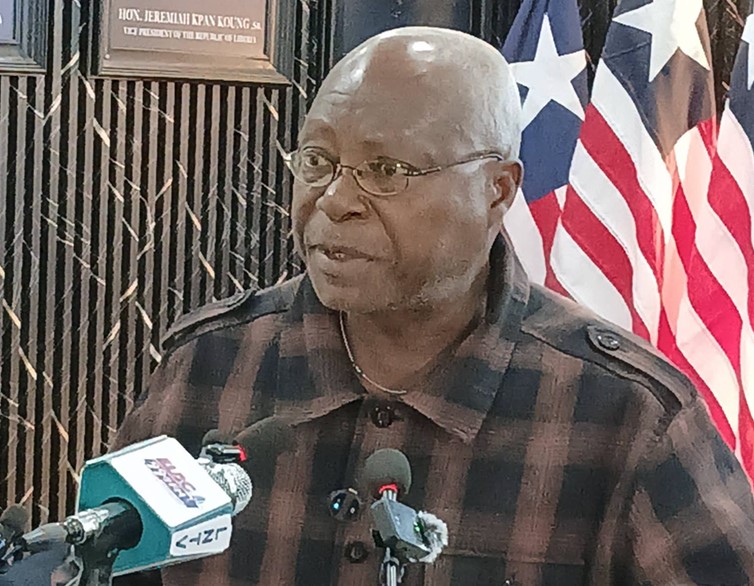
The Government of Liberia has declared October 2026 the Month of Good Governance, with the Governance Commission (GC) outlining a series of nationwide activities to promote accountability, transparency, integrity, citizen participation and effective public service delivery. The declaration was announced on Tuesday at the Ministry of Information’s regular press briefing at the Charles Gbenyon Press Hall in Monrovia.
Acting Chairperson of the Governance Commission, Professor Alaric K. Tokpah, formally presented the presidential proclamation to the public. He said the proclamation, issued by President Joseph Nyuma Boakai, Sr., represents a national commitment to strengthening governance and ensuring that public institutions operate with integrity and in the interest of citizens.
Beyond A Symbolic Observance
Prof. Tokpah said good governance encompasses a broad range of principles, including honesty, truthfulness, accountability, transparency, effectiveness and efficiency in government performance. According to him, the observance also focuses on inclusion and participation, quality service delivery, attention to marginalized groups and underserved communities, equity and adherence to the rule of law.
The Acting Chairperson stressed that the Month of Good Governance should not be treated as a merely symbolic event. He described it as an opportunity for government institutions, civil society, the private sector, the media and ordinary citizens to reflect on the quality of governance in Liberia and identify areas that need improvement.
What The Proclamation Says
The presidential proclamation states that good governance is essential to national stability, sustainable development and the protection of citizens’ rights and dignity. It further notes that a resilient, peaceful and democratic state depends on the continued strengthening of public institutions, ethical leadership, transparency, accountability, citizen participation and respect for the rule of law.
The proclamation also recalls the establishment of the Governance Commission through legislative action in October 2007, giving the institution a formal mandate to advance policies promoting integrity, anti-corruption and institutional efficiency. President Boakai’s proclamation calls for a shift from symbolic recognition of governance principles to rigorous, evidence-based evaluation of institutional performance, with citizens empowered to take part in assessing public institutions.
New Tools To Measure Performance
As part of the October observance, the proclamation calls for the use of the Scientific Governance Barometer to support the compilation of the annual State of Governance and Integrity Report. The Governance Commission, working with sister integrity institutions including the General Auditing Commission (GAC) and the Liberia Anti-Corruption Commission (LACC), is also expected to use the month to launch the National Integrity Index.
The Index will provide a framework for assessing and classifying public institutions in areas including ethical leadership, efficiency and financial openness. Another major component of the observance will be the institutionalization of Citizens’ Scorecards through town hall meetings, public dialogues and digital feedback mechanisms.
According to the proclamation, citizens’ perceptions will be built into institutional evaluations, giving the public a more direct role in assessing government performance. The initiative will also involve civil society organizations, educational institutions, the private sector and the media in public awareness campaigns and policy discussions.
The Governance Commission is expected to establish independent review panels drawn from these sectors to review and validate governance metrics before policy recommendations are submitted to the Executive. The panels would bring outside voices into the validation of the Commission’s findings.
Counties, Chiefs And Classrooms
The proclamation further calls on educational institutions, local government structures, traditional leadership councils and media houses across Liberia’s 15 counties to organize community dialogues and civic initiatives on integrity and civic responsibility. The aim is to carry the conversation beyond Monrovia into towns and villages.
Individuals, institutions and communities that show notable improvement and commitment to good governance and public integrity are expected to be recognized through an Exemplary Governance Recognition and Awards program. The recognition program forms part of the proclamation’s push to reward institutional performance.
The October Calendar
Providing details of the planned activities, Governance Commission Executive Director Jallah C. Kesselly said the month-long observance will be held under the theme, “Promoting Accountability and Transparency in Governance.” He said the activities are intended to raise public awareness, encourage citizen participation and strengthen governance practices across Liberia’s public institutions.
Kesselly explained that the Governance Commission emerged from Liberia’s post-war governance reform process following the 2003 Comprehensive Peace Agreement. The institution was first established as the Governance Reform Commission before being renamed the Governance Commission in October 2007, and former President Ellen Johnson Sirleaf served as its first chairperson.
According to the Executive Director, activities will officially begin on October 6 at the Governance Commission’s headquarters on 3rd Street, Sinkor, with President Boakai expected to serve as guest of honor. The Commission will then host a Good Governance March on October 16 to mobilize citizens and stakeholders around the principles of accountable and transparent governance.
A two-day National Good Governance Dialogue is scheduled for October 22 and 23 at the Ministerial Complex. The dialogue is expected to bring together government officials, civil society organizations, development partners, the private sector, the media and other stakeholders to examine governance challenges and identify practical ways to improve institutional performance and citizen engagement.
The month’s activities will culminate on October 30 with a National Integrity Index Awards Dinner, at which institutions and individuals demonstrating notable commitment to integrity and good governance are expected to be honored. Kesselly said the Commission expects the October program to go beyond ceremony and feed a broader national conversation about making government institutions more accountable and responsive.
He urged public institutions, civil society, educational institutions, traditional leaders, the private sector and the media to take an active part in the observance. His appeal extended to every sector named in the presidential proclamation.
A Call To All Stakeholders
The Governance Commission’s October program comes amid the administration’s stated emphasis on strengthening public institutions, improving accountability and increasing citizen participation in national governance. Through the proclamation, President Boakai called on ministries and agencies, educational institutions, traditional leadership structures, national and international organizations and other stakeholders to join the Commission in implementing programs suited to the Month of Good Governance.
The observance is expected to offer a national platform for reflection on Liberia’s governance system. It is also expected to create opportunities for citizens to engage directly with the institutions responsible for delivering public services and managing public resources.
See more Liberia News Network stories in Google Search by adding LNN as one of your Preferred Sources.
★ Add LNN as a Preferred Source