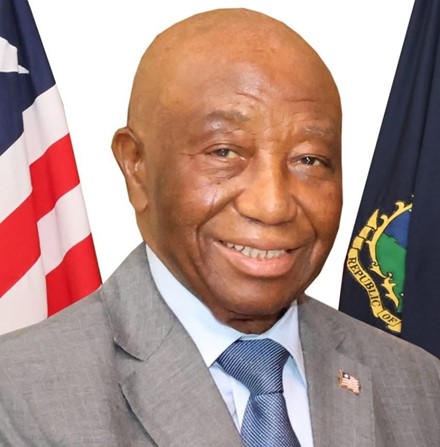
MONROVIA – President Joseph Nyuma Boakai, Sr. addresses the 81st Session of the United Nations General Assembly on Thursday. He speaks from a position no Liberian leader has held in more than six decades. Liberia now sits on the UN Security Council, nine months into a 2026–2027 term won with 181 votes. The country that once hosted UN peacekeepers will preside over the Council in December. That shift changes what a Liberian speech in New York can credibly promise. It also changes what the world will expect in return. The real test is practical. Can diplomatic prestige become leverage that reaches the market woman in Red Light and the farmer in Lofa? THE ANALYST reports.
\n
When President Boakai approaches the green marble podium of the General Assembly Hall in New York on Thursday, September 24, the setting will carry a different weight for Liberia. For years, Liberian presidents addressed the world body with speeches centered on post-conflict recovery, debt relief and appeals for international assistance.
\n
This time, the President speaks as the head of a sitting member of the Security Council, one of 15 states that decide questions of war, peace and sanctions.
\n
The General Debate of the 81st Session opened on Tuesday, September 22, under the theme “Restoring trust, managing transformation: a United Nations that delivers for all.”
\n
President Boakai, who leads a delegation that includes Foreign Minister Sara Beysolow Nyanti, is expected to set out Liberia’s priorities on peace and security, climate action, youth, women’s leadership and reform of the multilateral system.
\n
He does so not as the leader of a nation seeking rescue, but as the leader of one now helping to make decisions that govern world peace.
\n
Liberia won its non-permanent seat on June 3, 2025, taking 181 of the 187 valid votes cast in the General Assembly, far above the 128 required.
\n
It took up the seat on January 1, 2026, and serves alongside the Democratic Republic of Congo and Somalia as one of the Council’s three African members. Africa’s oldest republic last sat on the Council in 1961, and then only in a brief, partial capacity. According to Liberia’s Permanent Mission to the UN, the election made Liberia the last of the organization’s founding members to serve on the Council.
\n
Supporters of the administration rank the result among the most consequential diplomatic achievements in Liberia’s modern history. For them, the mandate caps years of intense diplomatic engagement and marks a clear rise in Liberia’s standing on the world stage.
\n
From Peacekeeping Subject to Arbiter
\n
The weight of the moment rests on how recently Liberia stood on the other side of the Council’s table.
\n
Two decades ago, the country was the subject of UN Chapter VII mandates, hosted thousands of foreign troops under the UN Mission in Liberia (UNMIL) and lived under international sanctions regimes.
\n
The world watched as the nation struggled through internal strife, and foreign envoys set the terms of engagement to hold together a fragile peace.
\n
That narrative has since been rewritten. The seat came on an uncontested African slate, but under a diplomatic push led by the Ministry of Foreign Affairs and Liberia’s Permanent Mission to the UN, the 181 votes gave it the character of an endorsement rather than a formality.
\n
The administration reads the size of that vote as international confidence in Monrovia’s political evolution and foreign policy vision.
\n
Officials say the victory recognizes Liberia’s democratic maturity, its peaceful transfers of power and its moral authority. A nation that endured civil war and the long work of conflict resolution, they argue, brings hard-earned practical knowledge to debates on crisis intervention, civilian protection and post-conflict institution-building.
\n
In that reading, Liberia moves from a passive consumer of international aid to an active architect of global security solutions.
\n
Repositioning Africa’s Oldest Republic
\n
President Boakai’s diplomatic strategy is to move Liberia from the margins of international politics back to its historic place as a pillar of pan-Africanism and multilateralism. Liberia was a founding member of both the United Nations and the Organization of African Unity, now the African Union, and it once championed anti-colonial movements and regional integration.
\n
By reclaiming a Security Council seat, the Boakai administration presents itself as restoring that heritage and re-establishing Liberia as a serious force in global governance.
\n
The seat gives Liberia a direct role on several international fronts. As a voice for the Global South, Liberian diplomats now sit at the table where sanctions, peacekeeping deployments and responses to global security crises are debated and put to a vote. Rather than observing from the sidelines, they help draft resolutions, negotiate peace frameworks and press the interests of developing states facing grave security threats.
\n
In December, Liberia is scheduled to take the Council’s rotating presidency, which will give it charge of the Council’s program of work for the month.
\n
Government officials also tie the seat to the economy. Their argument is that nations commanding respect in high-level forums attract foreign direct investment, infrastructure partnerships and bilateral economic agreements more readily than those on the periphery.
\n
Some international investors, officials say, read Council membership as a mark of institutional stability and lower sovereign risk, which can open funding channels for domestic projects.
\n
The seat also arrives at a critical juncture for West Africa. The Economic Community of West African States (ECOWAS) region has faced democratic setbacks, security threats and constitutional crises, and Burkina Faso, Mali and Niger have left the bloc.
\n
Against that backdrop, the administration argues, Liberia’s steady governance offers a model of stability and constructive regional diplomacy. It says West Africa’s security priorities will now be carried on the Council by a nation that understands the cost of instability from experience.
\n
What It Means at Home
\n
Critics often ask what a seat in New York means for the market woman in Red Light or the farmer in Lofa. The government’s answer lies in the return on international political capital. Officials say global standing translates into priority access to multilateral funds, climate financing and strategic trade partnerships.
\n
When Liberia speaks with authority in New York, the argument runs, doors open in Washington, Brussels, Beijing and Tokyo. The goodwill generated by the Council seat strengthens the government’s hand when it negotiates for development assistance, debt relief and private investment.
\n
Those resources feed directly into the administration’s development agenda, from roads and agriculture to education and the rule of law.
\n
A Proud Day for Liberia
\n
As President Boakai addresses the Assembly, Liberians in Monrovia, Gbarnga, Harper and across the diaspora can hold their heads high.
\n
The Lone Star flag, installed in the Security Council chamber in January, no longer flies in New York only as the banner of a standard member state. It now stands as a symbol of leadership and moral influence.
\n
For the administration, the journey from devastation to the world’s top security table proves that Liberia is back at the center of world diplomacy. The President’s task on Thursday is to show that the country is ready to serve, ready to lead and ready to ensure that the voice of freedom echoes once more from the rostrum of the United Nations.
See more Liberia News Network stories in Google Search by adding LNN as one of your Preferred Sources.
★ Add LNN as a Preferred Source