Published: September 25, 2026
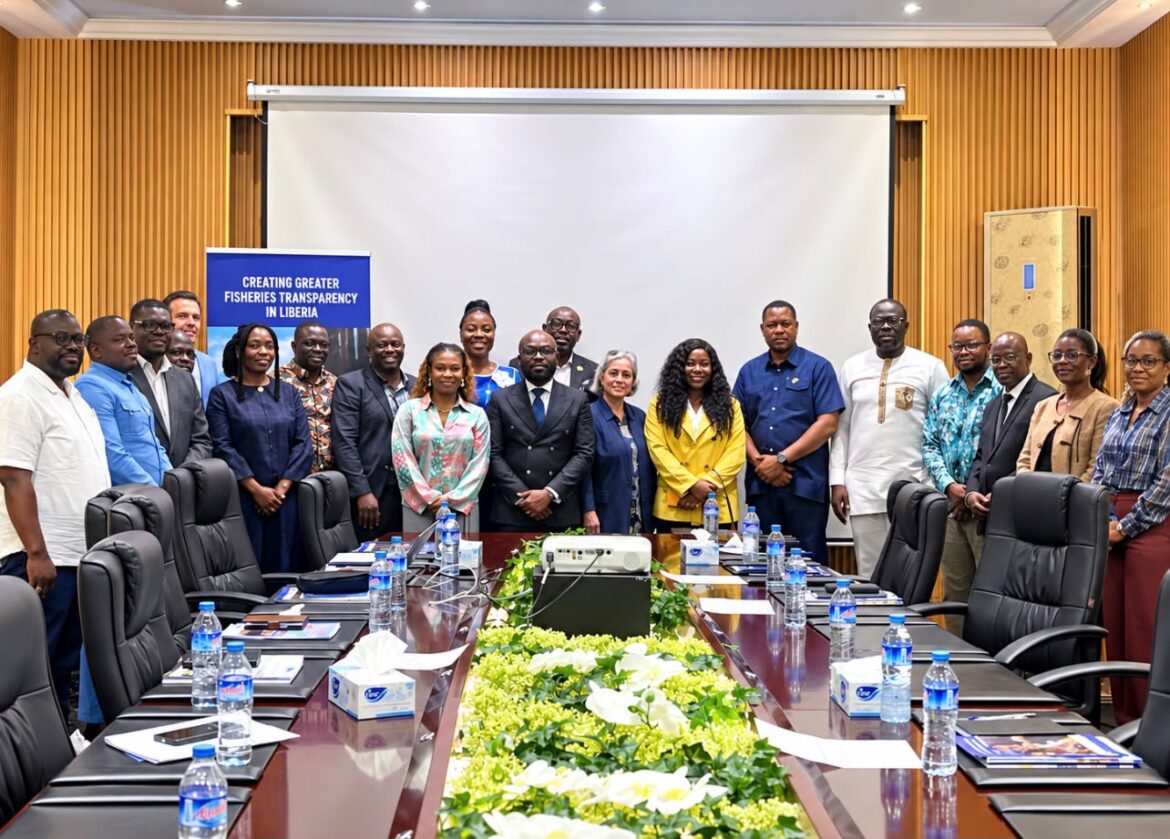
Officials from NaFAA, EJF and partner institutions attend the launch of a three-year fisheries transparency initiative in Monrovia.
MONROVIA — Liberia is moving to strengthen its fishery laws and enforcement system as government officials, lawmakers and development partners push for greater transparency in a sector long challenged by illegal fishing and weak regulatory enforcement.
The effort is being driven through a new three-year initiative, “Creating Greater Fisheries Transparency in Liberia,” launched Thursday in Monrovia with about US$500,000 in support from Oceans5 and implementation led by the Environmental Justice Foundation (EJF) in partnership with the National Fisheries and Aquaculture Authority (NaFAA).
The initiative is expected to support a review of Liberia’s fisheries and aquaculture legislation, efforts to combat illegal, unreported and unregulated fishing, implementation of the Global Charter for Fisheries Transparency and the ratification of the International Labor Organization’s Convention 188, which sets standards for work in the fishing sector.
But speakers at the launch made clear that passing new laws will be only part of the challenge.
The bigger test, they said, will be translating international commitments into Liberia’s domestic legal framework, enforcing those laws and ensuring that fishing communities and the wider public can see how the country’s fisheries resources are being managed.
EJF: Transparency Must Reach Communities
Opening the program, Cephas Asare, EJF’s West Africa regional manager, said the initiative builds on years of the organization’s work with Liberia’s government and fishing communities.
EJF began working in Liberia in 2019, initially focusing on sea turtle conservation in Grand Kru before expanding into community fisheries management.
Asare said the organization subsequently worked with NaFAA to support the decentralization of fisheries governance through Community Co-Management Associations, giving communities a greater role in managing local fisheries resources.
He said Liberia’s transparency drive received additional momentum at the 2025 United Nations Ocean Conference in Nice, France, where the country endorsed the Global Charter for Fisheries Transparency.
Oceans5 subsequently funded EJF to support Liberia’s implementation of the charter over three years.
Asare said the project will combine research, advocacy, national dialogue and collaboration with fishing communities and international partners.
It is also expected to support training for journalists, activists and community-based surveillance.
Asare stressed that the government cannot address the sector’s challenges alone.
“Money is a vehicle of evangelism,” he said, explaining the role of the funding in supporting the reform process.
NaFAA: Liberia Will Not Manage Fisheries “In the Dark”
NaFAA Director General J. Cyrus Saygbe Sr. said transparency is central to responsible management because Liberia’s fisheries resources belong to the Liberian people.
“We will not manage fisheries in the dark,” Saygbe said.
He said NaFAA is working to make information, science, technology, accountability, stakeholder participation and the rule of law central to fisheries governance.
Saygbe pointed to several measures already being implemented by the authority, including quarterly open houses, improvements to its website and a fisheries information management system that he said has reduced fish import permit processing from about three weeks to three days.
NaFAA is also preparing to launch a public call center in October through 6822-32.
The service is expected to allow members of the public to report suspected illegal fishing, dynamite fishing, destructive fishing practices, illicit drug activities, gender-based violence and other fisheries violations.
Saygbe said the authority is also pursuing greater decentralization because fisheries resources extend across Liberia’s coastal counties and inland waters.
EU Yellow Card Pressure Continues
Liberia’s fisheries reforms are also taking place against the backdrop of the European Union’s yellow-card process.
Saygbe said NaFAA has reduced the number of outstanding issues identified in March 2025 from 15 to four.
The remaining issues include managing unauthorized vessels, implementing post-flag measures, monitoring Liberia-flagged fishing vessels, and enforcing an effective sanctioning regime.
He said NaFAA is working with the Liberia Maritime Authority and the Liberia Coast Guard to address the remaining concerns.
The authority is also upgrading its Fisheries Monitoring Center with artificial intelligence and other technologies designed to identify vessels attempting to evade conventional monitoring, including by switching off automatic identification systems.
Three operational vessels are also expected to strengthen fisheries surveillance.
Saygbe said Liberia is reviewing the circumstances surrounding the August entry of the Spanish-flagged Zubara into the country’s exclusive economic zone after the vessel was detected while its AIS was deactivated.
He said Liberia is engaging relevant regional and international authorities to establish the facts.
Legal Experts Warn Against Passing Laws Without Domestic Application
The legal side of the reform emerged as a central issue at the launch.
The Liberia Maritime Authority said it has established a technical committee with NaFAA to address fisheries-related issues and remains committed to strengthening cooperation between the two institutions.
The authority also emphasized that ratifying an international convention is not necessarily the end of the process.
International obligations must be properly incorporated into Liberia’s domestic legal framework to be effectively applied and enforced.
Counselor Ramses Kumbuyah, Executive Director of the Law Reform Commission, said his institution is prepared to review proposed legislation before it reaches the Legislature.
He said the commission can conduct desk reviews, peer reviews and validation exercises to identify conflicts with the Constitution or existing laws before legislation enters the formal legislative process.
Acting Solicitor General Cllr. Abraham Boimah Sillah Sr. made a similar appeal for earlier coordination among government institutions.
Sillah said bills sometimes reach the Legislature after outside consultants draft them, only for legal and institutional concerns to emerge later.
He said early collaboration between agencies could help ensure proposed laws are consistent with Liberia’s existing legal framework and reduce delays during legislative consideration.
Findley: International Standards Must Be Made to Work in Liberia
Senator Gbehzohngar Milton Findley said Liberia must pay particular attention to the domestic application of international fisheries commitments.
Findley, who has previously worked on transparency issues in the extractive sector, said international partners may understand international standards but may not fully appreciate the realities of Liberia’s domestic environment.
He said those commitments must therefore be properly domesticated to work within Liberia’s legal system.
Findley also highlighted beneficial ownership as one of the difficult areas of fisheries transparency.
He said identifying the people who ultimately own or control fishing vessels could prove difficult when vessel owners are based outside Liberia and may resist disclosure.
But he argued that the difficulty should not lead Liberia to abandon beneficial ownership requirements.
Findley also stressed that legislation must be implemented after it is passed.
He said he would work with NaFAA as the proposed reforms reach the Legislature but acknowledged that lawmakers would have questions to consider before deciding on any legislation.
House Says It Will Consider Proposals
Rep. Austin Taylor, chairman of the House Committee on Maritime Affairs, said the Legislature has a responsibility to support initiatives that benefit Liberians.
Taylor said the House is prepared to consider proposals from NaFAA and other stakeholders after reviewing the relevant documents.
He said if legislation originates in the Senate, the House would be prepared to engage in the process as part of efforts to improve fisheries governance.
EU Commits More Support
The European Union reaffirmed its support for Liberia’s fisheries sector, with Maria Winnubst, a program officer with the EU’s Green Team, outlining more than a decade of EU assistance.
She said EU programs have supported aquaculture, food safety, private-sector development, fisheries governance and efforts to combat illegal fishing.
Winnubst also highlighted the new Starfish program, which began July 1 and carries €25 million in funding over five years, with a possible two-year extension.
The program will focus on coastal counties, sustainable economic development, private-sector opportunities in fisheries and environmental protection.
Magbollah Formally Launches Initiative
After the presentations and statements from government institutions, lawmakers and development partners, Madia H. Peters Magbollah, NaFAA’s deputy director general for administration, formally launched the initiative.
Magbollah described the project as part of a broader effort to strengthen transparency, accountability and governance in Liberia’s fisheries sector.
She said it would help strengthen the legal framework for combating illegal fishing, implement the Global Charter for Fisheries Transparency and advance the ratification of ILO Convention 188.
She also called for stronger monitoring, enforcement and accountability.
“It’s not just another event or project,” Magbollah said, stressing NaFAA’s commitment to building a transparent and sustainable fisheries sector.
She said NaFAA would work with the Legislature and other institutions to strengthen the legal framework governing Liberia’s fisheries.
The project now enters its implementation phase, with EJF and NaFAA expected to work with lawmakers, government agencies, fishing communities, civil society and international partners to translate Liberia’s fisheries transparency commitments into law, enforcement measures and practical reforms.
See more Liberia News Network stories in Google Search by adding LNN as one of your Preferred Sources.
★ Add LNN as a Preferred Source