Cllr. Varmah
MONROVIA, September 28, 2026 — Liberia’s newly enacted Cybercrime Act is heading toward a potential constitutional test as debate intensifies over whether some provisions of the law and their enforcement are consistent with constitutional protections for freedom of expression.
The controversy has grown following the arrest and subsequent release of political commentator Jerry Nyantee Wrotto and the announcement by the opposition Congress for Democratic Change (CDC) that it intends to challenge portions of the law before the Supreme Court.
Defending the legislation recently in Monrovia, Chairman and Chief Executive Officer of the Law Reform Commission (LRC), Cllr. Bornor M. Varmah, rejected claims that the Cybercrime Act contradicts the Kamara Abdullah Kamara Act of Press Freedom, which repealed several criminal speech offenses.
Varmah argued that the two laws address different legal issues and should not automatically be considered contradictory.
According to him, the Cybercrime Act should be allowed to operate within the judicial system, where courts can determine how its provisions apply in individual cases and whether any challenged provision is consistent with the Constitution.
He said the Legislature has the authority to enact laws, while the judiciary has the responsibility to interpret those laws and determine their constitutionality when a proper challenge is brought before the courts.
At the center of the debate is Article 15 of Liberia’s Constitution, which guarantees freedom of expression, including freedom of speech and of the press, while making individuals responsible for abuse of that freedom. The Constitution also protects the public’s right to information about the government and its functionaries.
Questions surrounding the Cybercrime Act have intensified over whether provisions dealing with online conduct could, depending on their interpretation and enforcement, extend into constitutionally protected political criticism and other forms of expression.
The Cybercrime Act covers a range of digital offenses, including unauthorized access to computer systems, unlawful interception, computer-related fraud, identity theft, cyberstalking and other prohibited conduct involving computer systems and data. Some provisions dealing with cyberstalking and harmful data messages have attracted particular attention in the free-expression debate.
Varmah, however, rejected suggestions that the legislation effectively reverses the reforms introduced under the Kamara Abdullah Kamara Act.
The 2019 press freedom law repealed Penal Law provisions dealing with criminal libel against the President, sedition and criminal malevolence. Critics of the Cybercrime Act have raised concerns that broadly interpreted restrictions on online communication could indirectly restore criminal penalties for forms of expression previously protected by those reforms.
Varmah maintains that the Cybercrime Act addresses offenses committed through digital platforms and that any dispute over whether particular provisions violate constitutional protections should ultimately be resolved by the courts.
The debate has moved beyond competing legal interpretations following the Wrotto case.
Wrotto was arrested after being accused of publishing or distributing allegedly manipulated digital content involving Vice President Jeremiah Kpan Koung. Police said he faced charges under provisions of the Cybercrime Act, including misuse of devices, cyberstalking and distribution of certain prohibited data messages.
His detention prompted legal and political controversy before Criminal Court “B” intervened following a habeas corpus petition and ordered his release from police custody.
Following the case, the CDC announced plans to petition the Supreme Court to determine whether portions of the Cybercrime Act are consistent with the Constitution.
The party says its proposed challenge will extend beyond Wrotto’s case and raise broader questions concerning political expression, criticism of public officials and the government’s authority to prosecute certain forms of communication distributed through digital platforms.
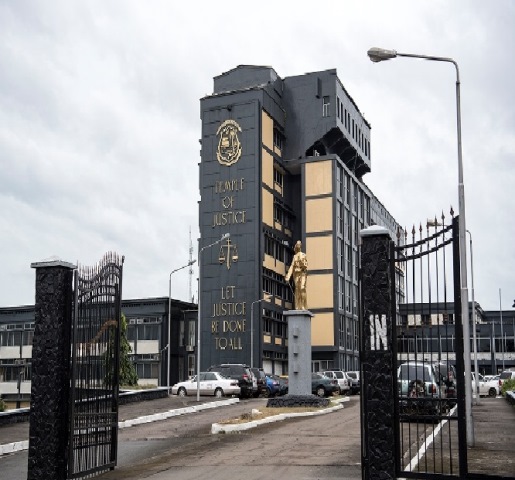
The emerging dispute could therefore place Liberia’s judiciary at the center of a consequential debate over where criminal online conduct ends and constitutionally protected expression begins.
For the Law Reform Commission chairman, that distinction should be determined through judicial interpretation rather than competing claims outside the courtroom.
For critics, however, the central question remains whether provisions of the Cybercrime Act—and the manner in which authorities enforce them—can be reconciled with Article 15 and Liberia’s existing protections for freedom of expression and press freedom.
If the CDC proceeds with its announced challenge, the Supreme Court could ultimately be asked to determine that constitutional boundary.
See more Liberia News Network stories in Google Search by adding LNN as one of your Preferred Sources.
★ Add LNN as a Preferred Source