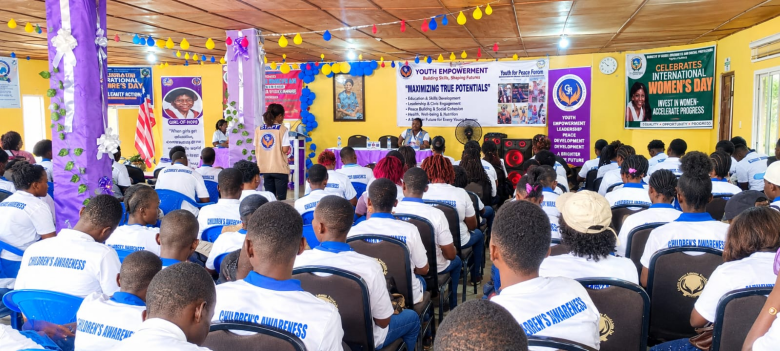
PAYNESVILLE — The Geneva Reeves-Johnson Foundation, Inc. (GREJOF) has commemorated the 15th anniversary of World Alzheimer’s-Dementia Day, with a call for early diagnosis, increased public awareness, and greater support for people living with dementia and their caregivers.
The celebration was held on Friday, September 25, 2026, bringing together high school students and health practitioners under the theme, “The Earlier You Know, The More You Can Do: A Dementia Diagnosis Matters.”
Speaking during the program, GREJOF Director of Programs and Training, John M. Gray, said the foundation is a non-political, non-profit charitable organization established in 2015 in the United States and in Liberia in 2022 in honor of the late Geneva Reeves-Johnson, who died in Georgia, USA, in 2013 from complications associated with Alzheimer’s disease and dementia.
Gray said the foundation continues Reeves-Johnson’s legacy through initiatives focused on mental health awareness, women’s rights, education, skills development, support for impoverished families, and community empowerment.
He said GREJOF’s Youth Empowerment and Mentorship Program (YEMP) seeks to equip young Liberians with skills and knowledge through seminars, vocational training, mentorship, peer discussions, and civic education.
According to Gray, YEMP also encourages young people to become ambassadors for Alzheimer’s and dementia awareness while promoting volunteerism, strategic youth leadership, non-violence, and education.
Serving as guest speaker, Dr. Juliett Whyeayea Diggs, a psychiatry specialist at the E.S. Grant Mental Health Hospital under the Ministry of Health, emphasized the importance of recognizing early signs of dementia and seeking medical assistance.
Dr. Diggs explained that dementia is a group of symptoms resulting from physical damage to the brain and can affect memory, communication, problem-solving, planning, and behavior.
She identified warning signs including memory loss that disrupts daily activities, difficulty planning or solving problems, confusion about time and familiar places, repeated questions, difficulty performing routine tasks, mood changes, withdrawal, and agitation.
“Dementia is not a normal part of ageing,” Dr. Diggs stressed, urging families to seek professional help when they notice significant changes in an elderly relative’s behavior or memory.
She said early diagnosis can help families understand the condition, access appropriate treatment and support, prepare for future care needs, and preserve the affected person’s independence for as long as possible.
Dr. Diggs also called for greater compassion toward people living with dementia, noting that understanding the condition can help reduce stigma and prevent families and communities from misinterpreting dementia-related behavior.
She encouraged communities to have open conversations about dementia and support affected individuals and their caregivers. “Always, the sooner you know, the more you can do,” she said.
See more Liberia News Network stories in Google Search by adding LNN as one of your Preferred Sources.
★ Add LNN as a Preferred Source