Monrovia, Liberia; September 29, 2026: Reforming electoral laws is an opportunity to strengthen democracy, expand inclusion, and build public confidence in the institutions that safeguard citizens’ voices.
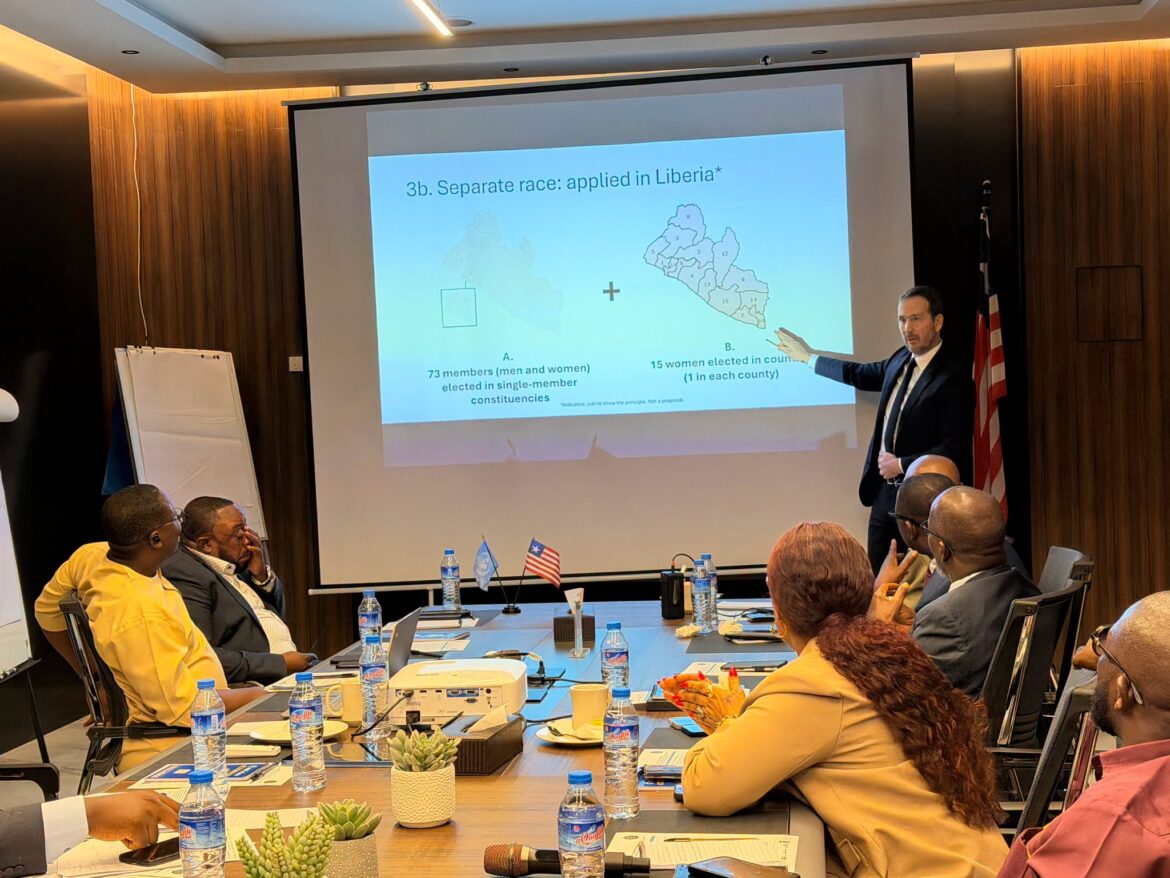
On September 22, 2026, representatives of Liberia’s House of Representatives, the National Elections Commission (NEC), the Law Reform Commission, the Women’s Legislative Caucus of Liberia, and United Nations partners concluded a two-day dialogue on electoral reform, reaffirming a shared commitment to strengthening Liberia’s democracy through nationally owned, inclusive, and evidence-based reforms.
Convened by the House Committee on Elections and Inauguration with support from the Liberia Electoral Support Project, the dialogue focused on reforms that can enhance electoral integrity and expand opportunities for women’s representation in elected office.
The event created a platform for lawmakers and electoral stakeholders to examine how Liberia’s electoral framework can become more inclusive, representative, and responsive ahead of the 2029 general elections and beyond.
The dialogue was supported through the Liberia Electoral Support Project, managed by UNDP and implemented in partnership with UN Women and the Netherlands Institute for Multiparty Democracy
(NIMD), with funding from the European Union, Irish Aid, and Sweden.
Technical expertise was provided by Maarten Halff, Senior Electoral Affairs Officer of the United Nations Electoral Assistance Division (EAD) in the Department of Political and Peacebuilding Affairs (DPPA), who shared comparative international experience on electoral law, electoral systems, and measures to strengthen women’s political representation.
Professor Thomas Romeo Quioh, Chair of the House Committee on Elections and Inauguration, outlined that the Committee is approaching electoral reform “not simply as an amendment to an election law, but as an opportunity to strengthen the overall democratic architecture of Liberia.”
This means ensuring that Liberia’s institutions reflect the aspirations of all Liberians, including women seeking to contribute to national leadership and decision-making.
Representative Quiah affirmed, “The Committee on Elections and Inaugurations remains committed to working with all stakeholders to advance an electoral framework that is credible, inclusive, transparent, constitutionally sound and responsive to the democratic aspirations of the Liberian people.”
Representative Priscilla Cooper, Vice Chairperson for National Affairs of the Women’s Legislative Caucus, encouraged participants to broaden the conversation beyond women’s participation as voters or candidates. Madam Cooper emphasized that meaningful political participation means giving women the opportunities to serve as legislators, policymakers, ministers, committee leaders and decision-makers who influence national development.
Acting Chairperson of the NEC, Commissioner Boakai Dukuly, reaffirmed the Commission’s readiness to implement reforms adopted through the legislative process, and encouraged lawmakers to seize the opportunity to advance reforms that address longstanding challenges that have contributed to conflict in the past, and strengthen the country’s democratic future.
UN Women Representative Monjurul Kabir underscored that increasing women’s political participation is not only about numbers.
“It is also about ensuring that women have meaningful opportunities to participate in decision- making processes and influence public policy”.
He encouraged participants to consider solutions that reflect Liberia’s constitutional framework while advancing equality, inclusion and democratic governance.
Louis Kuukpen, Deputy Resident Representative of UNDP, emphasized that decisions on Liberia’s electoral framework belong to Liberians and that international partners stand ready to support nationally led efforts through technical expertise, comparative experience, and capacity-building.
“The commitment demonstrated by Liberia’s institutions and stakeholders is an important step toward strengthening inclusive, credible, and resilient democratic institutions,” Kuukpen said.
Across the two days, participants agreed that electoral reform is a national process, led by Liberians, while benefiting from broad consultation, technical expertise and public engagement.
The discussions also helped identify priorities for continued dialogue as the nation advances its electoral reform agenda.
This highlighted a widely shared aspiration to see more Liberian women elected to the Legislature in 2029 and to remove barriers that continue to limit women’s political leadership, and participants agreed to consider specific legislative measures to advance this in more detail.
The dialogue underscored the strong engagement of Liberian institutions and stakeholders in shaping the country’s electoral future and reaffirmed the commitment of the United Nations and its partners to support Liberia’s efforts to strengthen democratic participation, inclusion, and representative governance for all citizens.
See more Liberia News Network stories in Google Search by adding LNN as one of your Preferred Sources.
★ Add LNN as a Preferred Source