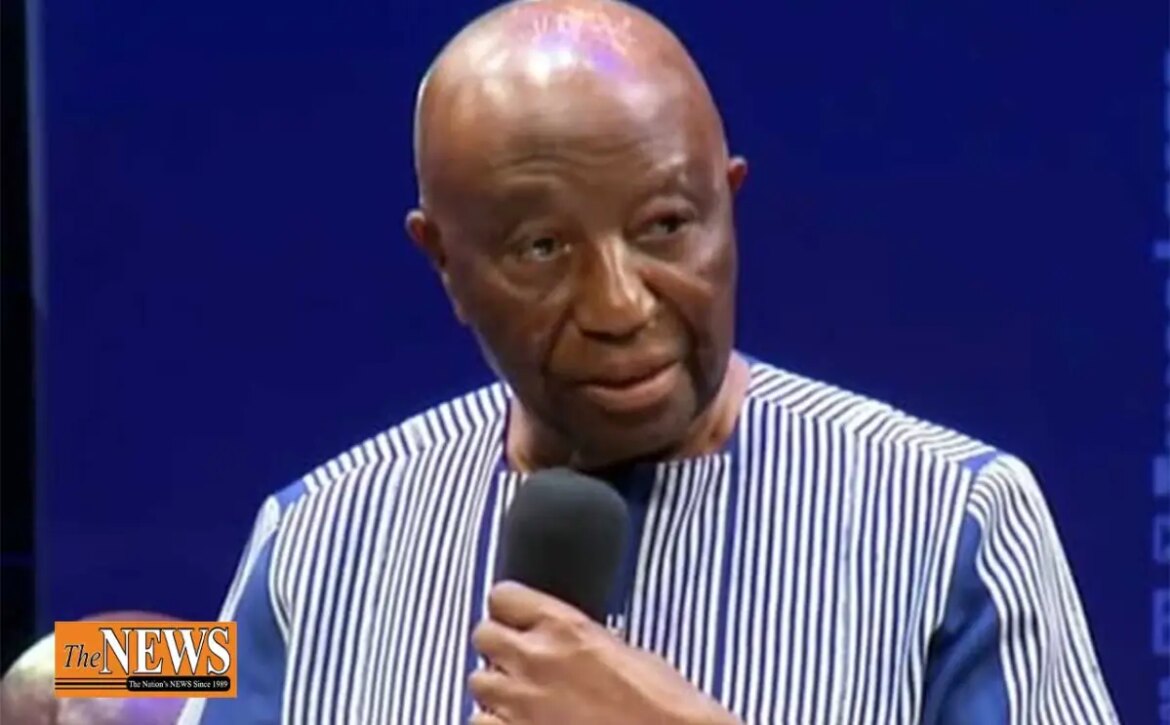
President Joseph N. Boakai has challenged Liberians in the diaspora to move beyond remittances and become active investors in the country’s economic transformation, declaring that Liberia’s development cannot be driven by government alone but requires the capital, expertise, innovation, and collective commitment of its citizens abroad.
Speaking at the Presidential Town Hall of the Liberia Diaspora Annual Conference (LDAC) at Harvest Intercontinental Church in Maryland, United States, President Boakai defended his administration’s record, highlighting economic growth, increased domestic revenue, road construction, agricultural reforms, electricity expansion and accountability initiatives under his government’s ARREST Agenda for Inclusive Development (AAID).
But beyond the catalogue of government achievements, the Liberian leader delivered a message that appeared directed at changing the country’s development narrative, rejecting what he described as the language of poverty reduction in favor of wealth creation.
“Something I don’t like to talk about. I don’t like to hear reducing poverty. If you are the poorest, you are poor. If you are poor, you are poor. So, I said, why not say creating wealth? I think it sounds more like it,” President Boakai told the gathering.
President Boakai’s remarks came as the diaspora conference adopted the theme, “From Dialogue to Delivery,” with discussions centered on investment, professional networks, innovation and practical contributions to Liberia’s national development.
Speaking further, the Liberian leader insisted that Liberians living abroad are not outsiders to the country’s development process but an indispensable part of its future. “The diaspora is not outside Liberia’s development story. It is a part of it,” he declared.
President Boakai called on diaspora organizations and professionals to respond to government efforts to establish a comprehensive database of Liberians abroad, arguing that reliable information on their locations, professional qualifications and areas of expertise would help connect them to opportunities at home.
According to him, the proposed diaspora engagement mechanisms include a Diaspora Investment Fund, a Diaspora Engagement Commission and Diaspora Savings initiatives, all intended to strengthen the relationship between Liberians abroad and the domestic economy.
The President said Liberia needs to move beyond merely counting its citizens overseas to connecting doctors, engineers, educators, entrepreneurs, researchers and other professionals with national development opportunities. Defending his administration’s economic performance, Boakai disclosed that Liberia’s economy expanded by 4 percent in 2024 and 5.1 percent in 2025, while inflation reportedly declined to approximately 4 percent by December 2025. Also, he cited an increase in gross international reserves from approximately US$475 million in 2024 to US$576 million in 2025.
On domestic revenue mobilization, the President highlighted what he described as a significant improvement in government collections, moving from approximately US$612 million in 2023 to US$699 million in 2024 and US$848 million in 2025. “The priority now is to translate stronger revenues into services, infrastructure,” he emphasized.
His remarks placed public expectations over revenue performance at the center of the administration’s development narrative, particularly as citizens continue to demand improved roads, electricity, healthcare, education and other essential services.
The President identified road connectivity as a central pillar of the ARREST Agenda, arguing that poor infrastructure increases the cost of doing business, food transportation, healthcare delivery and access to educational institutions. He referenced the dedication of the 81-kilometer Banga–Sanaiji Road in July 2026 and the groundbreaking of the Sanaiji–Konya–Zorzor–Yela corridor.
Boakai also cited a US$73.8 million road investment backed by the Arab Development Partnership, describing the projects as part of broader efforts to connect communities, open economic corridors and facilitate commerce.
According to the President, the infrastructure program extends beyond roads to include electricity, technology, public facilities and county-level investments. On electricity, Boakai pointed to the July 2026 energization of the Burkina electricity distribution network, which he said restored electricity supply after more than three decades. He also highlighted Liberia’s participation in the Côte d’Ivoire–Liberia–Sierra Leone–Guinea (CLSG) regional electricity interconnection project.
See more Liberia News Network stories in Google Search by adding LNN as one of your Preferred Sources.
★ Add LNN as a Preferred Source