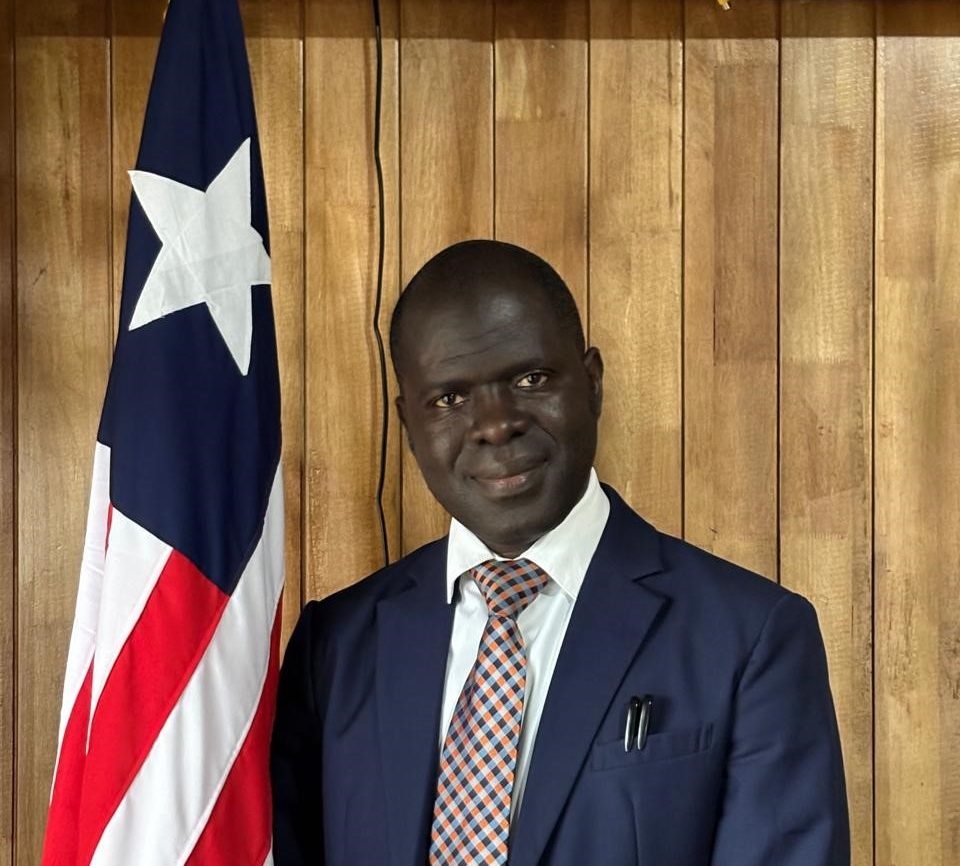
MONROVIA – Liberia writes a new development plan almost every time it changes government. Dr. Emmanuel K. Urey Yarkpawolo wants that habit broken by law. The Environmental Protection Agency chief proposes a 25-year national framework, carried out through successive five-year plans. His arithmetic is blunt. A six-year presidential term, he argues, can leave roughly three years of concentrated implementation. Planning eats the start; campaigning eats the end. He would legislate continuity, strengthen the Governance Commission and protect technical staff across elections. A public project register would settle who began what. Citizens would receive an annual report on promises, spending and delivery. As THE ANALYST reports, his test is whether plans can outlive the governments that write them.
MONROVIA: Dr. Emmanuel K. Urey Yarkpawolo, Executive Director of the Environmental Protection Agency (EPA), has proposed a 25-year national development framework, enacted into law and implemented through successive five-year plans, to protect Liberia’s development agenda from the disruptions of electoral cycles. In an article written as he departed Washington, D.C., he noted that successive governments since the civil wars have produced national development plans, from the Poverty Reduction Strategy and the Agenda for Transformation to the Pro-Poor Agenda and now the ARREST Agenda, but said his concern is “whether we consistently translate them into measurable results that citizens can track across administrations.”
Dr. Yarkpawolo said his reflections followed engagements in New York around the United Nations General Assembly and Security Council, including a side event on the nexus between climate change and resource conflict, and the Liberia Diaspora Conference, where more than 500 Liberians gathered. “These conversations have stayed with me as I reflect on the future of our country,” he wrote.
The Three-Year Window
At the heart of his argument is time. “A presidential term lasts six years,” he wrote, explaining that if an incoming administration spends its first year developing a plan, implementation gains momentum in year two, while campaigning and political positioning can increasingly shape development decisions by years five and six. “This can leave roughly three years of concentrated implementation,” he argued, adding that “we must ask how much momentum we lose through repeated planning and political competition.”
He also pointed to recurring disputes over credit, in which one government begins a project under its agenda and another continues or completes it under a different name. Such tensions, he wrote, “can deepen party divisions and weaken public trust,” adding: “Citizens deserve an honest account of each administration’s contribution, while the project remains a national achievement.”
Seven Pillars of Continuity
The framework he proposes rests on seven measures. First, he called for goals “that Liberians broadly own,” set through consultations across all 15 counties with political parties, communities, businesses, civil society and the diaspora, and covering jobs, education, health, infrastructure, food security and environmental protection. Second, he proposed a National Development Continuity and Planning Act requiring administrations to align their programs with the framework and report their progress, with major changes subject to public consultation and legislative scrutiny.
Third, he said governments should retain flexibility over policies and delivery methods, with five-year implementation plans identifying priorities, costs, funding sources, responsible institutions and deadlines. Fourth, rather than establish another institution, he proposed expanding the mandate of the Governance Commission to coordinate reviews, preserve records, assess progress and publish independent findings, with “operational independence, transparent funding, and freedom to report without political clearance.”
Fifth, he called for designated technical positions filled through open competition, staggered terms for commissioners and protected career appointments, balanced by performance reviews and fair procedures for addressing misconduct or poor performance. Sixth, he urged that every annual budget explain how spending advances the 25-year national goals, that governments publish their reasons before canceling major inherited projects, and that a public project register record when each project began, its funding, its progress and the contributions of successive administrations.
Seventh, he proposed an annual national progress report explaining “what was promised, what was spent, what was delivered, and what remains unfinished.” He cited Indonesia, Singapore, Japan and South Korea as countries that “offer different lessons in sustained planning and implementation.”
Dr. Yarkpawolo said President Boakai’s administration and the Legislature can begin the reform while implementing the ARREST Agenda. “Each administration should advance the work, receive fair recognition for its contribution, and leave the next government better placed to serve Liberia,” he wrote. The full text of his article appears on Page 2.
See more Liberia News Network stories in Google Search by adding LNN as one of your Preferred Sources.
★ Add LNN as a Preferred Source