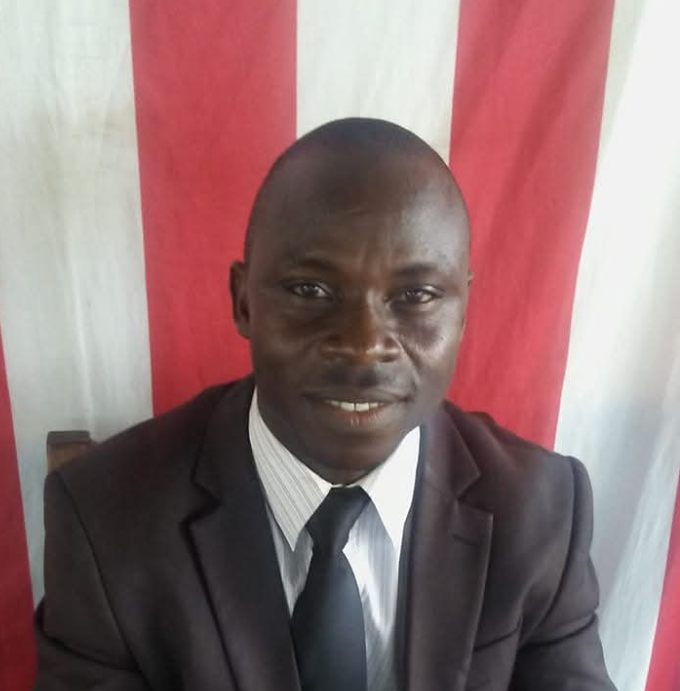
Dafuwah hasn’t made headlines with landmark rulings. What’s drawn attention instead is something smaller and, in some ways, harder to quantify that the way he runs his courtroom. Where the law allows for it, he’s known for slowing down before assigning winners and losers — asking questions, hearing both sides out fully, and testing whether the dispute in front of him can be settled through dialogue rather than confrontation
GBARNGA, Bong County — Ask most Liberians what the word “court” conjures, and the answer rarely involves comfort. For decades, the courthouse has stood in the public imagination as two separate buildings occupying the same address: one for those who can pay their way through the system, and another — slower, colder, more intimidating — for everyone else.
That divide wasn’t invented by any single scandal. It was built up over years of war, weak institutions, whispered accusations of bias on the bench, case backlogs that stretched on indefinitely, and legal fees that put the process out of reach for the people who needed it most. A farmer, a market seller, a motorbike taxi driver weighing whether to file a complaint wasn’t just asking “am I right?” They were asking whether they could survive the process long enough to find out.
A Different Kind of Magistrate
That backdrop makes it easier to understand why people in Gbarnga have started talking about Stipendiary Magistrate Richard M. Dafuwah, who took over the city’s Magisterial Court roughly a year ago from his predecessor, Daniel Dolokelen.
Dafuwah hasn’t made headlines with landmark rulings. What’s drawn attention instead is something smaller and, in some ways, harder to quantify that the way he runs his courtroom. Where the law allows for it, he’s known for slowing down before assigning winners and losers — asking questions, hearing both sides out fully, and testing whether the dispute in front of him can be settled through dialogue rather than confrontation.
People who’ve watched him work describe a magistrate who treats the poorest litigant with the same attention as anyone else. One resident familiar with the court’s proceedings put it simply: coming before Dafuwah, a person doesn’t feel dismissed for being ordinary — he lets them explain themselves fully before he acts. Another resident described the effect as almost as important as any verdict: being taken seriously restores a person’s faith that the process is actually working for them.
The Health Workers’ Case
The clearest test of that approach came when Bong County’s health worker protests spilled into legal territory. After a night in police custody, the workers’ leader was brought before the Gbarnga Magisterial Court — a moment that could easily have hardened into a standoff between striking workers and the government.
Instead, accounts from the community describe Dafuwah working to de-escalate the situation, engaging both sides directly rather than letting the confrontation deepen. It’s a small case study in what advocates of court-based mediation argue is possible: using the authority of the bench not to punish, but to create space for people to find their own resolution — without ever abandoning the law that governs the outcome.
That distinction matters. Mediation isn’t a replacement for adjudication, and no one — including Dafuwah’s admirers — argues it should be. Serious crimes, constitutional questions, and cases that legally demand a formal ruling still have to go through the full judicial process. But plenty of disputes that land in a magisterial court don’t need that kind of weight brought down on them. Sometimes what’s needed is simpler: someone willing to actually listen before deciding.
Justice as a Relationship, Not Just a Ruling
There’s a practical reason this matters beyond any single case. In a place like Gbarnga, the parties to a dispute don’t disappear from each other’s lives once a judgment is entered. They still share a market, a church, a school, a water source. A ruling can settle who’s legally right. It can’t necessarily repair what broke between two neighbors — but a resolution both sides had a hand in shaping just might.
That’s the argument residents make when they describe what they’ve seen from Dafuwah: that treating people with dignity and giving them room to be heard doesn’t soften justice — it expands what justice is capable of doing. As one community member framed it, people don’t just want a ruling; they want to be seen and treated with respect along the way, and that’s what they say they’ve gotten from him.
A Bigger Story Than One Courtroom
Dafuwah’s rising local reputation lands at a moment when Liberia’s Judiciary, under Chief Justice Yamie Quiqui Gbeisay Sr., has been pushing to make courts more present — and more credible — outside Monrovia. In September 2026, the Judiciary formally seated 73 newly appointed magistrates across all 15 counties, a move officials framed as extending access to justice into the country’s most remote areas.
Earlier, in June 2026, Gbeisay announced a performance-based evaluation system meant to reward professionalism and accountability among judges and magistrates annually.
Dafuwah’s rising local reputation lands at a moment when Liberia’s Judiciary, under Chief Justice Yamie Quiqui Gbeisay Sr., has been pushing to make courts more present — and more credible — outside Monrovia. In September 2026, the Judiciary formally seated 73 newly appointed magistrates across all 15 counties, a move officials framed as extending access to justice into the country’s most remote areas
Those are administrative moves, made from the top. But their success or failure will be measured almost entirely at the bottom — in rooms exactly like the one Dafuwah presides over. For most Liberians, the Supreme Court in Monrovia is an abstraction. The magistrate down the street is the actual, physical face of the justice system: the person who decides, in real time, whether the law is something that protects them or something that happens to them.
That’s precisely why a single magistrate’s demeanor carries outsized weight. A citizen who leaves a courtroom feeling heard walks away more willing to trust the next institution they encounter. A citizen who leaves feeling dismissed carries that suspicion into every future interaction with the state — and, in the worst cases, may decide that formal institutions aren’t worth the trouble at all, pushing disputes back into the community where they can curdle into retaliation and violence instead.
The Limits of Popularity
None of this means Dafuwah should be judged, or judge himself, by how well-liked he is. A magistrate’s job isn’t to be popular — it’s to apply the law, and sometimes that means handing down decisions that disappoint the very people who’d otherwise praise him. A year on the bench is a short track record, and his long-term legacy will rest on the consistency of his rulings, his independence from outside pressure, and his fidelity to due process — not on goodwill alone.
But the goodwill itself is worth paying attention to, because of what it reveals about what Liberians have been missing. The admiration building around Dafuwah isn’t really about him as an individual. It’s a proxy for a much larger and older demand: fairness, access, timeliness, and the basic experience of being taken seriously — regardless of how much money or influence a person carries into the room.
What Comes Next
The real test of Liberia’s judicial reform push won’t be the number of magistrates seated or systems announced. It will be what happens after those magistrates put on the robe: whether citizens feel safe walking into their courtrooms, whether the poor believe they’ll get a fair hearing, whether political and financial pressure gets resisted, and whether officers of the court can tell the difference between a dispute that needs mediation and one that demands a formal ruling.
In Gbarnga, those questions are still being answered one case at a time. Dafuwah’s tenure is young, and its ultimate verdict — pun intended — will be written over years, not months. But for now, his court offers a glimpse of something Liberians have long been told to expect and have too rarely experienced: a justice system that treats ordinary people as though they belong inside it.
For a country still working to convince its own citizens that the courthouse door swings open for everyone, that glimpse — however modest, however local — is not nothing.
See more Liberia News Network stories in Google Search by adding LNN as one of your Preferred Sources.
★ Add LNN as a Preferred Source