Published: October 2, 2026
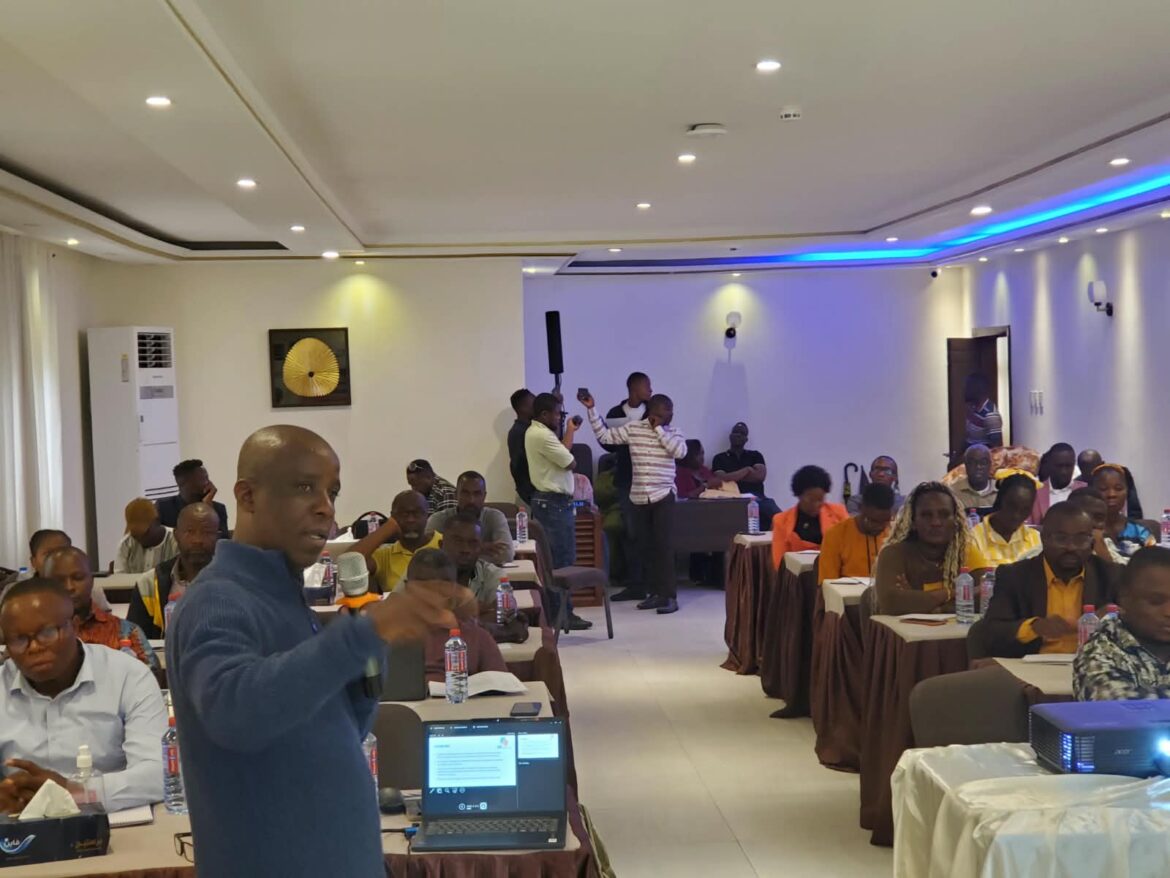
Civil society organizations and mining-affected communities are calling for comprehensive mining reforms following a roundtable at D’ Calabash Hotel in Congo Town, Monrovia.
MONROVIA — Leading Liberian civil society organizations and mining-affected communities are calling for an urgent and comprehensive overhaul of the country’s mining governance framework, warning that weak enforcement and limited transparency could allow the current mining boom to repeat Liberia’s decades-old experience of economic “growth without development.”
The call was made at a Civil Society and Local Communities Roundtable on Mining and Inclusive Sustainable Development, organized by the CSOs Consortium on Mining at D’ Calabash Hotel in Congo Town, Monrovia.
Participating organizations included the Sustainable Development Institute, Integrity Watch Liberia, Integrated Development and Learning, Civil Society Independent Forest Monitors, medica Liberia, Sustain Earth and Equity Defenders, along with representatives of mining-affected communities.
Delivering a statement at the gathering, renowned environmental advocate Silas Kpannan Ayoung Siakor of Integrated Development and Learning, or IDL, said mining remains a major part of Liberia’s economy, generating revenue and employment while also leaving a significant environmental footprint and serious social consequences.
“Liberia, we are in a position where we need to take that context into consideration and we need to think how to move forward. If mining is done right, it has the potential to deliver significant benefits for Liberia. But there is a big if to that,” Siakor said.
Siakor recalled the phrase “growth without development,” associated with Liberia’s mining boom of the 1950s and 1960s, warning that the country risks seeing history repeat itself if mineral wealth does not translate into tangible improvements in citizens’ lives.
“In the 1950s and 60s, the economy was doing well on paper, GDP was through the roof, investment was flowing in, 10 billion, 20 billion, 30 billion investment, but you don’t see that in people’s lives on the ground. And we are beginning to see that already as we speak,” he said.
Siakor cited what he described as discrepancies in mineral production and export figures, poor road conditions in gold-rich areas and health risks faced by young people transporting fuel as examples of how mining benefits are not being adequately captured by communities.
Despite those concerns, he said Liberia still has an opportunity to change course, pointing to what he described as growing consensus among civil society, government and industry actors over the need for reforms.
Siakor referenced Cllr. Boakai Kanneh, CEO of the Law Reform Commission, as saying the country’s Minerals and Mining Law of 2000 is severely outdated. He also cited the president of the Chamber of Mines as supporting a comprehensive overhaul of the sector rather than reforms limited to Class B and C mining licenses.
“The story could change if we reform and enforce the laws. Because it is one thing to change the law, it is quite another thing to abide by the law,” Siakor stressed.
Loretta Pope Kai, gender advocate and executive director of Sustain Earth and Equity Defenders, or SEED, said the roundtable is also examining gender equality and gender-based violence within the mining sector.
“We are here to build consensus among CSOs and communities around key principles and priority areas for mining sector reform and develop a shared reform agenda to inform engagement with government, the private sector, the legislature, and development partners,” Kai said.
She said participants are seeking to move beyond dialogue toward a common reform agenda that examines what is working, what is failing, who is benefiting from mining and who is being left behind.
According to Kai, the discussions are focusing on governance gaps, community and human rights concerns, revenue losses, environmental impacts and gender-responsive approaches.
Presenting on governance challenges, CENTAL Executive Director Anderson D. Miamen said Liberia already has laws, institutions and international commitments governing the mining sector, but implementation and enforcement remain weak.
Miamen referenced the Ministry of Mines and Energy, Environmental Protection Agency and Liberia Anti-Corruption Commission, as well as Liberia’s international commitments under the Kimberley Process and Extractive Industries Transparency Initiative.
He identified corruption risks including procurement irregularities, under-reporting of exports, opaque beneficial ownership structures in which actual company owners may be concealed behind fronts, and concerns surrounding the management of social development funds.
Miamen also raised concerns about fines being deposited into the government’s consolidated account instead of directly benefiting affected communities.
He cited Transparency International’s 2025 Corruption Perceptions Index, which ranked Liberia 136th out of 182 countries with a score of 28, below the Sub-Saharan African average of 32. He also referenced a CENTAL survey showing that 94% of respondents considered corruption a major problem.
Miamen warned that poorly governed mining can leave citizens facing poverty, loss of livelihoods, unemployment, environmental pollution and human rights violations while reducing government revenue and exposing both the state and mining companies to reputational risks.
The roundtable is expected to produce a shared assessment of the major challenges confronting Liberia’s mining sector, incorporate perspectives from mining-affected communities and identify gender-responsive priorities.
Participants also intend to develop a preliminary civil society and communities reform agenda to inform a comprehensive proposal for changes to Liberia’s mining governance framework ahead of the upcoming Mines and Energy Conference.
For participants, the debate is not about whether mining is inherently good or bad, but about fixing weaknesses in the sector so Liberia’s mineral wealth produces greater benefits for its people.
“The story could change if we reform and enforce the laws,” Siakor said. “Because it is one thing to change the law, it is quite another thing to abide by the law.”
See more Liberia News Network stories in Google Search by adding LNN as one of your Preferred Sources.
★ Add LNN as a Preferred Source