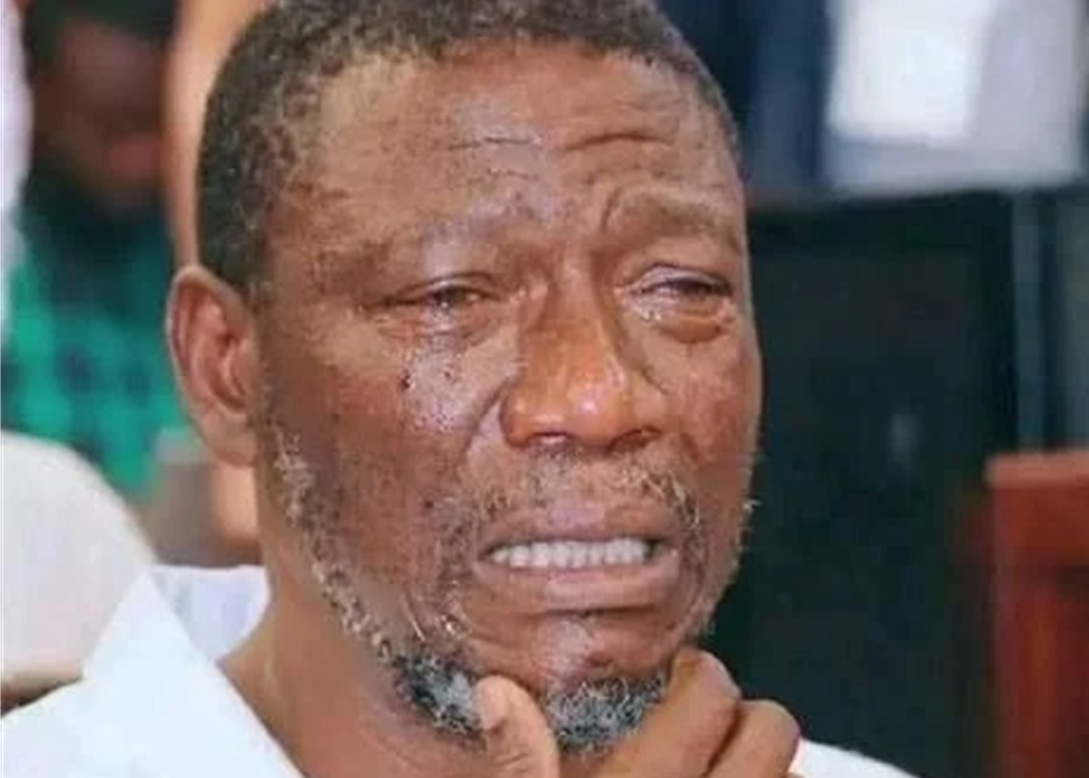
In the world of politics, there are pivotal moments when a politician shifts their stance. Sometimes, it feels as if they are stepping right into the shadows cast by their own previous statements.
Yekeh Kolubah may be experiencing one of those pivotal moments. For years, the former District #10 lawmaker crafted his political persona through a confrontational approach towards President Joseph Nyuma Boakai.
His rhetoric was often harsh, his accusations deeply personal, and his public demeanor appeared unwavering.
At one point, he made it clear that he would never consider reconciliation with Boakai.
Howbeit, the political landscape seems to have shifted. Words like “reconciliation,” “dialogue,” and even the phrase “Prodigal Son” have entered his vocabulary.
Kolubah’s recent appeal for reconciliation comes alongside reports of a potential truce with President Boakai. He has also expressed regret over his past relationship with the president.
His public remarks indicate that seeking reconciliation doesn’t equate to abandoning one’s principles. That’s certainly a commendable stance. Yet, Liberians have long memories. And those memories include the Kolubah who once viewed political reconciliation with Boakai as completely out of the question.
So, what has led to this change? That’s a question the former lawmaker cannot simply address with a biblical reference.
The “Prodigy Son” Has a Political Past
The biblical story of the prodigal son revolves around themes of leaving and returning, as well as the crucial elements of repentance and reconciliation.
This makes Kolubah’s choice of words particularly intriguing. If he is positioning himself as the prodigal son coming back home, then Liberians have every right to question: What is he coming back from? And what does he feel needs reconciling?
For years, Kolubah’s criticisms of Boakai were not expressed through mild political disagreement. Instead, they were often intense and highly personal.
For instance, in February 2025, he openly declared a political “war” against the President, labeling him an “embarrassment” and “another crook.”
This goes beyond typical political critique; it embodies the rhetoric of political warfare, which undoubtedly carries significant repercussions.
From “I Will Never to “Let Us Reconcile”
This is where the story takes a turn for the uncomfortable. A politician has the right to change his mind. In fact, there’s nothing wrong with acknowledging that the hostility of the past no longer aligns with today’s national interests.
However, the louder the declarations of the past, the more substantial the explanations for today must be.
If Kolubah previously told Liberians, in clear terms, that he would never seek reconciliation with Boakai, then his current message of reconciliation requires more than just a shift in tone.
It calls for an explanation. What changed? Was he mistaken before? Is he correct now? Was the earlier hostility merely political theater? Has the national interest truly evolved, or has the political landscape shifted around him?
These are valid questions—not because Kolubah is barred from reconciling with Boakai, but because public officials need to recognize that their statements become part of the public record.
And Then There Is the Expulsion
The timing adds an intriguing political layer to the development. Kolubah was expelled from the House of Representatives in April 2026 after lawmakers took action against him due to his comments on the Liberia-Guinea border dispute. He later contested the House’s decision, claiming he was not treated fairly.
President Boakai, on his part, has publicly distanced himself from the legislative proceedings, stating, “I’m not in the Legislature.” However, Kolubah has consistently linked his political challenges to the Boakai administration.
Now, months later, we hear talk of reconciliation. This does not confirm a political deal, nor does it indicate that Boakai orchestrated Kolubah’s expulsion.
It certainly does not verify that a reconciliation meeting has taken place. Recent reports highlight that neither the Executive Mansion nor any official sources have confirmed such a meeting. Yet, the timing is hard to overlook.
Politics Has a Long Memory
One of the key takeaways here isn’t just about Boakai; it’s about the nature of political rhetoric.
When politicians express anger, they often speak as if today’s adversary will always be an adversary.
Howbeit, situations can shift. Allies can turn into foes, and foes can become partners in negotiation.
What was once deemed impossible can suddenly become a topic for discussion.
That’s the essence of politics. Yet, it’s crucial to distinguish between reconciliation and revisionism.
Reconciliation involves acknowledging past divisions and seeking a path forward, while revisionism is about disregarding previous statements.
Liberians should advocate for the former rather than the latter. If Kolubah truly wishes to reconcile with President Boakai, he should feel no shame in expressing that desire.
At the same time, he must recognize the significant gap between his past statements and his current stance.
Mr. Kolubah, Liberians Are Listening
The expelled lawmaker now has a chance to clarify his position. Not through more insults. Not through more accusations. Not with another grand political statement. But with straightforwardness.
If the national interest calls for him to reconcile with President Boakai, he should express that clearly.
If he regrets some of the words he used against the President in the past, he should admit it openly.
If he thinks the opposition has become too fragmented or ineffective and that working together is now the better option, he should communicate that clearly.
And if he believes that reconciliation can happen without compromising his political beliefs, he should detail how that can be achieved.
No one should be judged for changing their stance when situations evolve. However, it’s also unreasonable to expect the public to overlook where that journey started.
The Final Question
Yekeh Kolubah once portrayed himself as a politician who couldn’t be intimidated, persuaded, or bow down to the political establishment.
Now, he references the Prodigal Son, marking a significant shift in his political stance.
However, the story of the Prodigal Son holds weight because he recognized his departure.
This brings us to Kolubah’s true challenge. If you are indeed returning, Mr. Kolubah, you need to explain to Liberians why you left and what has prompted your return.
Don’t ask them to forget the things you once said. Don’t expect them to ignore the political battles that took place. Don’t swap yesterday’s harsh words for today’s flowery language. Acknowledge your past, clarify your current position, and outline your vision for the future.
Reconciliation is a noble pursuit, but without accountability, it becomes just another political act.
After all that Yekeh Kolubah has said about Joseph Boakai, Liberians deserve clarity on whether the “Prodigal Son” has truly come back or if we are merely witnessing another act of political drama.
See more Liberia News Network stories in Google Search by adding LNN as one of your Preferred Sources.
★ Add LNN as a Preferred Source