
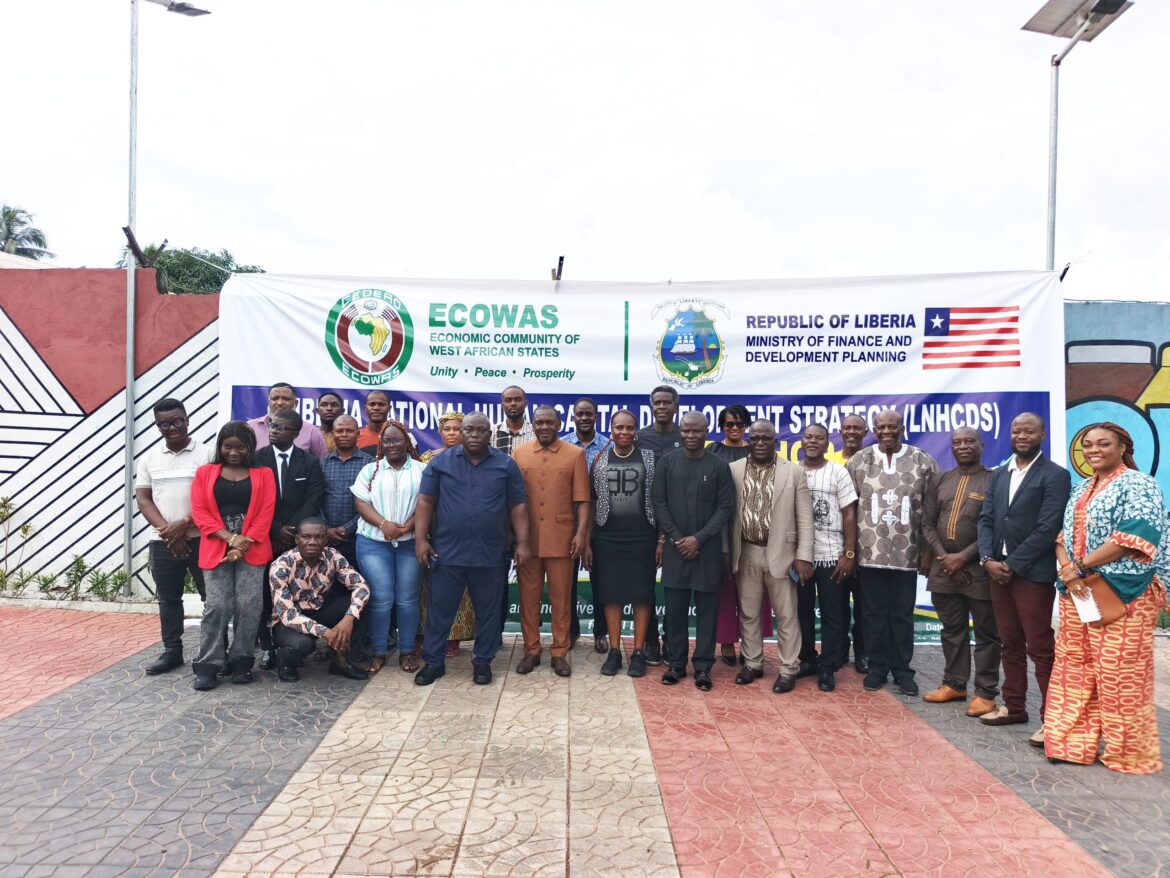
Kakata, Margibi County, October 16, 2026: The Government of Liberia, in collaboration with the Economic Community of West African States (ECOWAS), has begun a three-day workshop in Kakata to validate Liberia’s National Human Capital Development Strategy, aimed at strengthening institutional capacity, developing a skilled workforce, and improving public service delivery.
The workshop, scheduled for October 14–16, 2026, is being coordinated through the ECOWAS National Office at the Ministry of Finance and Development Planning (MFDP).
Held under the theme, “Validating Liberia’s National Human Capital Development Strategy: Aligning National Priorities, Regional Commitments, and Implementation Frameworks,” the exercise seeks to align the proposed strategy with Liberia’s ARREST Agenda for Inclusive Development (AAID) and broader ECOWAS development priorities.
Speaking at the opening ceremony, Assistant Minister for Development Planning J. Wellington Barchue I stressed that investing in human capital is essential to effective governance, sustainable economic growth, and improved public service delivery.
He said Liberia’s development ambitions cannot be achieved through policies and plans alone without skilled professionals, capable institutions, responsible leadership, and effective implementation.
“Ultimately, it is about making government work better for the people we serve,” Barchue said.
He emphasized that capacity development must go beyond training government officials to include practical investments in young graduates, public servants, and institutions capable of responding to citizens’ needs.
According to him, strengthening human capital will improve public financial management, domestic revenue mobilization, budget planning, and expenditure control while ensuring that limited public resources benefit vulnerable communities.
He maintained that every dollar collected, spent, or invested by the government must produce measurable development outcomes.
The Assistant Minister also called for stronger regional cooperation, noting that ECOWAS member states face similar institutional and development challenges that require coordinated solutions.
“I want you to ensure that the document contains clear priorities, realistic timelines, measurable targets, and sustainable financing arrangements,” he urged participants.
Barchue warned that development strategies often fail not because of a shortage of ideas, but because of inadequate funding, weak coordination, unclear institutional responsibilities, and poor implementation.
He stressed that capacity-building programs should be measured by improvements in institutional performance and service delivery, not merely by the number of workshops conducted or certificates awarded.
He further called for evidence-based policymaking, digital innovation, fiscal transparency, stronger accountability, and performance-oriented public administration.
The Assistant Minister urged ECOWAS institutions, member states, and development partners to mobilize sustainable funding, avoid duplication of interventions, and establish effective monitoring and evaluation mechanisms.
He also emphasized national ownership, regional cooperation, women’s leadership, and expanded professional opportunities for young people.
Barchue reaffirmed Liberia’s commitment to integrating human capital development into national planning and budgeting processes to ensure that investments translate into tangible benefits for citizens.
He challenged participants to develop a practical, results-oriented strategy that addresses Liberia’s current institutional challenges while preparing the country for future economic, technological, and governance demands.
The workshop brings together representatives of government ministries and agencies, the Liberia Marketing Association, ECOWAS-sponsored students, and local nongovernmental organizations.
See more Liberia News Network stories in Google Search by adding LNN as one of your Preferred Sources.
★ Add LNN as a Preferred Source