
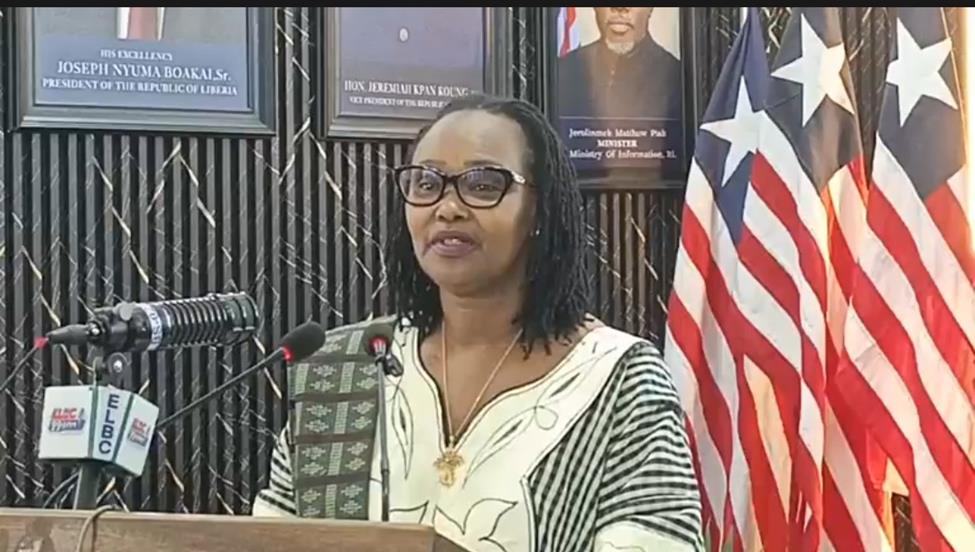
MONROVIA – Liberia’s peace is no longer in question. Its prosperity still is. That tension ran through Christine N. Umutoni’s briefing ahead of the 81st United Nations Day. Asked by THE ANALYST to measure the UN’s contribution, she offered no statistics. She credited Liberians’ own resilience instead. The answer is gracious. It also leaves the accountability question open. A country once on the Security Council’s agenda now sits on the Council itself. Yet young Liberians still ask for jobs, schools and decent clinics. Umutoni’s message is that peace must now pay dividends in ordinary lives. Moving UN Day to the Foreign Ministry signals partnership. As THE ANALYST reports, the harder test remains delivery for ordinary Liberians.
\n
United Nations Resident Coordinator in Liberia, Madam Christine N. Umutoni, has commended Liberia for its progress in sustaining peace and strengthening democracy, while acknowledging that poverty, unemployment, healthcare, education, and opportunities for young people remain significant development challenges.
\n
Speaking Tuesday at the regular press briefing of the Ministry of Information, Cultural Affairs and Tourism (MICAT) in Monrovia, Umutoni said Liberia had made considerable progress when compared with its past, describing the country’s peaceful environment and growing international role as important foundations for advancing its development agenda.
\n
Her remarks come ahead of Liberia’s commemoration of the 81st United Nations Day, scheduled for Monday, October 26, in collaboration with the Government of Liberia through the Ministry of Foreign Affairs (MOFA).
\n
The annual observance, traditionally held on October 24, marks the anniversary of the entry into force of the UN Charter, the founding document of the international organization.
\n
Resilience of Liberians Credited
\n
Responding to a question from THE ANALYST about how the United Nations’ contribution to Liberia could be assessed, particularly in addressing poverty, unemployment, education, and healthcare, Umutoni acknowledged that the country continues to face considerable challenges despite the progress recorded over the years.
\n
She, however, cautioned against attributing Liberia’s development achievements solely to international assistance, emphasizing the resilience, determination, and collective efforts of Liberians themselves.
\n
“From where the country came from to where it is now, it is very evident to everybody that the country is peaceful,” she said, pointing to the progress made in peacebuilding and social cohesion.
\n
Umutoni noted that Liberia’s transformation from a country that once depended on international peacekeeping efforts to maintain stability to one now participating in global discussions on peace represents a significant national achievement.
\n
She said Liberia’s growing international role demonstrates the importance of sustaining the peace it has achieved, particularly at a time when conflicts and instability continue to affect countries around the world. According to her, the country’s experience offers valuable lessons to the international community on peacebuilding and the efforts required to maintain stability after conflict.
\n
A country that previously featured prominently on the agenda of the UN Security Council because of its conflict situation is now serving as a non-permanent member of the Council, participating in discussions and decisions on international peace and security.
\n
For Umutoni, this transition represents more than a diplomatic accomplishment. It reflects the progress Liberia has made in strengthening its democratic institutions and creating conditions for further national development.
\n
She congratulated Liberians on the achievement, stressing that maintaining peace and stability is essential to ensuring that the country can take advantage of the opportunities created by its recovery.
\n
Despite the progress, the UN Resident Coordinator acknowledged that Liberia continues to confront longstanding socioeconomic challenges, including poverty, unemployment, and gaps in essential public services.
\n
She did not provide specific statistics to quantify the UN’s contribution to improvements in these areas during the briefing. Instead, she emphasized the gradual progress made by the country and the importance of building on existing achievements.
\n
Translating Peace into Dividends
\n
Umutoni said the next phase of Liberia’s development must focus on translating the dividends of peace into tangible improvements in the lives of ordinary citizens. She stressed that peace and stability should provide the foundation for addressing the economic and social conditions that continue to affect many Liberians.
\n
Her remarks highlight a central question facing Liberia as it continues its post-conflict recovery: how to convert decades of peacebuilding and international cooperation into greater economic opportunities, improved public services, and a better quality of life for its citizens.
\n
The challenge is particularly significant for young people, many of whom continue to seek employment, access to quality education, and opportunities to improve their living conditions.
\n
Umutoni acknowledged these aspirations, noting that young entrepreneurs and other young people want jobs, access to a better life, and the assurance that peace and stability will be maintained.
\n
She said creating these opportunities requires sustained collaboration among the government, the private sector, young people, women, development partners, and the wider population.
\n
According to her, national development cannot be left to the government or international partners alone but requires the participation of all sectors of society.
\n
Umutoni also credited Liberians for their resilience in responding to public health emergencies, particularly the Ebola outbreak and the COVID-19 pandemic. She said Liberia’s experience in mobilizing communities and strengthening community health responses demonstrated the capacity of its people to confront difficult national challenges.
\n
According to the UN official, the experience gained during the Ebola crisis helped inform responses to the COVID-19 pandemic, with Liberia’s community health workers playing an important role in public health efforts.
\n
She said such experiences illustrate how national determination, local knowledge, and cooperation can contribute to addressing complex development and public health challenges.
\n
“The work is not necessarily really because of the UN intervention or because of partners here; it is because of the resilience of Liberians,” Umutoni said, emphasizing the importance of recognizing the role citizens themselves have played in the country’s progress.
\n
Her comments underscore the importance of strengthening local capacity and ensuring that development initiatives build on the knowledge, experience, and contributions of Liberian communities.
\n
She further indicated that Liberia had moved beyond some of the deepest challenges associated with its past and was now positioned to build on the gains of peace to pursue further development.
\n
However, sustaining that progress will require continued investment in people, stronger governance, effective institutions, and opportunities capable of responding to the needs of the population.
\n
UN-Government Partnership Priorities
\n
Looking ahead, Umutoni said the United Nations would continue working with the Government of Liberia and other development partners through the country’s national development priorities and the UN-Government cooperation framework.
\n
She identified human capital development, governance, the rule of law, economic development, and environmental sustainability as major areas of focus for the partnership.
\n
The emphasis on human capital is particularly important as Liberia seeks to improve the capacity of its population to participate in economic growth and national development.
\n
Investments in education, health, skills development, and other essential services are central to preparing citizens, especially young people, to contribute meaningfully to the country’s future.
\n
Similarly, strengthening governance and the rule of law remains important to building public confidence, improving institutional accountability, and ensuring that development gains benefit citizens.
\n
Umutoni said the UN and Liberia share aligned objectives around peace, dignity, equality, opportunity, and prosperity for all. She expressed confidence that continued cooperation between the two sides would help the country build on its existing achievements while addressing emerging challenges.
\n
However, the success of these priorities will depend on sustained implementation, effective coordination, and the ability to translate development commitments into measurable improvements in people’s lives.
\n
UN Day at Foreign Ministry
\n
Meanwhile, Umutoni announced that this year’s United Nations Day celebration will take place on October 26 at the MOFA in Monrovia. The event is being organized by the United Nations in Liberia in collaboration with the Government of Liberia, under the leadership of the MOFA.
\n
She said the decision to host the celebration at the ministry’s premises for the first time represents a reflection of the strong and enduring relationship between Liberia and the United Nations. In previous years, the commemoration had been held at the UN One House compound, while some editions were organized in Liberia’s counties.
\n
Umutoni described this year’s event as both a celebration of Liberia’s achievements and an opportunity to reflect on the work that remains necessary to achieve sustainable development.
\n
The commemoration will highlight the country’s progress in peacebuilding, recovery, and resilience, as well as the role of international cooperation in supporting its development journey.
\n
It also comes at a significant moment in Liberia’s diplomatic history, following the country’s assumption of a non-permanent seat on the UN Security Council. Umutoni said Liberia’s presence on the Council represents a source of pride for the country and the African continent, while reflecting the country’s growing participation in regional and global efforts to address shared challenges.
\n
She noted that the event would provide an opportunity to strengthen the partnership between Liberia and the United Nations and reaffirm their shared commitment to peace, development, human rights, and international cooperation.
\n
Youth at Center of Celebration
\n
Umutoni disclosed that young people will feature prominently in the celebration, including an opportunity to express their aspirations under the theme “Liberia We Want by 2030.” She said the participation of young people is important because they represent the country’s future and must have opportunities to contribute to decisions and discussions affecting national development.
\n
According to her, the event will include messages from government officials and young people, cultural performances, exhibitions, and other activities demonstrating the cooperation between Liberia and the United Nations.
\n
She said the celebration would also help younger generations understand Liberia’s history and appreciate the progress the country has made since its period of conflict.
\n
For young Liberians who did not experience the country’s civil conflict, she noted, Liberia’s current position as a peaceful nation participating in global decision-making provides an opportunity to imagine a future shaped by transformation and continued development.
\n
However, Umutoni stressed that sustaining peace requires more than celebrating past achievements. It also requires responding to the expectations of citizens who want employment, improved living conditions, and a stable environment in which they can pursue their ambitions.
\n
She said the aspirations of young people must remain central to discussions about Liberia’s future, particularly as the country works toward its long-term development objectives.
\n
As part of the commemoration, Umutoni called on Liberians across the country to participate in reflecting on the values that unite the nation with the wider international community.
\n
She also appealed to media institutions and other organizations to help ensure that citizens in all counties receive information about the celebration and its messages. She described the media as an important partner in informing, educating, and connecting communities, noting that effective communication is essential to the success of public events and national development efforts.
\n
The UN Resident Coordinator maintained that Liberia’s experience demonstrates what can be achieved when peace is sustained and partnerships are strengthened over time.
\n
She said the country had established a strong foundation for continued progress, while acknowledging that emerging challenges would require renewed cooperation and collective action.
\n
As Liberia prepares to mark the 81st United Nations Day, her message is that the country’s peacebuilding achievements must serve as a foundation for a new phase of development—one that delivers more opportunities for young people, strengthens public institutions, and improves the lives of ordinary citizens.
\n
For the United Nations and the Government of Liberia, the occasion is therefore expected to serve not only as a celebration of their longstanding partnership but also as a reminder of the work required to turn the country’s development aspirations into lasting results.
See more Liberia News Network stories in Google Search by adding LNN as one of your Preferred Sources.
★ Add LNN as a Preferred Source