
Liberia’s reported collection of more than US$1 billion in domestic revenue during the first nine months of 2026 is, no doubt, a major fiscal milestone for the administration of President Joseph Nyuma Boakai.
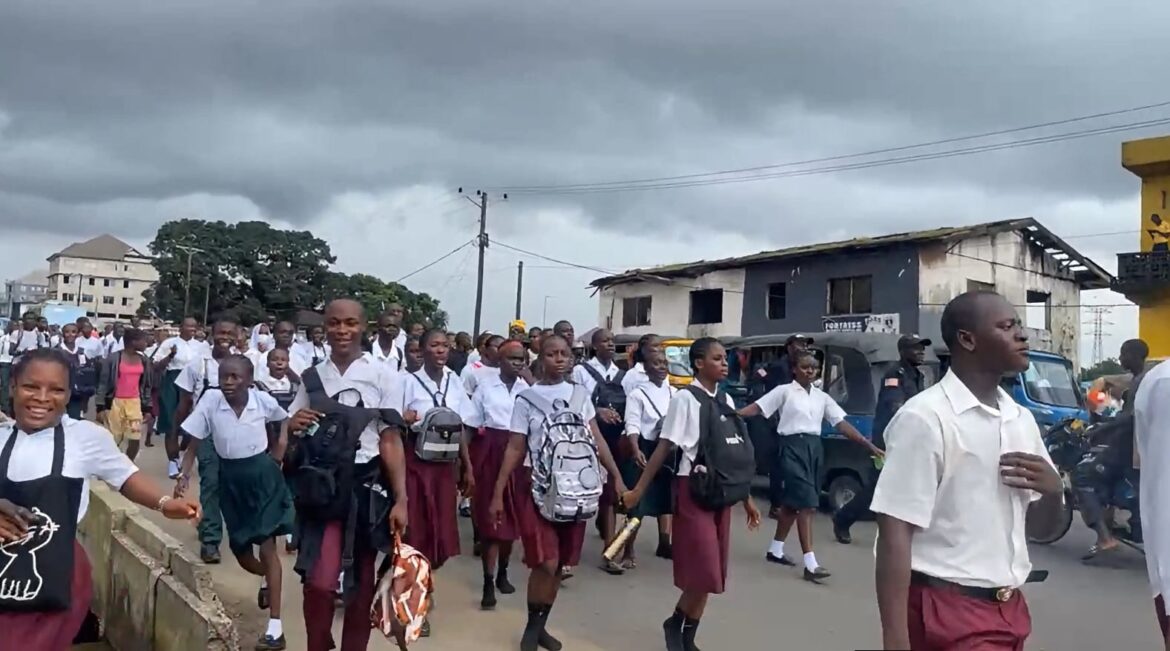
But beyond the celebration, one fundamental question demands a clear answer: What difference has this record revenue made in the lives of ordinary Liberians grappling with the high cost of living, while students protest poor educational conditions?
The government may have improved its revenue-generating capacity, but the true test of success is whether citizens can feel tangible improvements in their daily lives.
We commend the administration for mobilizing more domestic resources to finance national development. However, collecting more money does not, by itself, translate into better living standards.
For ordinary Liberians, economic progress is measured by affordable food, accessible healthcare, quality education, decent jobs and reliable infrastructure.
When these basic needs remain beyond the reach of many households, record revenue figures risk becoming mere government statistics rather than proof of meaningful national progress.
The students’ protests make the matter even more urgent. When young people take to the streets over educational conditions while the government announces record revenue, the troubling contrast cannot be ignored.
A May 2026 report by Human Rights Watch put Liberia’s fiscal year 2026 education allocation at about US$136 million, representing approximately 11 percent of total government spending, while raising concerns over the distribution of resources across the education system.
The allocation and execution of education spending must therefore be scrutinized to determine whether basic and secondary schools are receiving adequate support alongside tertiary institutions.
Liberia cannot build a prosperous future while children confront preventable barriers to learning and young people question whether the education system is serving them.
Education is not merely a budgetary obligation; it is an investment in Liberia’s future. Underfunded schools and poor learning conditions undermine the development of the skilled workforce needed to drive economic transformation.
The revenue debate also raises concerns about economic fairness. Measures to boost revenue, including changes to the standard goods and services tax rate and selected excise duties, must be weighed against their impact on consumers.
Consumption taxes can deepen the burden on low-income households that spend much of their earnings on basic necessities. Revenue mobilization is necessary, but its benefits must reach beyond government operations to the citizens whose spending and economic activities sustain the public purse.
The government says the revenue collected is financing public obligations and development programs. Indeed, it would be misleading to suggest that the entire US$1 billion should remain idle in government accounts.
The central issue is not simply where the money went, but whether it produced results equal to Liberia’s pressing development needs.
Moreover, increased revenue alone will not solve Liberia’s unemployment and poverty crises. Sectors such as mining may yield substantial government receipts without creating enough decent jobs for the broader population.
Broad-based progress requires investment in productive sectors, stronger support for local businesses, vocational training and real opportunities for young people to enter the workforce.
The government must ensure that economic growth creates livelihoods, not merely more money passing through public accounts.
Student protests and economic hardship do not automatically prove that increased revenue has failed to benefit the country. They do, however, demand serious scrutiny of whether public spending is addressing the needs that matter most to citizens.
Ultimately, the US$1 billion revenue milestone should be an opportunity to accelerate inclusive development, not an excuse for government complacency.
The Boakai administration must demonstrate that increased domestic resources are delivering better classrooms, functioning health facilities, improved roads, decent jobs and greater economic security.
Liberians cannot be expected to judge national progress by revenue announcements while they struggle to afford basic necessities.
The decisive question is no longer how much money the government can collect, but how responsibly and effectively it can use that money to improve the lives of the people.
Record revenue may strengthen the national treasury, but only visible improvements in living conditions will make the achievement meaningful to ordinary Liberians. That is the impact the public deserves to see.
See more Liberia News Network stories in Google Search by adding LNN as one of your Preferred Sources.
★ Add LNN as a Preferred Source