
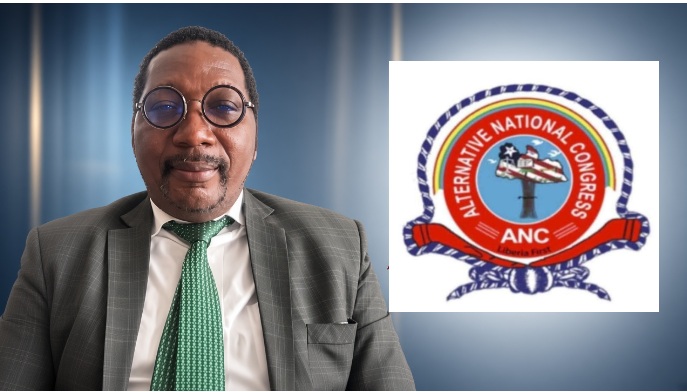
MONROVIA, LIBERIA — Alternative National Congress (ANC) Chairman Lafayette Gould has called for the abolition of Liberia’s Ministry of Information, accusing the institution of wasting taxpayers’ money while questioning the administration of President Joseph Nyuma Boakai over what he described as the lack of meaningful development after nearly three years in power.
\n
In a strongly worded interview with a local radio station, Gull argued that Liberia cannot continue spending scarce public resources on government institutions that, in his view, duplicate the functions of other agencies without delivering sufficient benefits to the population.
He particularly criticized the Ministry of Information, arguing that taxpayers should not be burdened with the salaries of officials whose public engagements, he alleged, focus on insulting and denigrating critics rather than providing credible information about government policies and performance.
\n
Gull also used the interview to defend ANC political leader Alexander B. Cummings, describing him as a responsible and experienced leader capable of leading Liberia toward meaningful national development.
He argued that Cummings’ experience managing multinational institutions worth billions of dollars should not be dismissed simply because he has not won a presidential election.
\n
According to Gull, Liberia needs leadership with the experience, responsibility, and commitment to deliver results rather than political figures whose principal qualification is electoral victory.
‘We Need to Scrap the Ministry of Information’
\n
Gould called for the closure of the Ministry of Information, arguing that its responsibilities could be handled by communications personnel already employed across government ministries and agencies.
“We need to scrap the Ministry of Information,” he said, maintaining that the government could reduce public expenditure and redirect resources toward development by eliminating what he considers an unnecessary layer of bureaucracy.
\n
He questioned why the government should maintain a separate ministry for public information when individual ministries already have personnel responsible for communicating their activities, policies, and programmes.
In his view, the continued existence of the ministry raises questions about the government’s priorities at a time when many Liberians are struggling with economic hardship, unemployment, inadequate infrastructure, and limited access to essential services.
\n
Gull further argued that the ministry should not become a platform for officials to attack critics instead of explaining government decisions and responding to legitimate public concerns.
He insisted that Liberian taxpayers deserve value for their money and should not be expected to finance what he characterized as insults and political attacks directed at people who question the government.
\n
His comments place the ministry’s role, performance, and use of public funds at the center of a wider debate about accountability and the cost of maintaining Liberia’s government machinery.
However, determining whether abolishing the ministry would produce substantial savings would require an examination of its budget, staffing, statutory responsibilities, and the cost of transferring its functions elsewhere.
\n
Gould: Cummings Is Capable of Leading Liberia to Success
In defending Cummings, Gull argued that Liberia should assess political leaders on their experience, record, and capacity to manage institutions rather than judge them solely by whether they have won elections.
\n
He described Cummings as a responsible leader whose experience managing multinational institutions worth billions of dollars demonstrates the kind of background that should be considered in discussions about Liberia’s future leadership.
Gould maintained that running major institutions and winning elections are different challenges, suggesting that electoral success alone does not establish whether a political leader can effectively manage a country.
\n
He rejected the idea that Cummings’ failure to secure the presidency in a previous election should be used to discredit his professional background or leadership credentials.
For Gould, Cummings remains a figure capable of helping deliver the change Liberia needs.
\n
His endorsement also underscores the ANC chairman’s argument that Liberia requires leadership focused on sound management, national development, and improving the living conditions of ordinary citizens.
The broader question, however, is how any prospective leader would translate professional experience into practical solutions for Liberia’s persistent problems, including poverty, unemployment, poor roads, electricity shortages, and weaknesses in public service delivery.
\n
‘Three Years Later, What Has Changed?’
Gould also challenged the Boakai administration to demonstrate tangible results from its time in office, arguing that the government’s campaign promise to rescue Liberia must be measured against the everyday experiences of citizens.
\n
“It is unacceptable that nothing has changed after three years,” he said.
His criticism reflects frustration over what he considers the gap between the government’s political promises and the improvements Liberians expect to see in their communities.
\n
For ordinary citizens, the assessment of an administration often comes down to practical questions: Are roads becoming more accessible? Are employment opportunities expanding? Are schools and hospitals improving? Is electricity becoming more reliable? Are families finding it easier to afford basic necessities?
These questions require answers supported by verifiable evidence, including completed projects, budget allocations, expenditure records, and measurable changes in public services.
\n
While the government may point to its own programmes and achievements, Gull’s challenge highlights the importance of demonstrating how those initiatives translate into tangible benefits for the population.
The administration’s development record should therefore be assessed against its commitments, documented results, and the challenges that remain unresolved.
\n
Independence Day Must Deliver More Than Speeches
Gould further argued that Liberia’s Independence Day celebrations should be marked by concrete development achievements rather than ceremonies and speeches alone.
\n
He maintained that each Independence Day should provide an opportunity for the government to present the Liberian people with a tangible development project or another meaningful national benefit.
His proposal reflects a broader demand for public officials to demonstrate progress through visible results rather than political announcements.
\n
For a population confronting economic hardship and inadequate public infrastructure, the expectation is that national celebrations should also serve as reminders of what the government has accomplished and what remains to be done.
Gould said Liberia needs a fundamental change in how the country is governed, with greater attention to public welfare and the responsible use of state resources.
\n
Political Collaboration and the Search for Change
Gould also explained that his political collaboration with experienced individuals is driven by the objective of gaining state power and establishing leadership capable of governing responsibly.
\n
He argued that Liberia needs leaders prepared to confront the country’s difficult challenges rather than focus exclusively on electoral competition or political attacks.
His remarks suggest that experience, institutional management, and the ability to deliver development should be central considerations in evaluating political leadership.
\n
For Gould, the objective is not simply to win an election but to establish a government capable of improving the lives of Liberians.
The Accountability Question
\n
Gould’s intervention raises two major questions for Liberia’s political leadership: whether public resources are being spent efficiently and whether the government is delivering the improvements citizens were promised.
His demand to abolish the Ministry of Information challenges the government to justify the institution’s cost and demonstrate the value it provides to taxpayers. His defense of Cummings, meanwhile, brings professional experience and leadership credentials into the debate over Liberia’s future.
\n
Ultimately, the claims made by political leaders must be weighed against evidence. The Ministry of Information’s performance can be assessed through its budget, public communications, and institutional responsibilities, while Cummings’ leadership credentials and any prospective administration’s development plans can be examined against their documented records and specific policy proposals.
As Liberia approaches another period of intense political debate, Gould’s message is that the country needs leadership focused on results, accountability, and the welfare of its people.
\n
The central issue remains whether Liberia’s political institutions and leaders can demonstrate that public resources are producing meaningful improvements in the lives of ordinary citizens.
See more Liberia News Network stories in Google Search by adding LNN as one of your Preferred Sources.
★ Add LNN as a Preferred Source