
Published: October 30, 2026
MONROVIA — Cabinet Director General Nathaniel T. Kwabo has announced plans to expand the government’s Performance Management and Compliance System (PMCS) to individual employees across ministries, agencies and commissions, warning that public officials must be held accountable for implementing government decisions and delivering measurable results.
The initiative will introduce clearly defined performance objectives and targets for employees at various levels of government, linking their responsibilities directly to commitments made by ministers and agency heads to President Joseph Nyuma Boakai.
Kwabo said the expansion is intended to address weaknesses in government coordination, strengthen institutional accountability and ensure that Cabinet decisions translate into tangible improvements in public service delivery.
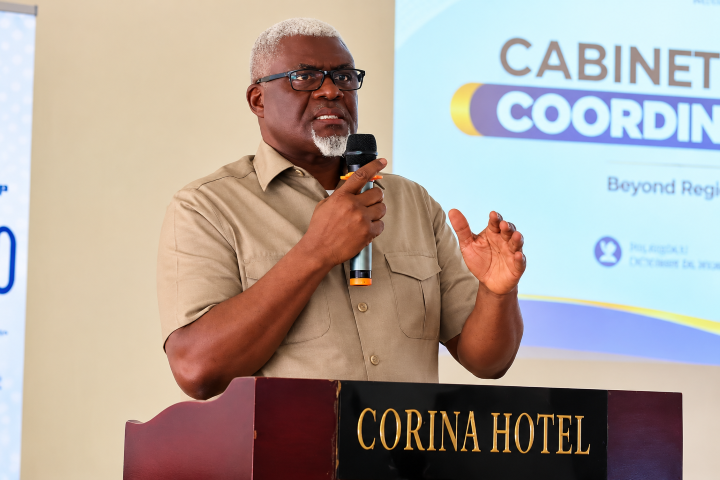
Speaking at the opening of the 2026 Cabinet Focal Persons Workshop in Monrovia on Sept. 29, Kwabo emphasized that government institutions must move beyond making policy commitments to ensuring their effective implementation.
The two-day workshop, held Sept. 29-30 under the theme “From Coordination to Results: Strengthening the Cabinet Focal Persons Network for Effective Delivery,” brought together approximately 150 Cabinet focal persons and technical staff from ministries, agencies and commissions (MACs).
Kwabo stressed that establishing a well-structured society requires clearly defined decisions, effective coordination and consistent implementation of government policies.
He said the decisions made by public officials today will have lasting consequences for current and future generations of Liberians.
The Cabinet chief reminded participants that public office is a privilege that carries responsibilities rather than a position of superiority over ordinary citizens.
“Your position or title must not prevent you from carrying out your duties effectively,” he told the gathering.
According to Kwabo, government officials must demonstrate professionalism, commitment and accountability in performing their duties, emphasizing that their primary responsibility is to serve the Liberian people.
He challenged Cabinet focal persons to take a more active role in ensuring that presidential directives and Cabinet decisions are implemented across government institutions.
Kwabo said focal persons should not hesitate to engage ministers, agency heads and other senior officials when seeking updates on the implementation of government decisions.
He urged them to follow up on outstanding instructions, consult relevant institutions, including the Ministry of Finance and Development Planning, and maintain regular communication with the Office of the Cabinet.
The Cabinet director general maintained that effective coordination between government institutions is essential to addressing implementation delays and improving public service delivery.
A major component of the proposed reforms is the expansion of the Performance Management and Compliance System to employees below the senior management level.
Under the arrangement, individual employees will receive performance targets aligned with the annual commitments their respective ministers and agency heads make to the President.
Kwabo explained that the system is intended to establish a clear connection between individual responsibilities, institutional objectives and the government’s broader development priorities.
He said the approach would also make it easier to assess performance, identify weaknesses and hold officials accountable for results within their assigned responsibilities.
The expansion represents an effort to strengthen accountability beyond Cabinet-level officials by ensuring that employees throughout government institutions contribute directly to national development targets.
Kwabo identified the government’s ARREST Agenda for Inclusive Development as a major policy framework requiring stronger coordination and collective responsibility.
He noted that the agenda contains development targets extending toward 2029 and 2030, which he linked to Liberia’s broader Vision 2030 aspirations developed between 2011 and 2012.
According to him, achieving those objectives will require consistent monitoring, institutional cooperation and effective implementation of government programs.
He cautioned that the success of the development agenda depends not only on decisions made at the highest levels of government but also on the commitment of officials responsible for executing them.
The workshop also marked another phase in strengthening the Cabinet Focal Persons Network, which was reconstituted and re-engaged in 2025.
The network was established to improve communication between the Office of the Cabinet and government institutions, strengthen the quality of Cabinet submissions and enhance monitoring and reporting on decisions.
According to the workshop’s concept note, the gathering was designed to be evidence-driven and results-oriented, using institutional performance data from 2025 and 2026 to assess progress and identify weaknesses.
The assessment will examine how ministries, agencies and commissions have engaged with Cabinet processes, including the submission of policy proposals, use of monitoring templates and responsiveness to Cabinet decisions.
It will also review the implementation status of decisions classified as completed, ongoing, delayed or outstanding.
A Cabinet Focal Persons Network Engagement Dashboard is expected to provide an overview of institutional compliance, progress, challenges and good practices.
The dashboard is intended to help the Office of the Cabinet identify institutions requiring additional support while strengthening transparency in the implementation of government decisions.
Participants are also expected to agree on corrective measures to address coordination gaps and improve the use of existing Cabinet monitoring tools.
Another anticipated outcome is the development of a 2026-2027 Cabinet Focal Persons Network Action Plan, outlining institutional responsibilities, implementation timelines and measurable performance indicators.
Kwabo said these measures are necessary to ensure that government decisions do not remain administrative commitments without practical results.
He encouraged focal persons to maintain open communication with the Office of the Cabinet and report challenges affecting the execution of their responsibilities.
The Cabinet chief assured participants that his office remains available to provide technical guidance and institutional support.
He emphasized that teamwork, effective coordination and accountability must remain central to the government’s efforts to implement its development priorities.
Kwabo maintained that the ultimate measure of government performance should be its ability to translate policy decisions, public resources and institutional commitments into meaningful improvements in the lives of Liberians.
See more Liberia News Network stories in Google Search by adding LNN as one of your Preferred Sources.
★ Add LNN as a Preferred Source